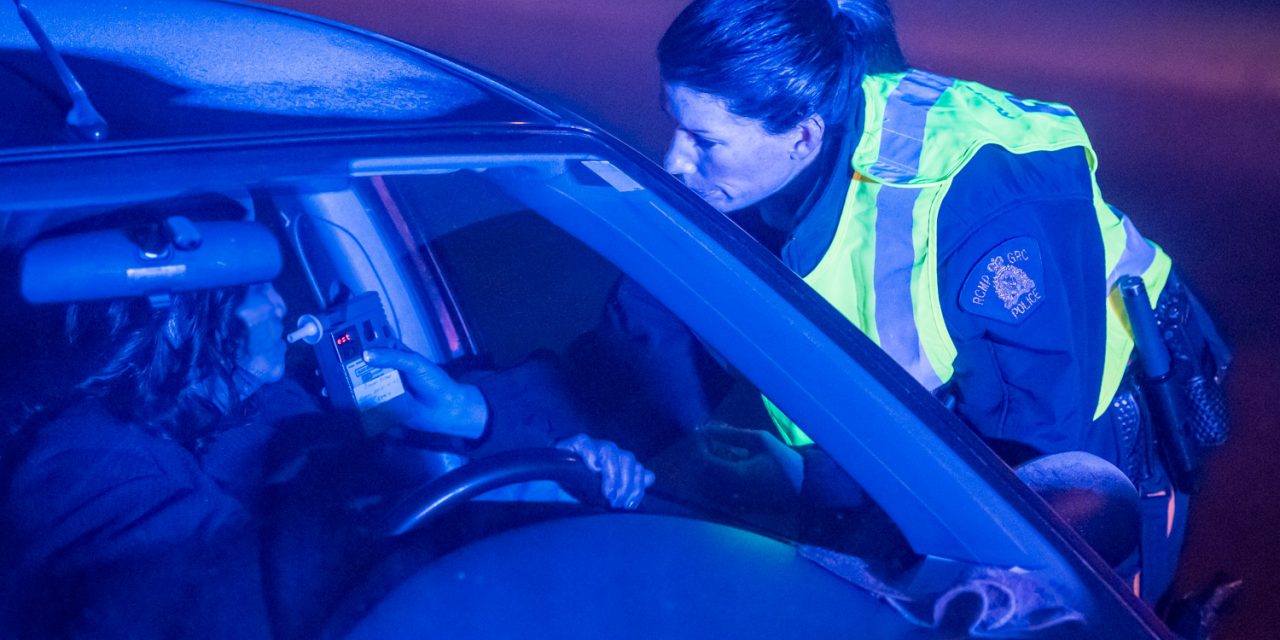
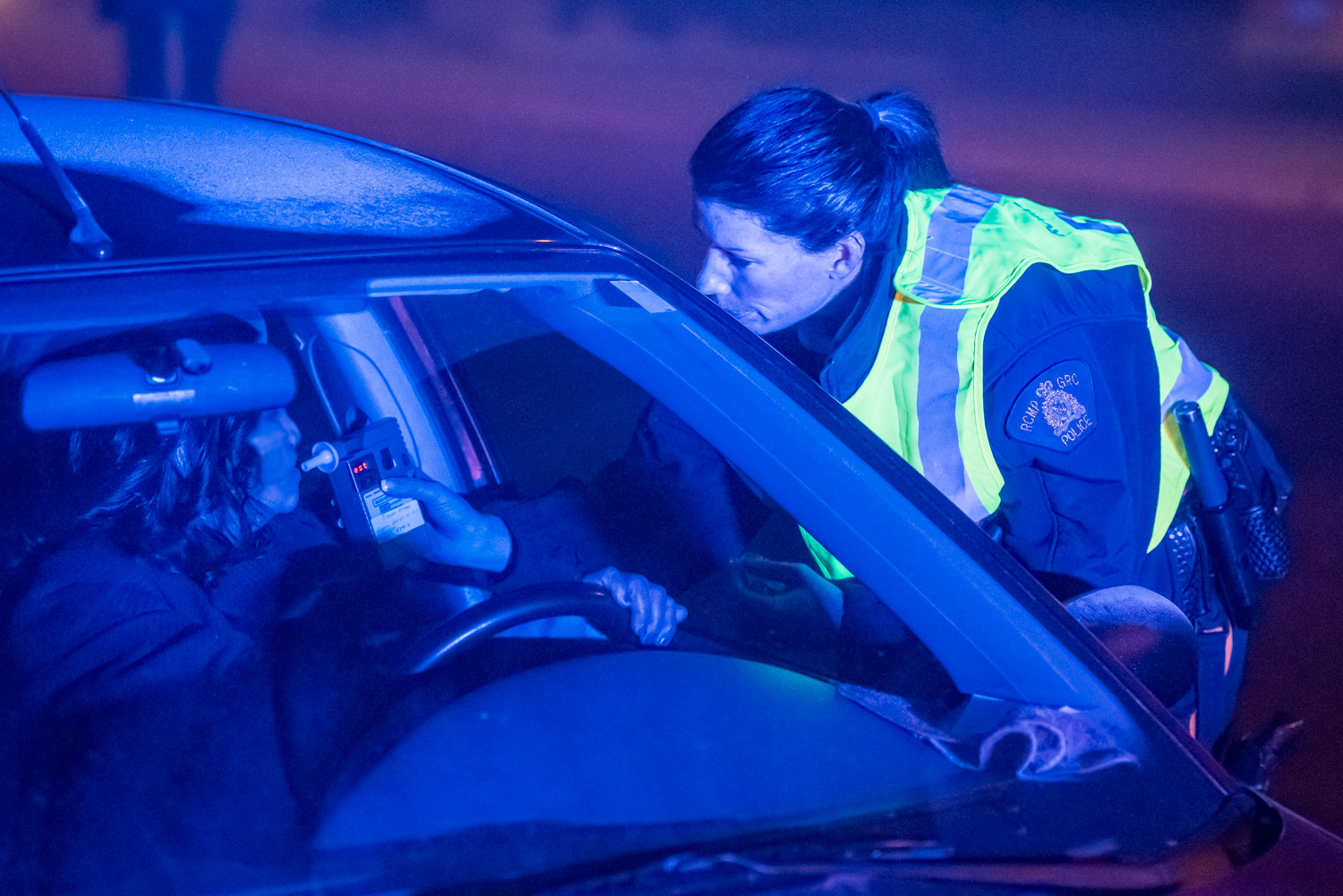
Constable Jody Rausch administers a roadside alcohol screening test to a driver after she notice the smell of alcohol in the vehicle. The driver had a reading of zero indicating she hadn’t consumed any alcohol recently. Her husband in the passenger seat had consumed a few drinks and that’s why he wasn’t driving. (Richard McGuire photo)
It’s a foggy Saturday evening and three members of Osoyoos RCMP have set up a road block just east of the bridge on Hwy. 3.
They’re on the lookout for impaired drivers and other infractions, but they also want to send a message – if you’re going to drink, make sure you have someone sober to do the driving.
RCMP do road checks throughout the year from time to time, often in the busy summer months, but during the holiday season when many events with alcohol are happening, they step up the number of checks.
The bridge is often used because drivers have no alternative route, but the police also choose other locations in Osoyoos.
“We’ll be doing sporadic road checks ensuring that there’s no drinking and driving and making sure everybody is safe for the holiday season,” said Cpl. Jason Bayda of the Osoyoos RCMP Detachment.
The red and blue flashing lights warn of a police presence and traffic lines up in both directions, but officers do their best to keep things moving quickly.
They exchange a few words with drivers, sometimes asking to see drivers’ licenses or vehicle registrations.
When one Volkswagen Jetta is stopped, Cst. Bruce Stangl points out to the driver that one of his headlights is burned out, then sends the driver on his way with a suggestion that he should fix it.
“Our main goal for the road checks is to make sure that people are being safe and making it home safely,” said Bayda. “But things do come up, whether it’s people driving without a license or no insurance or prohibited drivers. If we do come across something like that, then we attend to it.”
Cst. Jody Rausch talks to one female driver and then tells her to pull off to the side of the road. Minutes later, she unpacks and sets up a roadside screening device. She asks the woman to provide a breath sample as she holds the device for her.
The woman blows, and Rausch informs her that her reading was zero, indicating she hasn’t been drinking recently.
Rausch did the check because she could smell alcohol from the vehicle, but the woman explained that her husband in the passenger seat is the one who’d had a few drinks. She is sent on her way.
“If the officer has reasonable suspicion that the driver has alcohol, and a lot of times it’s the smell coming from the vehicle, you want to make sure,” Bayda explained. “If the driver is sober and they provided a test, then that’s great. That shows they are the designated driver and we’re happy about it.”
If a driver blows a “warn” on the device, it indicates a blood-alcohol concentration of 0.05 mg/100 mL, but less than 0.08.
This is below the threshold to be charged under the Criminal Code of Canada, but under B.C. provincial laws it is sufficient for police to issue an immediate roadside driving prohibition ranging from three to 30 days, depending on whether the driver has been caught before.
The vehicle may also be impounded, resulting in hundreds of dollars in towing, impoundment, an administrative penalty and fee for license reinstatement.
A “fail,” indicating a reading of more than 0.08 mg/100 mL of blood is treated even more severely. Under provincial law, it means a 90-day driving prohibition and the vehicle is impounded for 30 days.
If someone has previously been found to be impaired, police will normally take them to the detachment and do a test using a more sophisticated device and proceed under the federal Criminal Code.
In that case, a conviction results in a criminal record.
The fog is getting thicker and the police decide to pack it in and return to other duties. No impaired drivers were stopped.
“That’s a very good sign for us,” said Bayda. “We hope that trend continues. We will be out there. Please be safe and make wise choices. There are taxis, there are friends that can drive people. You may be chosen for designated driver this time and hopefully next time somebody else will take that role, but somebody needs to step up to the plate for each gathering.”
RICHARD McGUIRE
Osoyoos Times
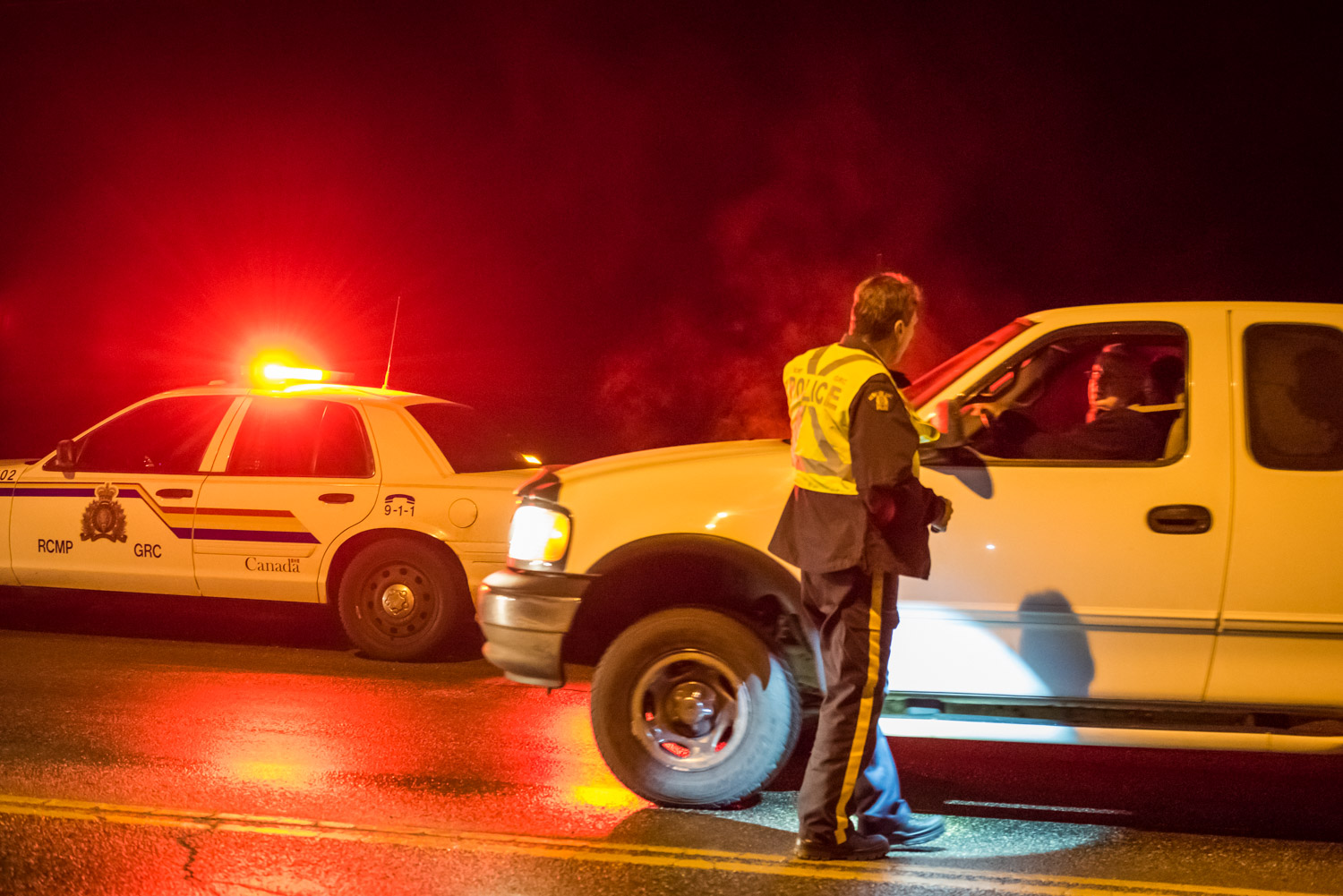
Constable Bruce Stangl speaks to a driver during a CounterAttack road check on Hwy. 3 on Saturday evening. Osoyoos RCMP were on the lookout for impaired drivers, but they didn’t encounter any. (Richard McGuire photo)
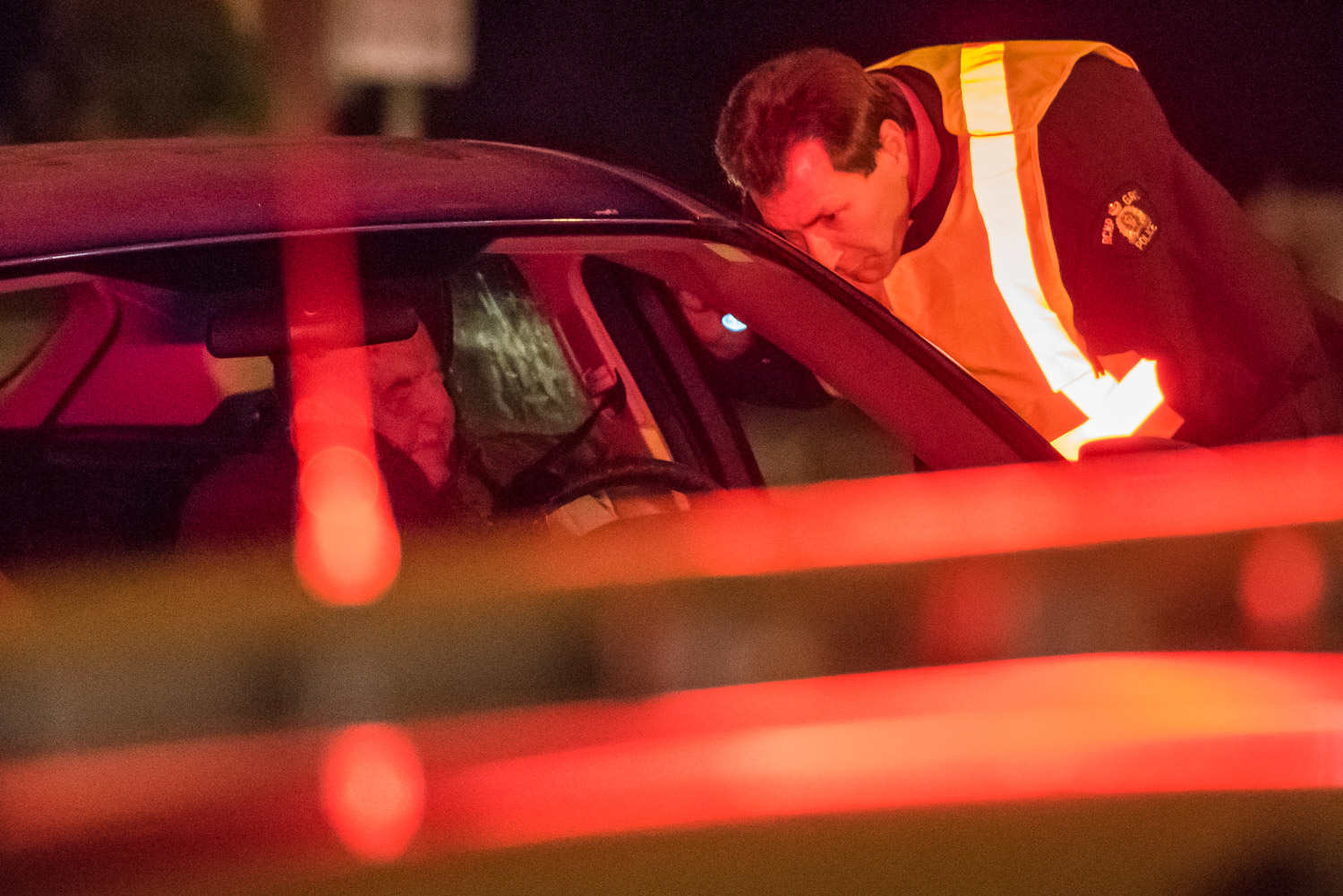
Constable Bruce Stangl speaks to a driver during a CounterAttack road check on Hwy. 3 on Saturday evening. Osoyoos RCMP were on the lookout for impaired drivers, but they didn’t encounter any. (Richard McGuire photo)
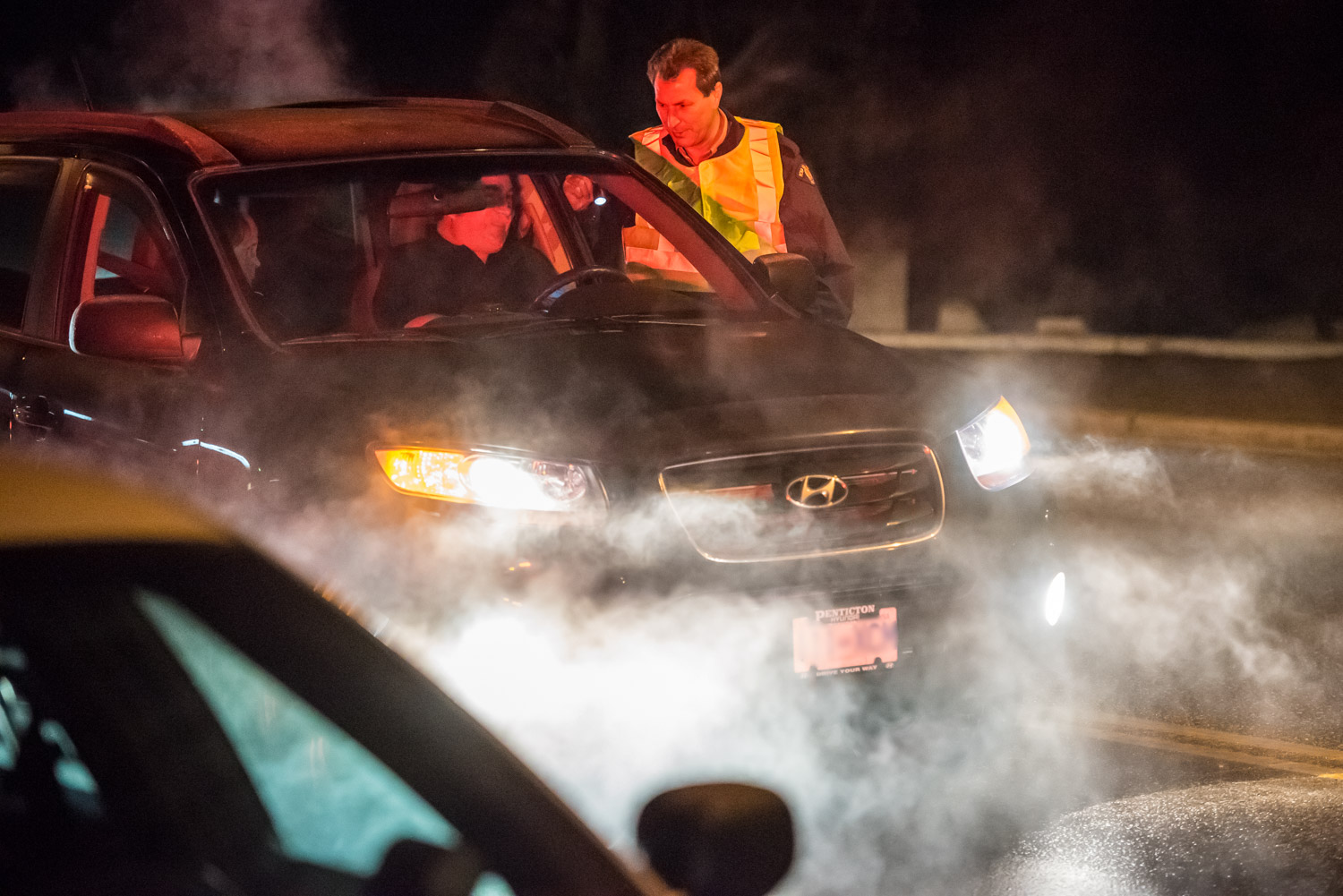
Constable Bruce Stangl speaks to a driver during a CounterAttack road check on Hwy. 3 on Saturday evening. Osoyoos RCMP were on the lookout for impaired drivers, but they didn’t encounter any. (Richard McGuire photo)
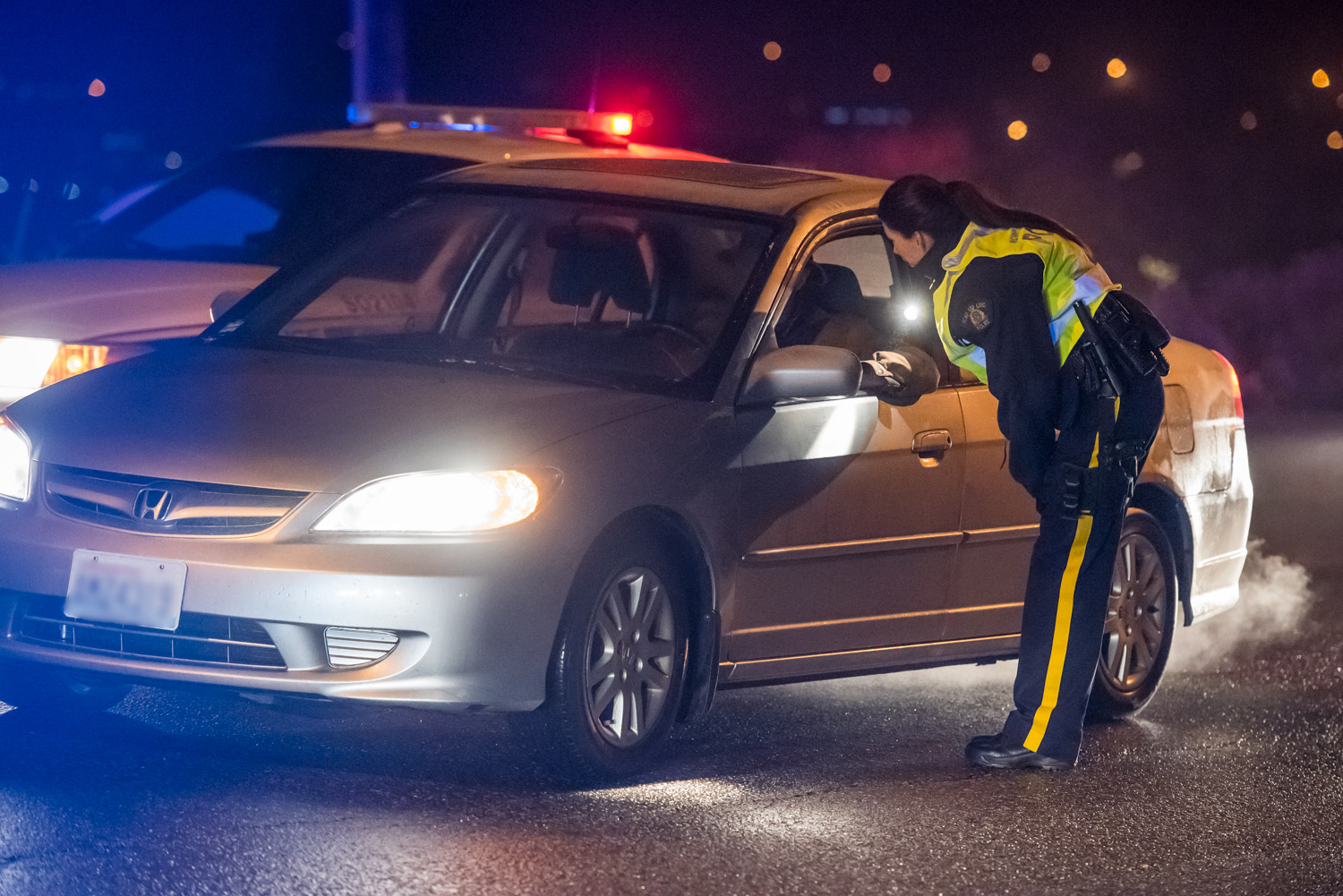
Constable Jody Rausch speaks to a driver during a CounterAttack road check on Hwy. 3 on Saturday evening. Osoyoos RCMP were on the lookout for impaired drivers, but they didn’t encounter any. (Richard McGuire photo)
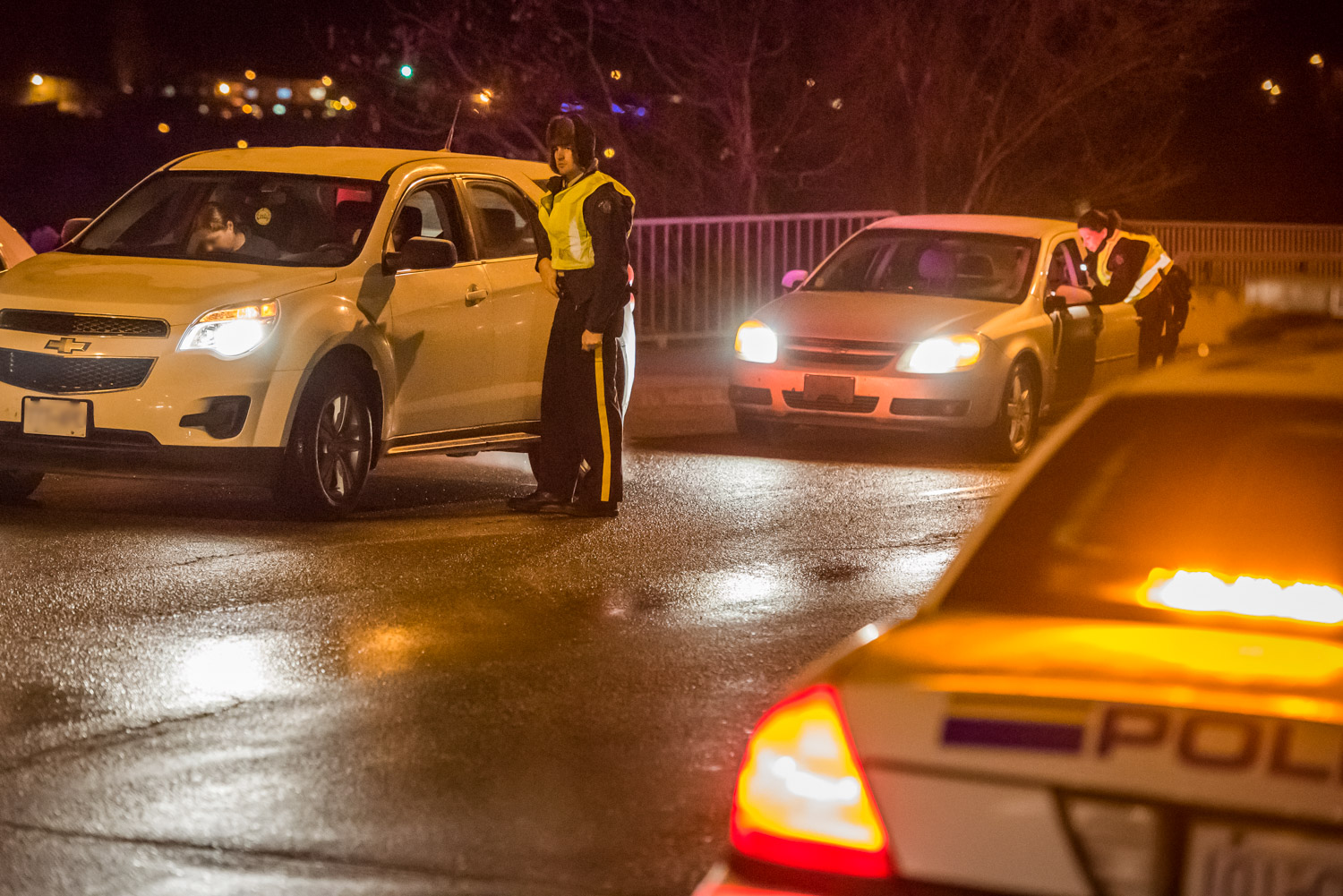
Osoyoos RCMP conducted a CounterAttack campaign on Saturday evening, checking traffic at the Hwy. 3 bridge. They were on the lookout for impaired drivers, but none were found. (Richard McGuire photo)