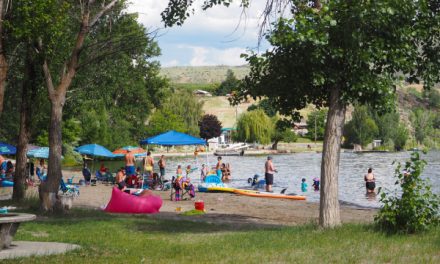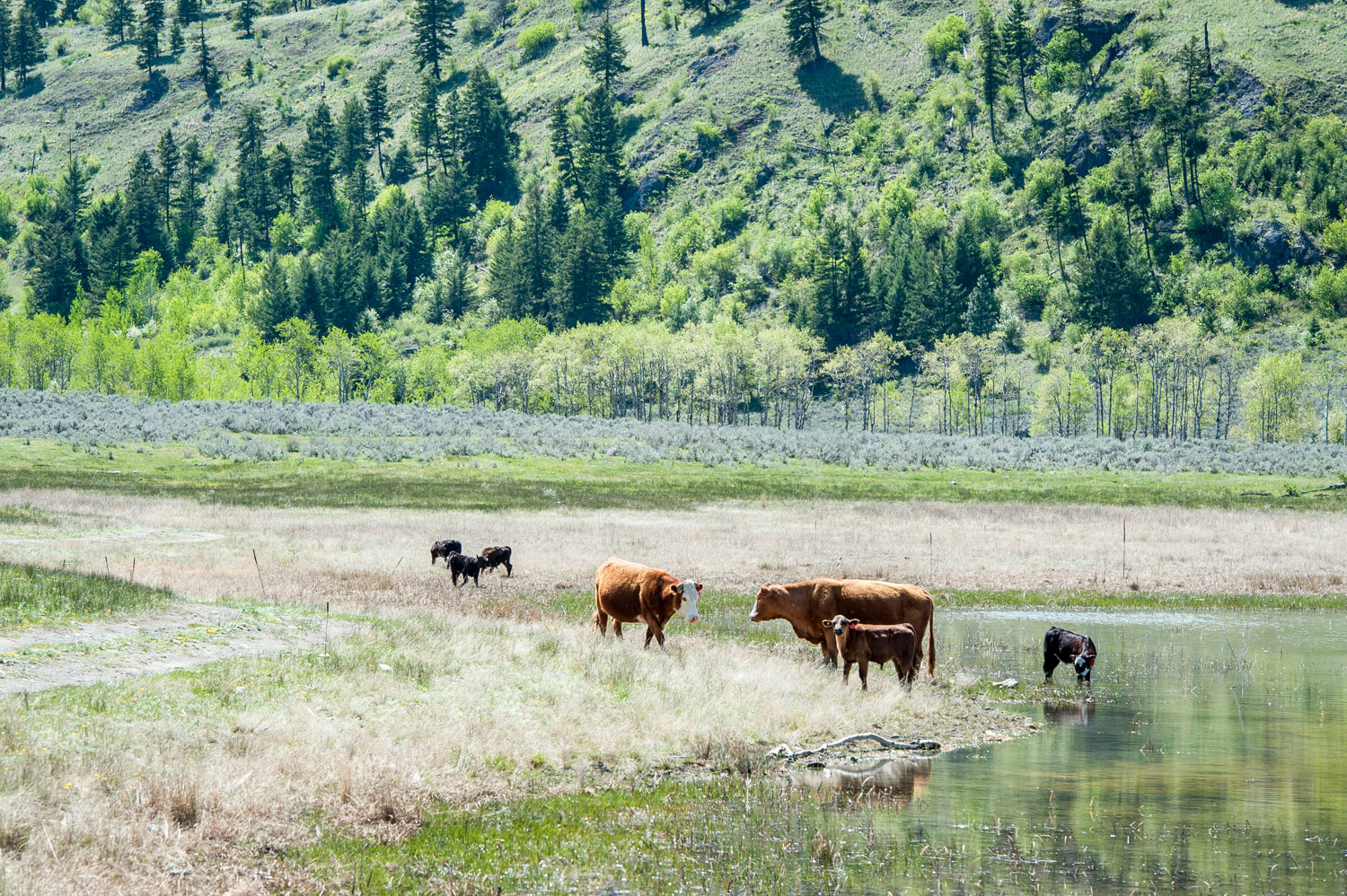
Cattle graze at Kilpoola Lake in the South Okanagan grasslands in the area under consideration for a national park reserve. (Richard McGuire file photo)
One of the largest ranchers in the area of a proposed national park reserve would be quite happy to sit down with Parks Canada and make a deal.
“The old saying when they started (park discussions) was willing-buyer-willing seller,” said Ace Elkink. “If you’re not happy with it, don’t sell.”
Elkink doesn’t talk about the numbers of cattle he raises, but he is widely believed to be the largest rancher in the area of the proposed park and the majority of his ranching is on land he owns.
Elkink also believes that only ranchers who own land or have grazing permits in the park area should be in negotiations – not those who put up “no national park” signs, but don’t own land or have grazing rights on Crown land.
“The ones that are involved, my neighbours up here, they don’t seem to be concerned,” said Elkink. “The only ones that seem to be concerned are the ones that don’t own land in there.”
That’s not to suggest ranchers outside the park area can’t have an opinion, he said.
“Everyone can voice their opinion. It’s a free country. They’d be no different than somebody that’s living in the city and voicing their opinion.”
Currently there are no discussions with ranchers because the province abruptly pulled out of talks aimed at establishing a national park reserve at the end of 2011.
Parks Canada was not able to negotiate directly with ranchers before the talks broke off, and without the province at the table, all negotiations have been put on hold.
Elkink declined to name the ranchers he was referring to who don’t own land in the park area. Nonetheless, two of the most vocal farmers opposing the park are orchardist Greg Norton and rancher Mark Quaedvlieg.
Quaedvlieg has grazing tenure and owns property outside the proposed park. Within the park area, he leases a ranch from a British owner.
Elkink believes the key to resolving the issue of ranchers in the national park area is simply for Parks Canada to negotiate deals with the landowners and grazing permit holders.
“If you can make a deal with them, you write down what you want,” he said. “If you don’t like it, well you don’t make an agreement.”
Some may choose not to run cattle in the park, while others may cut back on numbers, he said.
Elkink himself isn’t sure what he’ll do, though he says he could never replace his current ranch in terms of the convenience of having his cattle in one area.
He’s been ranching there for 48 years and five generations of ranchers in his family are still living.
Elkink has sold portions of his land near the U.S. border to the Nature Conservancy of Canada (NCC).
“It’s their land now, so it’s their business what they do about that,” he said when asked about NCC’s goals of preserving the ecology and environment of the area.
He may not be a tree hugger, but he bristles at any suggestion that he’s not an environmentalist.
“All ranchers are,” Elkink said. “If it wasn’t for us, there wouldn’t be what’s there. It wouldn’t be there for them to protect… If it wasn’t for me, over the years it would have been all chopped up by now.”
Elkink believes there will need to be some cattle in the park to condition the grass. Deer, he said, don’t want to eat grass that’s two feet tall. They want short, lush grass.
Without a national park, Elkink believes the land will sooner or later be subdivided into acreage properties like those at Kilpoola Estates.
“I’ve been cornered once before,” he said. “I said to the guy, what would you sooner see? It all subdivided, chopped up into pieces, or would you sooner see it the way it is? He said he’d sooner see it the way it is. I said, well then, it’s a park.”
RICHARD McGUIRE
Osoyoos Times