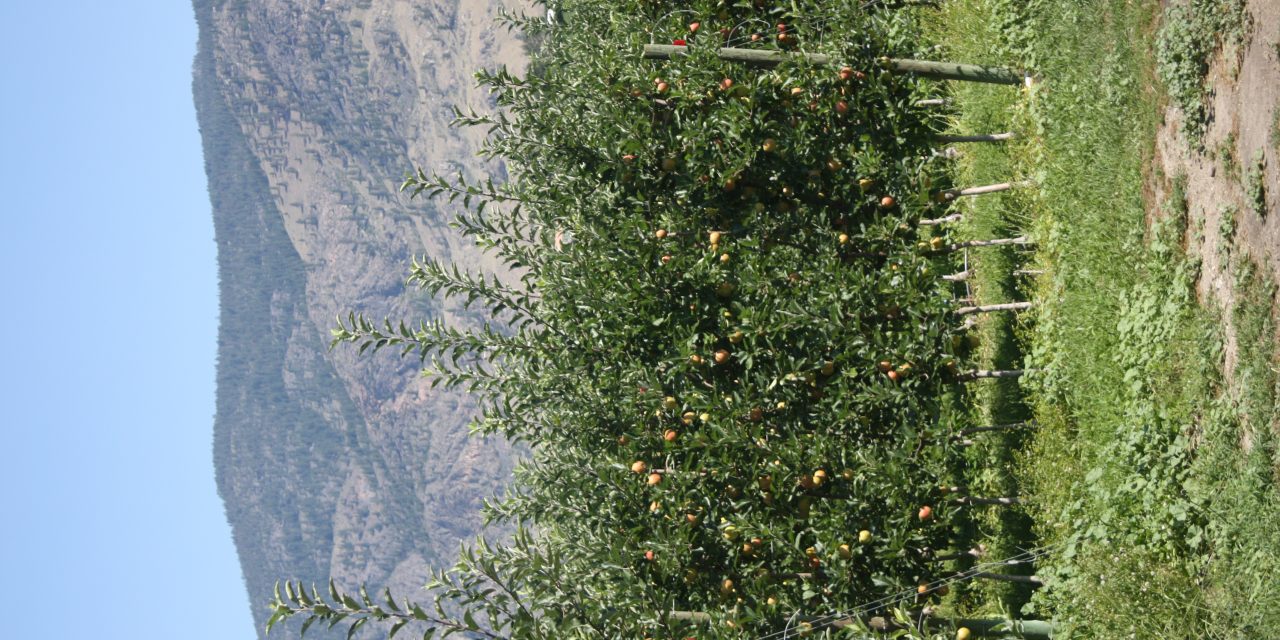
The Okanagan and Similkameen Valleys remain the only commercial apple-producing regions in North America free of the many problems caused by apple maggots, a serious apple pest, and the Ministry of Agriculture and B.C. Fruit Growers Association (BCFGA) are working together to ensure the devastating pest never comes this way. The Ministry of Agriculture released a press release last week, asking for the public’s co-operation to help protect the B.C. apple industry from apple pests and to minimize the use of pesticides.
The apple maggot (Rhagoletis pomonella), a serious apple pest, has been established in the Fraser Valley, Greater Vancouver area and on Vancouver Island, says the ministry in its release.
The Okanagan and Similkameen Valleys remain free of the pests and are the only major apple-producing regions in all of North America without any problems and it’s going to take the co-operation of all citizens to help prevent the spread of apple maggots from the Lower Mainland to B.C.’s commercial fruit growing areas, said ministry communications staffer Kathryn Hardy.
Kirpal Boparai, the president of the BCFGA, said the association and its members know all about the devastating effects of apple maggots and are pleased the ministry is taking steps to inform the public about the problem.
“We don’t have any problems with apple maggots here in the Okanagan or Similkameen and we don’t want any,” said Boparai.
Because apple maggots are spread mostly by people transporting apples from infested backyard apple trees to non-infested areas of the province, this public awareness campaign is crucial, said Boparai.
The ministry has suggested several steps to help prevent the spread of apple maggots, including:
• Do not take any fruit (apples, crabapples, hawthorn, pears and plums) out of the Lower Mainland.
• Do not take plants with garden soil that were grown near fruit trees out of the Lower Mainland.
• If you receive fruit from the Lower Mainland that appears to be infested, contact the Canadian Food Inspection Agency (CFIA) or staff at a Ministry of Agriculture office.
• Do not compost any apples that appear to be infested with apple maggots. Place the fruit in a sealed plastic bag and bury it at least 30 centimetres deep or take it to the local landfull for burial.
If anyone is planning to move any host fruit or host trees with soil or host nursery stock out of the Lower Mainland, they are also being asked to contact the CFIA.
Another pest, the apple clearwing moth, has been found in Coastal B.C. as well as Cawston, Keremeos, Oliver, north Osoyoos, Kelowna and Belgo, says the ministry. The larvae burrow inside the bark and may not be visible. To prevent this pest from spreading into the Okanagan and Creston Valleys, people are being asked to not move fruit trees, soil and rootstocks from infested areas.
More than 48 per cent of apples grown in British Columbia come from the Okanagan and Similkameen Valleys and B.C. produces 24 per cent of all apples grown in Canada, according to the ministry. The value of B.C. apples is about 45 per cent of all B.C. fruit tree production and about 58 per cent of all B.C. orchard land is planted in apples.
The BCFGA has made a specific request to the Ministry of Agriculture to work with the Ministry of Transportation to post highway signs along the Coquihala Highway, warning members of the public about apple maggots and to not transport any apples or trees from the Lower Mainland if they’re heading towards this region, said Boparai.
“We’ve asked for highway signage to not bring apples or apple trees to this region,” he said. “My understanding is signage will be posted very shortly along highways, including the Coquihala, to warn the public. We feel this will help a great deal.”
The BCFGA also has staff scientists on contract and they have been working on coming up with a plan should apple maggots find their way into the Okanagan or Similkameen Valleys, said Boparai.
“We want to be prepared and have a plan just in case this apple maggot does manage to find its way up here,” he said. “We‘re doing everything we can to keep it away from here, but we feel we must also have a plan of action in place should we have a problem.”
Any kind of widespread introduction of apple maggots into the Okanagan and Similkameen regions would have devastating and long-term negative ramifications for the entire apple-growing industry, he said.
“This stuff spreads very quickly and causes all kinds of problems,” he said. “We don’t have a problem now and we’re trying to do everything we can to ensure it doesn’t become a problem.”
The apple industry in the Okanagan and Similkameen regions result in current annual sales of $130 million, he said.
Introduction of this pest would require a lot of time to control the pests, including monitoring, pesticide application and increased grading activity, cost millions in lost fruit, affect the environment due to increased pesticide use and add a significant challenge for organic farmers, he said.
Boundary-Similkameen MLA John Slater said “we all need to do our part in preventing the spread of these pests. The apple industry is very important to the Okanagan and B.C.’s economy; to support our jobs, our food supply and our farming communities.”
Vernon-Monashee MLA Eric Foster agreed.
“The introduction of these pests would be devastating to the hard working families that make up our apple industry. We grow the best fruit in the Okanagan, so please don’t jeopardize our livelihood.”
This awareness campaign should go a long way to ensuring members of the public know about the dangers of the apple maggot and how easily it can be transported and cause significant damage in other areas of the province, said Boparai.
“I applaud the provincial government for these steps and hopefully it’s going to make a difference and keep it away from here,” he said.
PUBLIC AWARENESS CAMPAIGN UNDERWAY TO TRY AND KEEP APPLE MAGGOTS OUT OF OKANAGAN AND SIMILKAMEEN VALLEYS