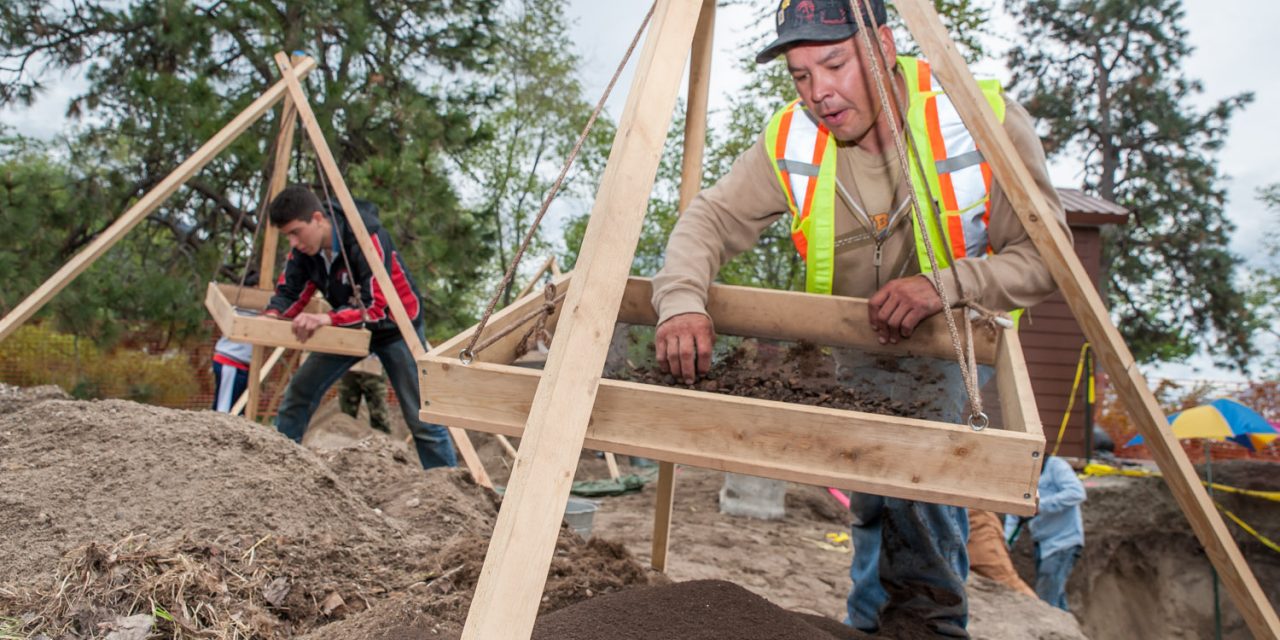
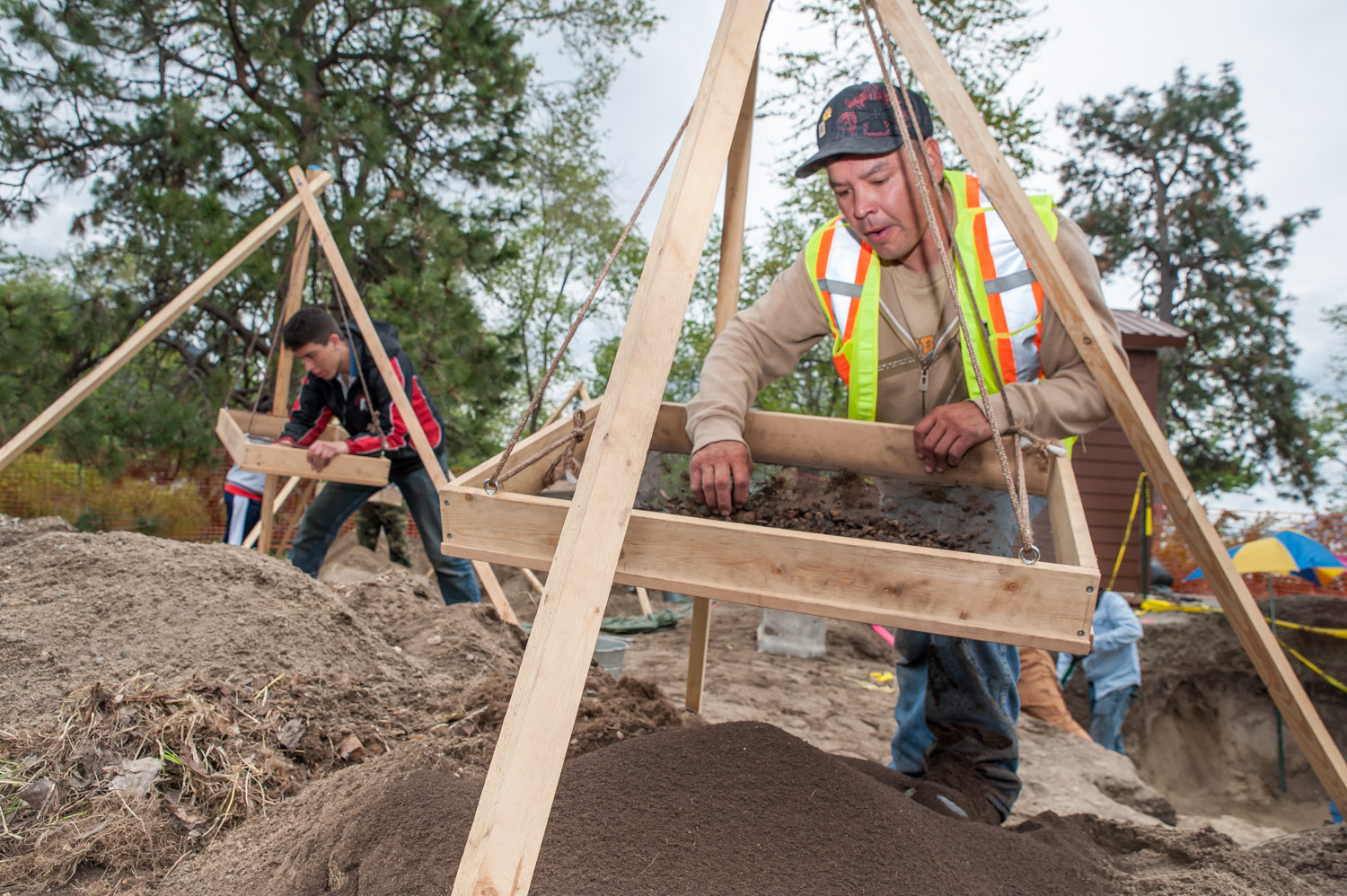
Archeological excavations were carried out last year at the former Haynes Point Provincial Park after Aboriginal ancestor remains were discovered. Last week the provincial government refused a Freedom of Information request by the Osoyoos Times, submitted five months ago, that asked for documentation about what was discovered. The province claims it is the minister’s opinion that disclosing any information would “interfere with the conservation of a heritage site or heritage object,” so they’ve overridden the Freedom of Information act. (Richard McGuire file photo)
The provincial government is refusing to release information about any ancestral remains or artifacts found at the former Haynes Point Provincial Park last year.
The Osoyoos Times requested any reports on the findings under the provincial Freedom of Information and Protection of Privacy Act (FIPPA) early this year, shortly after the conclusion of an archeological survey and a decision to turn operation of the park over to the Osoyoos Indian Band (OIB).
So far the province has only acknowledged that human bones discovered were radiocarbon dated to about 1,224 years ago, which suggests they were those of a First Nations ancestor.
They have refused all comment on whether a complete skeleton or multiple skeletons were found, or whether artifacts were found along with the remains that might indicate a deliberate burial.
In a letter to the Osoyoos Times in November 2014, OIB Chief Clarence Louie said OIB would not give specific details of what was discovered “out of respect for our ancestor,” but he added that “more than ‘just a few bones’ were recovered, along with artifacts directly associated with the burial.”
The discovery of the remains led to an agreement in February turning over the operation of Haynes Point and Okanagan Falls provincial parks to the OIB.
It also led the province to agree to rename Haynes Point as “sw̓iw̓s” and Okanagan Falls as “sx̌wəx̌wnitkw.”
Rather than using FIPPA to refuse to release or to redact any documents, the province has used a section of the Heritage Conservation Act that allows the minister to override FIPPA if “disclosure of the information could, in the opinion of the minister, result in damage to or interfere with the conservation of a heritage site or heritage object.”
The province chose not to release redacted information, but rather to refuse the request entirely.
“That’s a new one on me,” said Vincent Gogolek, executive director of the B.C. Freedom of Information and Privacy Association, a non-profit organization advocating for freedom of information and privacy rights.
Normally FIPPA requires the government to respond to a request within 30 days, but the government requested an extension and then took almost five months to issue its refusal.
The discovery of the remains was controversial, with some people in Osoyoos suggesting they may have been brought in when fill was added to the former Haynes Point Provincial Park.
At the time, Chief Louie rejected this suggestion, saying: “It is very unlikely that an official member of the archeological team provided specific details about the ancestral remains to the public. In addition, since provincial law protects all archeological sites in B.C. (whether intact or disturbed, known or unknown, recorded or unrecorded), it is extremely unlikely that the BC Parks or OIB official would have jeopardized this protection by sharing specific details about the ancestral remains. In fact, the public should take note that archaeological site information and reports are privileged documents with limited public access.”
Gogolek, the freedom of information advocate, said he’s disturbed by the number of laws the provincial government has brought in that “carve out” from provincial freedom of information legislation.
While some of these exceptions to FIPPA exist for specific reasons, an increasing number of other laws say “notwithstanding FIPPA” in order to keep information secret, he said.
“They’re doing more and more of that actually,” he said. “Putting those provisions in, notwithstanding the Freedom of Information and Protection of Privacy Act, the minister ‘can refuse’ or ‘shall not be released.’ There’s more and more of that going on and that’s a concern.”
Gogolek said there’s a “culture of secrecy” in government that has led to government officials communicating orally rather than putting information in writing so that it can’t be the subject of a Freedom of Information request.
In other cases, he said, the government has actually been caught deleting emails or shredding documents to keep them away from the public eye.
RICHARD McGUIRE
Osoyoos Times