— Public meeting feedback to go to Parks Canada —
(OSOYOOS TIMES — November 21, 2007) —
By Chad IngramrnOsoyoos Times
It is clear there is mixed opinion among area residents concerning the national park proposed for the west side of Oliver.
At a public meeting Saturday at the Osoyoos Legion Hall, members of Parks Canada and the pro- and anti-park groups “ the South Okanagan Similkameen National Park Network and the Grassland Park Review Coalition “ met with citizens to share their perspectives.
Citizens were also given a chance to make comments and ask questions.
The meeting commenced with a 20-minute presentation by Parks Canada, outlining the concept for the park. Parks Canada is currently conducting a feasibility study to see whether a park in the area would be viable.
Covering a 650-sq.-km area west of Oliver and south of Keremeos, the park would include portions of Kobau and Kilpoola to the east, Vaseux Lake to the north, Snowy Mountain to the west and extend south to the American border. It would sit just to the west of Osoyoos.
Parks Canada says creation of a national park would be beneficial for the preservation and conservation of some of the Southern Interior's endangered species. In fact, 350 sq. km of the proposed park is already protected by the Province as ecologically sensitive.
The federal parks agency says a national park would not only be good for environmental sustainability, but good for the economy as well, as it would create an estimated 15 to 20 full-time jobs.
Parks Canada says because much of the land in question has traditionally been used for cattle-grazing, it would be an ideal location, because the land has remained greatly unaltered.
A national park would mean that certain land uses, including ranching, hunting, ATV-ing and other activities, would be phased out within its boundaries.
This is a major grievance for the Grassland Park Review Coalition.
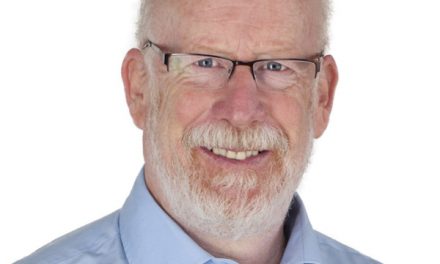
We are the people that basically have something to lose if the park comes in, said Greg Norton in his five-minute presentation. Norton, a longtime Oliver resident, orchardist and fan of the outdoors, is a founding member of the coalition. The group was formed back in 2002 when the idea for a national park was first brought forth.
Norton contended that much of the planning process had taken place without adequate consultation with the residents who would be affected.
More than our opposition to the park, we believe in the democratic process, Norton said. He called the planning process exclusionary, pointing out that some of the ranchers on the designated land have been grazing cattle there for generations.
About 100 sq. km of the proposed park area is private land. Parks Canada says if a national park is eventually approved by Ottawa, owners will be able to keep their land or sell it to the government at their discretion. The prohibited land uses, however, would stand. Only native people would be permitted to continue using the land for their traditional purposes.
Norton said the park would create too great a reliance on tourism, and seriously jeopardize the businesses that exist there now.
We want to continue to be stewards of the land, he told the room of more than 100 people.
Biologist Bob Lincoln spoke on behalf of the South Okanagan Similkameen National Park Network.
Lincoln said the park would be good for nature, good for land use and good for people.
He suggested research capacity and research funding could increase as a result of the park's creation. Partnerships with universities and colleges, the protection of headwaters for watersheds, weed control and wildfire control were among other benefits the scientist said are likely.
The conservation of native plant and animal species was also on his list.
No other place warrants conservation more than the Okanagan-Similkameen, Lincoln said.
After his speech, the floor was opened to questions and comments from the audience.
It was a mixed bag.
I believe that if this park was created 100 years ago, it would be a national treasure, said one man. If it is created now, it will be a national abomination.
He said building a national park in a populated area meant ghettoizing the people there and stealing their lifestyles.
Another man lamented that the park wouldn't extend far enough to encompass his property.
I'd love to have a national park in my backyard, he said.
The issue is far from being decided.
First, there are three more public meetings to be held this month “ in Oliver (Tuesday, Nov. 20, 6:30-9:30 p.m., Legion Hall), Penticton (Wednesday, Nov. 21, 6:30-9:30 p.m., South Main Seniors Centre), and Keremeos (Thursday, Nov. 22, 6:30-9:30 p.m., Victory Hall).
The feedback from these meeting will be summarized in a report by mediator Derek Murphy and submitted to Parks Canada. Along with the feasibility study, Parks Canada will also conduct socio-economic and environmental assessments.
A final report is expected to be completed and submitted to a steering committee in the first few months of 2008. Before coming into fruition, the park proposal must be approved by the steering committee, along with the provincial and federal governments. [b][/b][b][/b]