By Don Urquhart, Times Chronicle
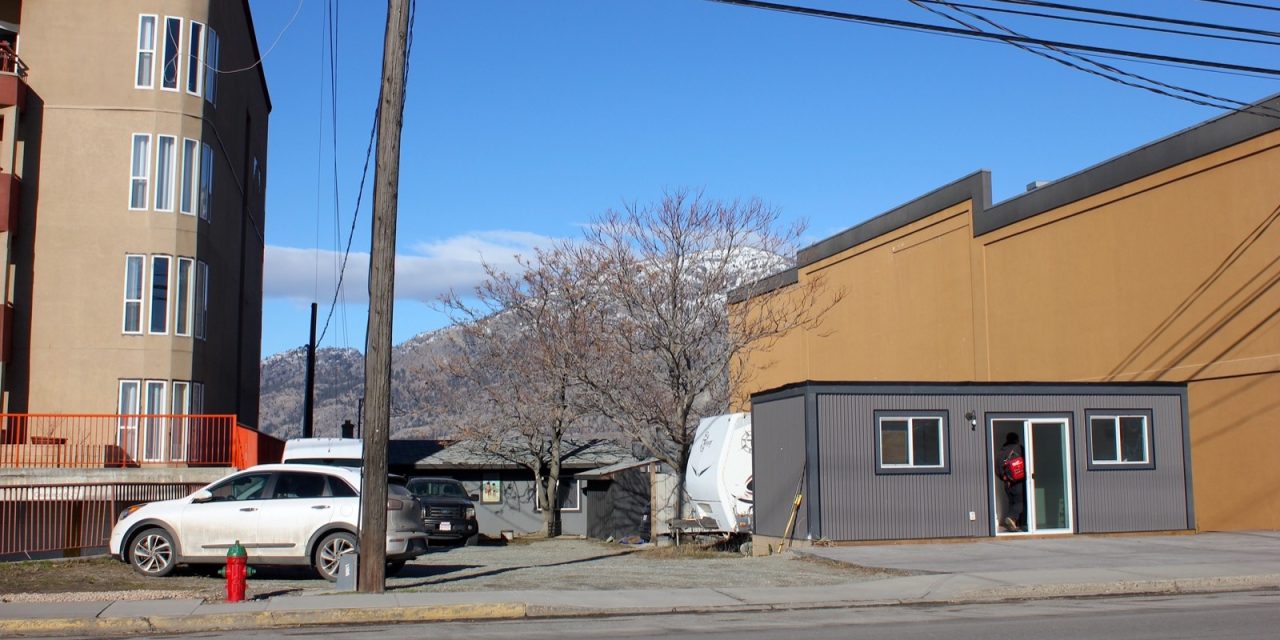
The Town of Osoyoos’ purchase of a property at 7710 Main Street has now landed in small claims court after the seller, Kevin Primeau, filed a Notice of Claim with the Provincial Court in Penticton seeking $28,025 in damages for what he says is “retained property”.
The house was purchased for $1.8 million in October, with a closing date in January this year in order to mitigate the cost of relocating an existing sewer line and pump station along the foreshore that was estimated in 2024 to cost $3.7 million.
The purchase, characterized as “secretive” by Primeau, through the Town’s lawyer as is typical in a property purchase such this, was almost immediately awash in controversy after it was alleged that tenants who had been renting under the previous owner and seller of the property, Kevin Primeau, had been locked out by the new owners, the Town of Osoyoos.
According to the Town, the property was purchased from Primeau as “vacant,” meaning no tenants are present.
After learning that there were in fact occupants in the house, the Town then permitted them to remain through the duration of the agreement they had signed with Primeau, despite what the Times Chronicle understands was not in fact a proper tenancy agreement, but rather a short-term rental agreement of only 10 weeks.
“We purchased the property free and clear as vacant, however, there were issues, and ultimately, the town is doing everything to cooperate with the third parties, those involved in the property from a third-party perspective,” Rod Risling, Chief Administrative Officer of Osoyoos, said at the time.
The former tenants – Bailey Jaymes and her partner Tyler Herman – on the other hand, had nothing but praise for the way the Town assisted them through the chaotic situation. “The Town has been just incredible throughout this whole situation,” said Jaymes, speaking on behalf of the two of them to the Times Chronicle earlier this week.
“I know a lot of people are unhappy with the Town right now and that Kevin probably has that on his side when he’s telling his story, but in this situation, honestly, the Town has been so helpful.
“Rod Risling has been our main contact and he has continuously gone out of his way to help in any way that we need whether it is to deal with landlord issues when things happened around the house, installing security cameras when we felt unsafe in our home, listening to us rant when we were frustrated with the situation, allowing us to extend our tenancy agreement when we needed more time.
“Rod has been so helpful, and the Town has been nothing but kind to us. They have been very gracious, understanding and accommodating,” she said.
They expressed reluctance to say anything specific about their tenancy from the point they discovered the property had been sold to the point they moved out, out of fear of being dragged into the legal quagmire.
In setting out the situation for the purposes of the Notice of Claim Primeau claims to have disclosed the existence of a “fixed term tenancy” and further claims to have negotiated to leave furnishings he values at $23,095 ($26,025 further on in his claim), “in good faith while retaining ownership in good faith while retaining ownership [SIC].”
He also states that, “After closing, the town denied access to the property and changed the locks on a business rental hut that was not on the property.” It’s not clear what the specifics are with regard to the “business rental hut,” and both parties declined to discuss the case any further because it is before the courts.
Primeau references the fact that the hut is located on the foreshore, which in BC is owned by the Crown, but effectively managed by municipalities through planning and regulating land use.
As for the furnishings, Primeau said, “Multiple efforts to retrieve and document my personal items were refused or ignored. The town later treated these items as abandoned or theirs, despite no legal basis or notice.”
Again, it’s not clear what the nature of this agreement was, or if indeed there even was one in place, but the Times Chronicle has confirmed with real estate professionals that anything left in or on a property following the official closing date usually becomes the legal property of the buyer.
In his notice of claim, Primeau addresses this by saying, “No legal abandonment occurred: all property remained in place to honour the tenancy or was scheduled for removal.”
He states in the claim that in order to “preserve the existing lease and avoid conflict,” he devised a “creative, good faith solution”. This was to offer the tenants a legal agreement to purchase the furnishings with the understanding that they would resell them back to him at the end of their tenancy.
He notes the Town had refused an earlier offer to leave all furnishings in exchange for honouring the lease.
In the end, the tenants declined the offer, but for Primeau, this arrangement demonstrates he had “no intent to abandon the property and actively sought to protect both the lease and my possessions.”
While the solution may well have been creative, it may have also constituted “attempted fraud” according to the RCMP, which he erroneously describes in his Notice of Claim as being the Town’s “police department.”
Denying the attempted fraud accusation he insists the proposal was “legal, transparent and offered in good faith to preserve a lease the Town unilaterally refused to honour. This allegation exemplifies a pattern of hostility and non-cooperation that directly contributed to my loss and now forms part of the basis for this claim.”
He also states that “furnishings and beach equipment were not part of the purchase agreement and remained my legal property.”
These were said to have been stored in the beach hut and separate breeze way, and when Primeau gained access in early May 2025 (some four months after the deal closed), “numerous personal items unrelated to the tenancy or sale,” including beach rental equipment were “removed or disappeared” without notice, he said.
“Attempts to show or retrieve these items were met with RCMP involvement, triggered by reports that the Town or tenant considered the items ‘stolen’.”
The Times Chronicle understands the lock on the beach hut was broken, and as such, a police report was made. Further, this equipment may have been the property of a nearby resort, but this has not been corroborated.
The Times Chronicle reached out to Primeau for clarification on various issues, but he only reiterated his position that the “Town made no genuine effort to resolve the issues surrounding the sale of the property in good faith, despite multiple opportunities to do so.
“This legal action was a last resort after all reasonable attempts at resolution were ignored.” He then noted that, as the matter is before the courts, he would not be making any further public comment.
The town of Osoyoos has 14 days after being served to respond to the allegations.