By Madeline Baker, Times Chronicle
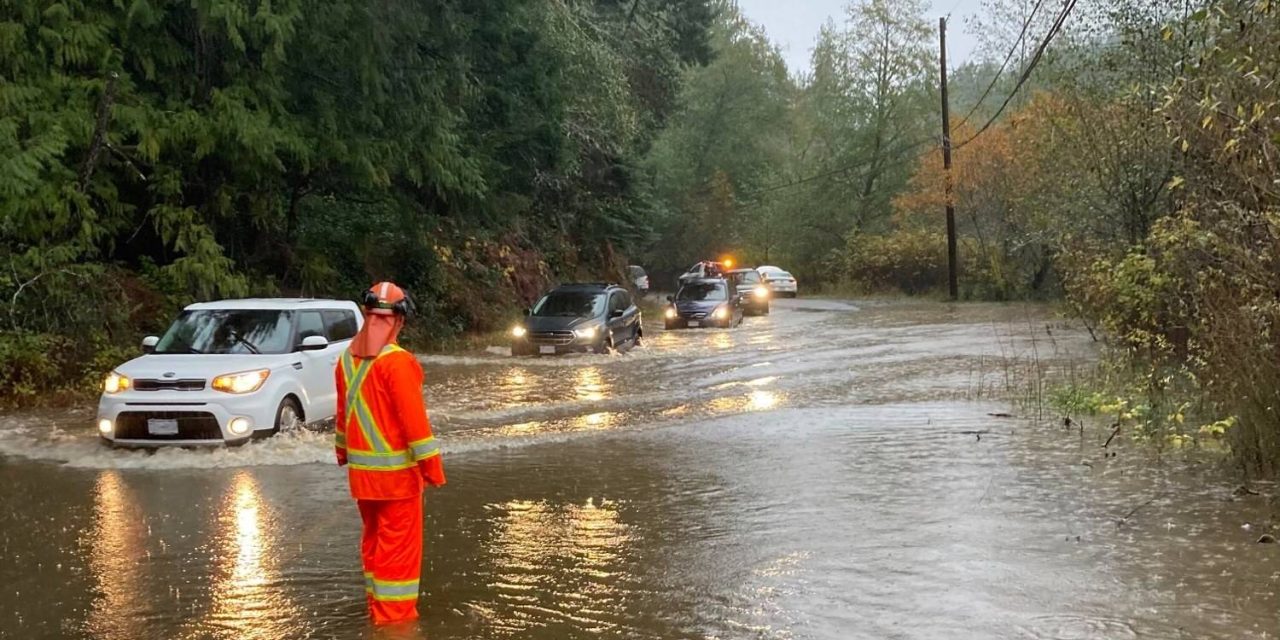
On August 18, the Regional District of Okanagan-Similkameen (RDOS) board of directors got their first look at an “after action review,” or AAR, of 2021’s atmospheric river flooding that they commissioned from Cailan Emergency Management Solutions.
The AAR is intended to “assess the RDOS response to the 2021 B.C. atmospheric river flooding through the identification of strengths, deficiencies, and gaps in existing emergency preparedness and response capabilities,” as stated on its front page.
Cailan’s Vanessa Howard presented the report along with what she considered to be a very important caveat, one she re-stated several times throughout her presentation: “The AAR should be considered with a really compassionate appreciation of the strain that prolonged emergency response operations may have on individuals and programs.”
“In my opinion, an urgent evacuation is one of the most stressful situations facing a decision-maker,” said Howard. “The frequency and severity of emergencies impacting the RDOS is notable and it puts an enormous strain on [emergency response experts]. The strain is also felt by your responders … the residents … and of course, yourselves.”
With that compassionate view in mind, Cailan compiled responses from several surveys delivered both online and in person, often with interviews conducted alongside them, to RDOS staff, members of the public, and response organizations involved in the emergency.
Their stated aim was not to grade anybody’s performance but to identify what they called Best Practices and Opportunities for Improvement: objective areas of strength and weakness as identified by the people involved at every level.
One of the first areas identified as an opportunity for improvement revolved around gathering, processing, and sharing information about the emergency as it developed.
There seemed to be more public trust in local first response professionals than RDOS-run information sources. In fact, some survey responses from members of the public revealed a distrust of the RDOS that was also confirmed in descriptions from surveyed members of first response agencies.
“We heard loudly from the public survey of evacuees … that many people relied on the Tulameen Fire Department, among others, for communication updates related to the emergency,” said Howard.
Meanwhile, RDOS staff and responders seemed at odds when it came to the actual source of difficulty in their communications during the active flood response, each appearing to point to the other as the source of their problem.
Responders tended to say that they struggled to reach their liaison at the RDOS and information flow from their response sites to Emergency Operations Centres (EOCs) was hampered by “technology changes and challenges,” while RDOS staff said they had difficulty accessing the kind of information they needed to maintain constant awareness of the situation.
The report had high praise for the RDOS’s consistent focus on individual preparedness before and during emergencies in their messaging to the public, which Howard said increased overall resilience during disasters, noting that many members of the public and first responders had made preparations for the flood before the atmospheric river even arrived.
However, those early efforts seemed to break down when it came to coordinating response activities across a variety of agencies. Howard encouraged the RDOS to “ensure that there’s alignment in expectations for each agency, as well as a clearly understood lead agency for each hazard type.”
“One hundred per cent of staff and volunteers, as well as first responders, indicated that they had an appropriate understanding of their roles and responsibilities within their respective response plans,” said Howard. “However, we did find the integration between the RDOS EOCs and the incident commanders is not well understood.”
By improving their relationship with the general public and all of the emergency response agencies across the region, Howard felt that the RDOS could take a good deal of pressure off everyone involved in future disasters, including themselves and their staff.
The strongest relationships between helpers and those in need of help were found at the local level. Naturally, local volunteers had insight and knowledge about their respective communities and the residents therein that made them uniquely qualified to distribute up-to- date information as widely as possible.
Particular credit was also given in the report to the “unique technical expertise” shown by the volunteer base within the RDOS, whom they also described as “highly knowledgeable” and capable in their particular fields of work.
For this, the RDOS was given special credit because a good deal of that specialized knowledge comes from the regional district’s investment in “emergency program activities that encourage regional integration and coordination” as well as continual evaluation of their training programs to ensure that they’re as effective as possible.
The RDOS have built excellent local response agencies, according to the report, and those agencies have formed a strong bond with their communities. All that remains is for the RDOS to work with those agencies to create integrated channels of communication that will carry vital information from emergency sites to residents across the district more efficiently.
This will reduce the strain on their own EOC staff, whom the report states “should not be expected to have the depth of technical expertise of volunteer agencies” because most volunteers have professional backgrounds that give them a much deeper knowledge pool than a professional emergency responder.
In large rural areas that depend entirely on their local volunteer-staffed agencies, enabling clear and ongoing communication between those agencies and EOC staff will go a long way to improving the situational awareness of staff throughout the RDOS and thereby improve the quality of information going back out to the public.
Predominantly rural areas also suffer from their lack of coverage by provincial agencies such as the BC Wildfire Service, which makes them uniquely vulnerable during emergencies. This was where the report emphasized the importance of “clear understanding of the roles and responsibilities of each response agency” to avoid the confusion detailed earlier.
Those geographical gaps in provincial coverage were noted as particularly important areas for the RDOS to identify and improve their relationship with members of the public, as the overall high level of distrust in the RDOS would have the harshest consequences for those who were left with no other options aside from their local agencies.
Overall, amplification of their existing strengths was declared to be a more important focus for the RDOS than opportunities for improvement. Howard said that the enormous outpouring of acknowledgement for individual people and agencies who helped members of the public was unlike anything they had seen elsewhere, which she felt emphasized that point.
Board members responded to the report with a level of positivity best expressed by Okanagan Falls director Ron Obirek, who specified that his verbal response of “WOW!!!” should be taken as delivered in “all caps with many exclamation points.”
Director Manfred Bauer did feel that reviews of every individual emergency incident should be undertaken so that the board doesn’t draw any conclusions based on this singular report that are too wide in nature; however, Howard felt that the recommendations in Cailan’s report were broad enough to improve the entirety of the RDOS’s emergency response.
Directors Bob Coyne, Rick Knodel, and Chairman Mark Pendergraft also praised the report for its positivity-focused method of recommending improvements, the candidness of remarks from survey respondents, and how much the findings resonated with a variety of emergency situations they had faced in their regions.
Pendergraft closed the discussion with a concise summation of the encouraged, empowered feelings that came through in the words of other directors: “You nailed it.”