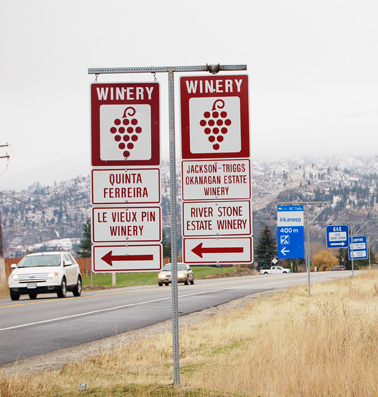

The proliferation of signs along Highway 97 in the Oliver area concerns Area C director Allan Patton, who took his message to the UBCM convention.
Lyonel Doherty photo
Making British Columbia free of genetically-engineered foods and animal feed is a victory that Area C director Allan Patton could celebrate every day.
“It’s a big step ahead,” he said of the recent vote at the Union of BC Municipalities convention in Vancouver.
Patton said the resolution sparked an emotional debate from both sides, but in the end, 60 per cent voted in favour.
The director said genetically modified food negatively impacts economic trade. Some countries refuse to import GE foods. For example, Europe will not accept GE canola and corn products, Patton said.
“Asia and Indian (markets) have said no to US imports of wheat.”
Another issue that Patton expressed concern about is commercial influences threatening the sanctity of the Agricultural Land Reserve (ALR).
He pointed to the resolution that all ALR restaurants be able to serve craft beer and spirits. He asked to amend the motion with the addition of “grown and manufactured in BC,” which was supported.
Patton said the issue came to light when the Agricultural Land Commission started approving wine that was not grown on the farm. And when a food primary licence is granted (allowing the restaurant to serve alcohol not produced on the premises), Patton believes this falls into the commercial realm.
“That’s a non-farm use . . . I don’t want to approve a non-farm use.”
Tinhorn Creek Vineyards recently raised a glass in celebration of its new food primary licence at Miradoro Restaurant. The first beer that will be featured is from the award-winning Firehall Brewery in Oliver.
As Tinhorn is located in the ALR, it was previously restricted to serving wine produced in the vineyard. But the new licence changes that rule.
Winemaker Sandra Oldfield said they worked with all levels of government to make this licence possible.
“It’s been a great collaborative experience to work with all of the organizations involved to achieve our goal of being able to offer more choice to our guests by showcasing other locally made beverages alongside our fantastic wines.”
Oldfield said their new licence does not allow them to sell wines or spirits made outside of BC. In addition, a food primary licence does not restrict minors from being in the establishment.
Patton said he wants wineries to be able to sell BC beer and spirits on an equal basis, but he doesn’t want to see these enterprises turn into commercial ventures.
“Once commercial, why not allow RV parks? It becomes a big snowball, and you’re doing everything on these farms other than farming.”
Patton said he has spent most of his political career fighting with the land commission on this issue.
He noted that Area C has more ALR restaurants than any other jurisdiction in BC.
The regional district is proposing a textual change to the definition of “winery.” The following text will be added: A wine bar and food and beverage lounge also includes the provision of alcoholic beverages produced in BC.
This change would allow administration to more favourably assess ALC “non-farm use” applications seeking approval to offer other made in BC alcoholic beverages as part of a winery lounge.
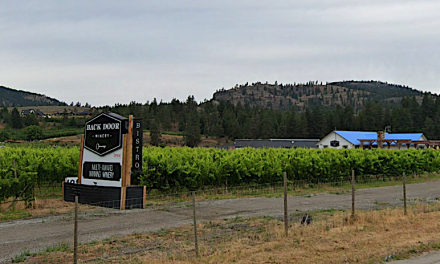
Another issue that Patton brought up at the convention was the proliferation of highway signs in the South Okanagan. He spoke with Minister of Transportation Todd Stone about too many signs distracting motorists and having a negative impact on viewscapes.
Patton acknowledged that everyone should be able to have a sign on their property advertising their business, but it has reached a point now that there are too many.
The director said he has witnessed motorists stopping on Highway 97 to read the signs near the intersection of Road 9.
Patton said the regional district may have to update its signage regulations in its zoning bylaw.
Another issue he addressed at the convention was putting pressure on Minister of Health Terry Lake to keep the new Penticton hospital tower on the government’s radar.
Resolution issues included the following: goose population control, Zebra and Quagga mussels, compulsory labelling of GE foods and animal products, and major appliance stewardship.
Lyonel Doherty
Oliver Chronicle