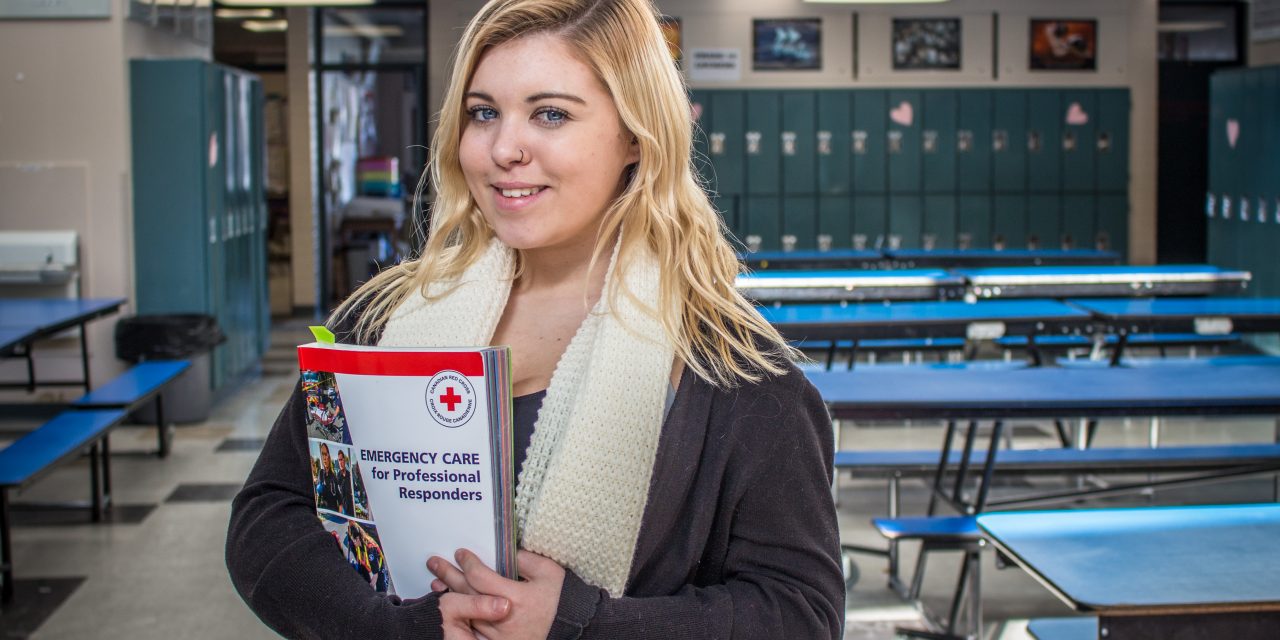
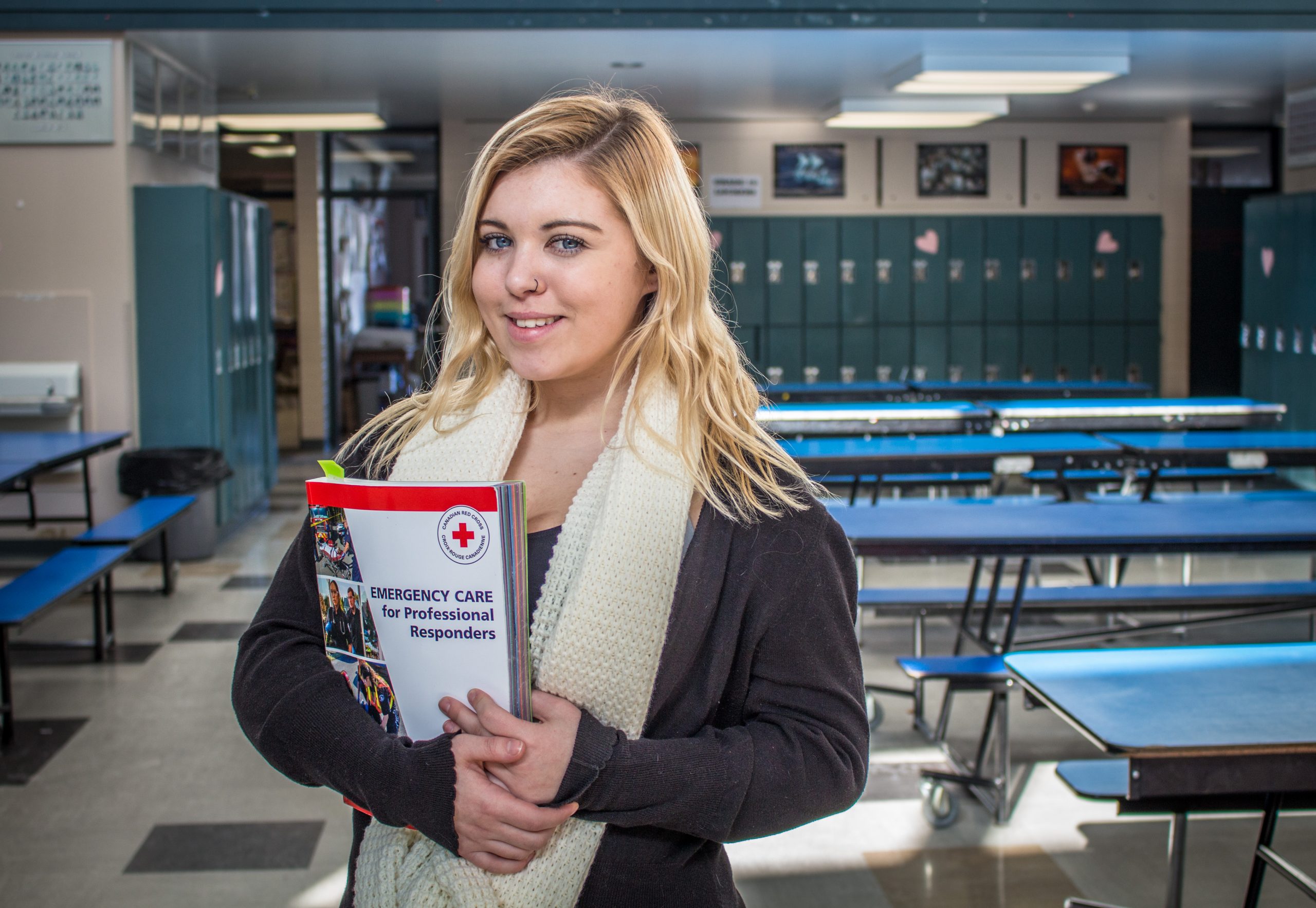
Louisa Wallner, a Grade 12 student at Osoyoos Secondary School, is the only high school student taking an Emergency Medical Responder course at the Justice Institute of British Columbia in Kelowna. She’s there as a transition program offered by the school district. (Vanessa Broadbent photo)
By Vanessa Broadbent
Osoyoos Times
While most students at Osoyoos Secondary School spend their weekends catching up on homework, Louisa Wallner does the opposite – she gets assigned even more.
The Grade 12 student is taking an Emergency Medical Responder course at the Justice Institute of British Columbia in Kelowna, for both high school and university credit simultaneously.
Along with her studies at OSS, she’s at the JIBC for eight hours every Saturday and Sunday.
“We pack everything into the weekends,” she said. “It’s a lot of working on your own as well because you have to be able to keep up for that next weekend.”
Wallner is one of nine students taking the course, but she’s the only one still in high school.
At first, being the youngest was daunting, but now that she’s among the top in her class the worry is gone.
“At the beginning I was a little nervous; it was all new people and they’re all a lot older than me,” Wallner said. “We’re all very, very different and it’s cool that we come together for this love of helping people.”
• Read more: Osoyoos grad brings in big bucks with B.C. scholarship
Wallner is there as part of a transition program where students can take post-secondary courses while still in high school, paid for by the school district.
“It’s the doorway that opens a gateway to get into that next phase,” career education counsellor Rod Kitt said.
Usually between 20 and 30 students across the district join the program. Many of them take their first level of a trades program and are ready to apprentice when they graduate.
“I get to go see them in their environments wherever they get to be and it’s really cool to see high school students working alongside 20-something, 30-something or 40-something people,e and they’re as successful, or more so,” Kitt said. “They’re complete equals.”
Wallner is planning on becoming an advanced care paramedic and the program has given her a head start.
“I’ve always had an interest in emergency response,” she said. “I’ve always had a passion for helping people and I love that aspect of it.”
Since the course started in January, Wallner has learned about narcotic overdoses, cardiac arrest, respiratory arrest, diabetic overdoses, hyper- and hypoglycemia, and fracture management.
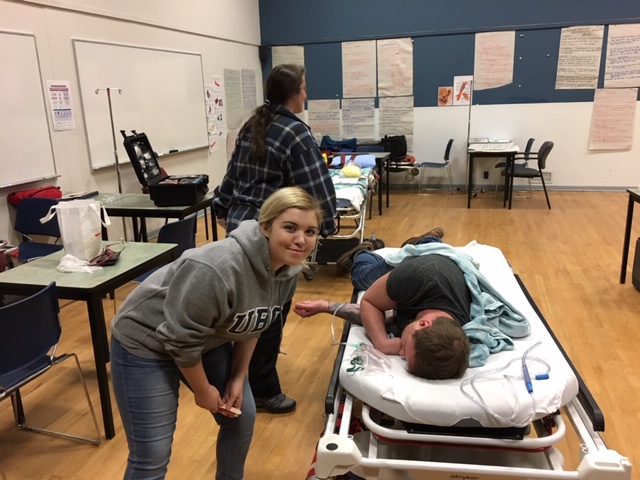
Louisa Wallner, a Grade 12 student at Osoyoos Secondary School, is taking an Emergency Medical Responder course at the Justice Institute of B.C. in Kelowna. (Contributed photo)
Each class starts with covering theory, and then splits into groups and practices different scenarios.
“There’s a lot material,” she said. “We go over all kinds of emergency response things … We practice and make sure we’re doing what we should be and we understand what’s going on.”
While the hands-on aspect has helped confirm her decision to pursue paramedicine, Wallner said she’s aware of the mental health component that comes along with being a first responder.
“There’s a lot of mental to it as well – keeping patients calm, keeping yourself calm and not bringing that trauma home with you.
“I know quite a few paramedics as well and was able to talk to them before even going into this. I was so concerned about that; what if I can’t handle it? They said as long as you are able to talk about it and make sure you get it all out, you’ll be fine.”
Up next, Wallner will need to become a primary care paramedic before becoming an advanced care paramedic.
The whole process will take about five years, she’s figured out – minus one thanks to the transition program.