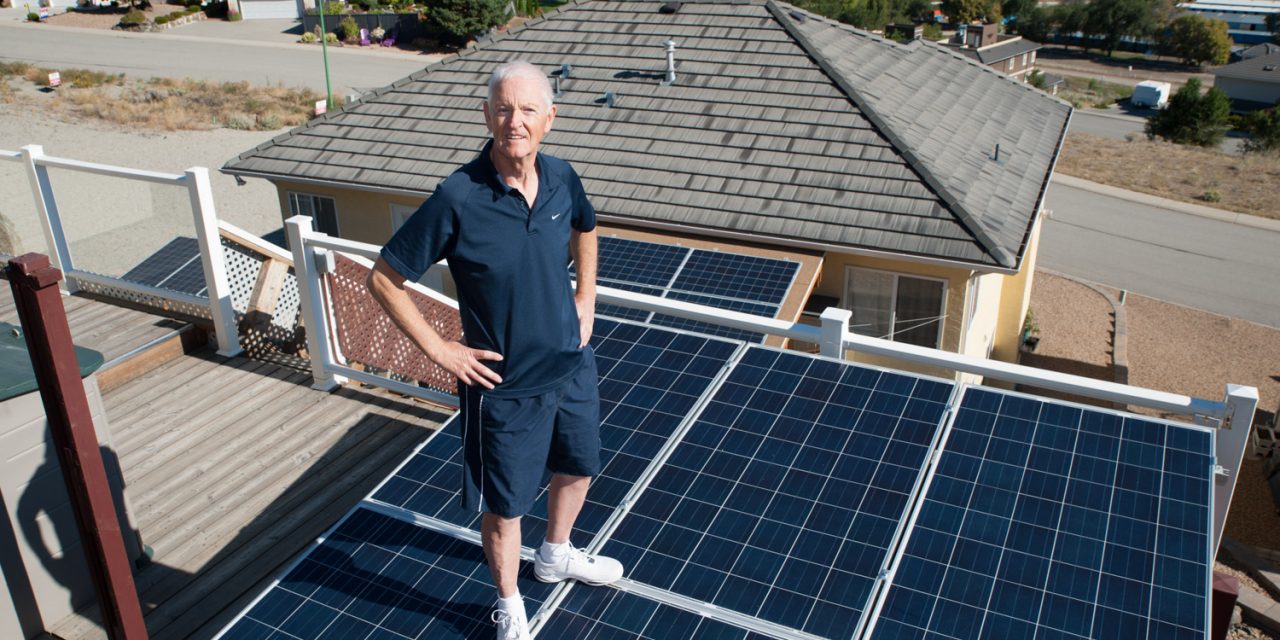
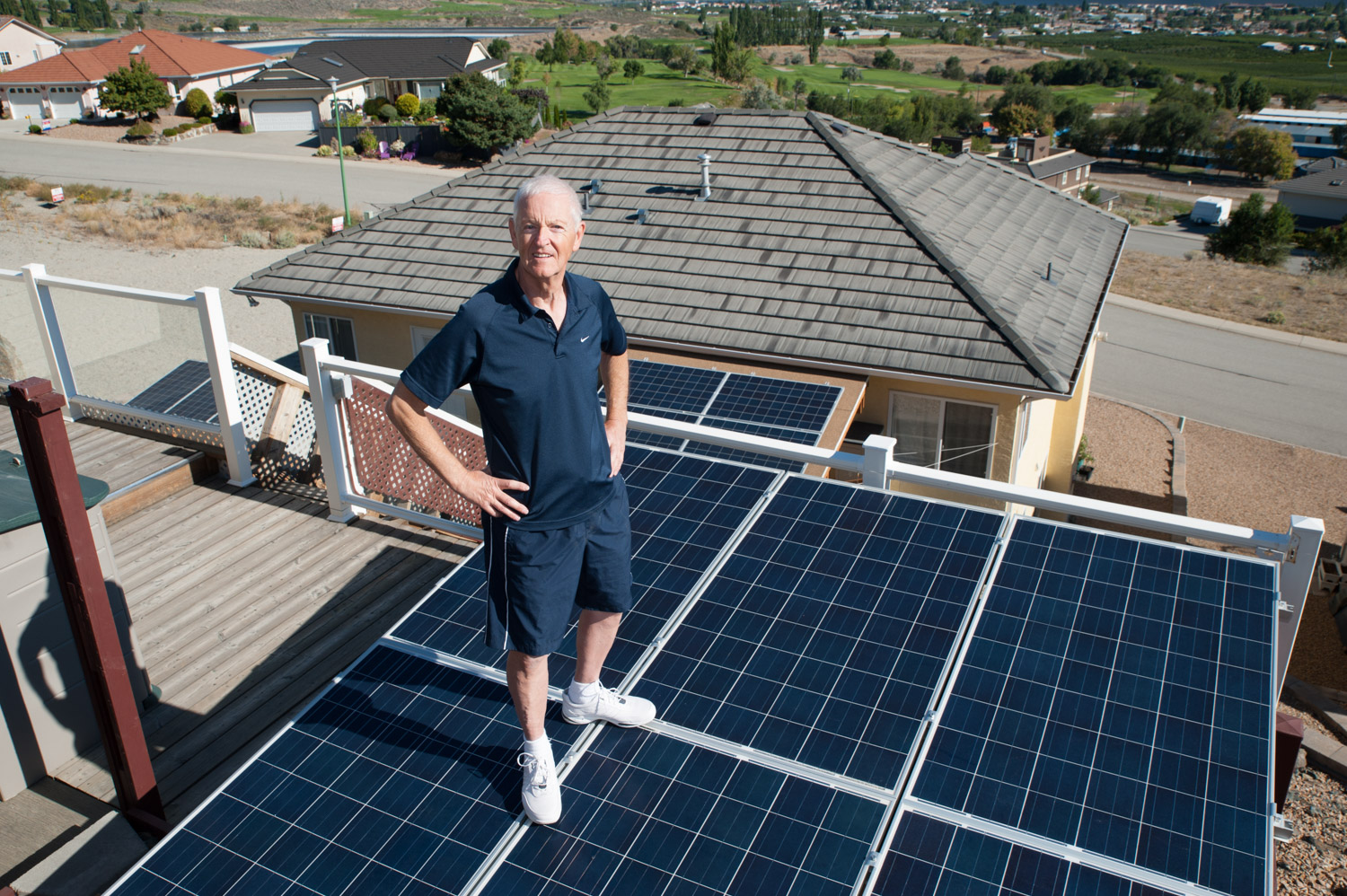
Paul McCavour shows off some of the 24 solar panels above his house that provide electricity to his home. (Richard McGuire photo)
Dear Editor:
The large-scale Site C Dam project will take 10 years to build and will be B.C.’s biggest infrastructure expenditure in its long history.
Yet, the energy picture will change drastically in those 10 years. My own home-based “solar power plant” is working every day, saving me money. Solar energy should be a big part of B.C.’s future.
Our provincial government is ignoring that – worldwide – countries are creating hundreds of thousands of jobs and generating huge amounts of energy with solar.
How can we reach our politicians, who are not held accountable for questionable decisions they make regarding our energy future?
Any project as expensive and massive as the Site C Dam should be put to a provincial referendum.
On May 1, “smart meters” will be rolled out in FortisBC’s service areas, including Osoyoos.
These meters will enable FortisBC to implement time-of-day billing, allowing them to charge more for peak demand usage, usually from 11 a.m. to 6 p.m.
I can’t say Fortis will raise the daytime rate, but Ontario just did, doubling the peak demand rates from eight cents to 16 cents/kWh.
Energy corporations have become like landlords, and we, their customers, are like renters.
But these landlords continually raise the rent and the renters have no option but to pay.
Sounds like a monopoly to me.
If your annual energy bill is $2,000 and you factor in a 40-60 per cent increase in the cost of power over 10 years, you’ll be paying close to $30,000 and have nothing to show for it.
If you invest in solar, your bills will be lower and the savings will be tax-free.
It’s an investment over time that pays you back, but you have to spend money to make money.
Natural gas, at one time, was relatively cheap; not anymore. Last year, I used $300 worth of gas, yet my bill for the year was $1,050 after add-ons, taxes, delivery charges, etc.
Have you checked your natural gas bills lately?
Pay attention to the cost of gas in relation to the total bill. Ever wonder why there are so many rebates on gas appliances, furnaces and water heaters?
Once you commit to natural gas, it’s very expensive to switch. The best way to manage your energy costs is to go solar.
When I replace my natural gas fireplaces and hot water heater, I will be powered by electricity and solar.
Sure, it’s going to cost me more money upfront, but it will save me money in the long run.
My advice to people building or buying a house is to carefully check out your energy options.
As far as I know, the sun hasn’t raised its rates in over four billion years.
Paul McCavour
Osoyoos, B.C.