By Don Urquhart, Times Chronicle
Osoyoos will be receiving $1,688,768 in provincial funding as part of an initiative to help reduce risks from future disasters related to natural hazards and climate change.
A total of $23.4 million from the Community Emergency Preparedness Fund (CEPF) will go to 49 First Nations and local governments throughout B.C. to better prepare for, mitigate and respond to climate-related emergencies, such as floods and extreme temperatures.
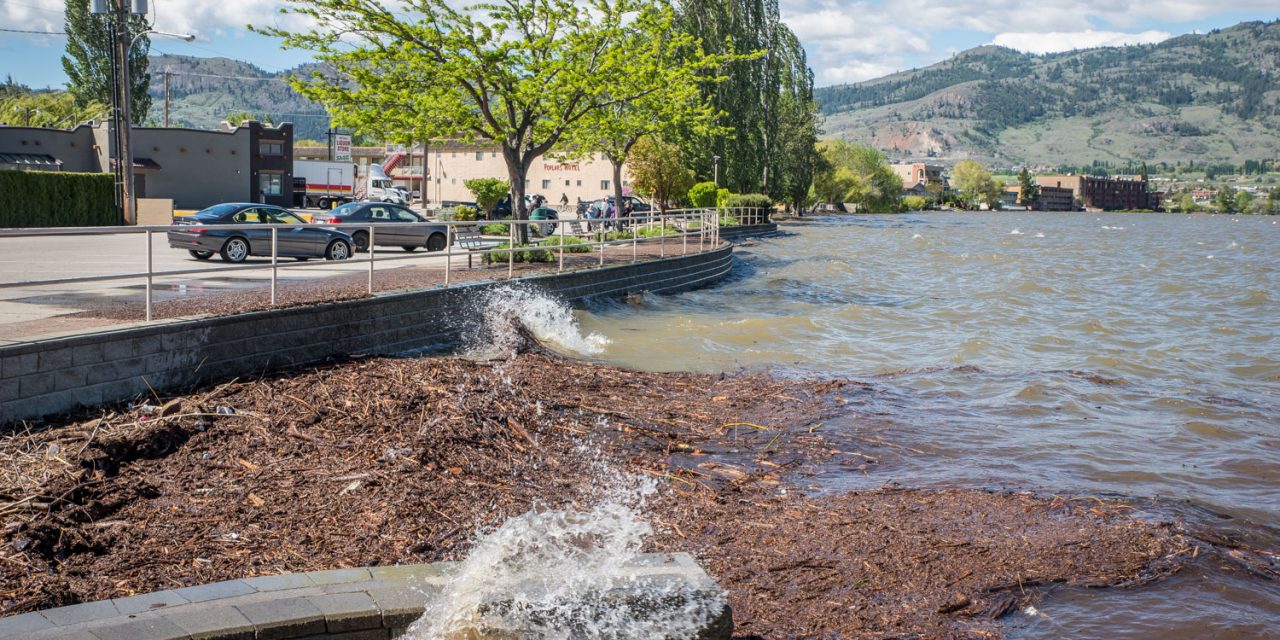
Osoyoos received the funding for High Priority Flood Mitigation Works under the C2 and C3 categories which includes: Non-structural activities (land use planning, community education, purchase of eligible equipment), and small scale structural activities.
According to the Town this funding will be used to address two wells that were previously impacted in both the 2017 and 2018 floods. Specifically, the town is aiming to flood protect the electrical systems, provide building upgrades to resist wave action, and install enhanced shoreline protection.
“Water is our most important commodity and being able to protect it provides our community with sustainability during these ever-increasing frequency in floods,” said Jared Brounstein, Director of Operational Services for the Town.
Mayor Sue McKortoff expressed her delight at the news saying: “It is not a matter of ‘if’ we are going to experience another flood, it is ‘when’. This funding will help to ensure that our wells are protected during high water events.”
“I am very grateful to our MLA Roly Russell and specifically Bowinn Ma, Minister of Emergency Management and Climate Readiness for having the foresight to invest in our community’s disaster risk reduction strategy,” McKortoff added.
Similarly, Keremeos received $198,900 in funding for Flood Mitigation Plan under the C1 (Foundational activities including risk mapping, risk assessments, planning), and the C2 Category for non-structural activities.
“The climate crisis will continue to increase the risk of natural disasters in British Columbia over the years ahead,” Ma warned.
“Local governments and First Nations are important partners in ensuring that communities are prepared for what will come and we’re taking action to support them in this critical work,” she said.
The funding may be used for:
- risk mapping, risk assessments and planning, such as the development of a hazard map;
- land-use planning, such as amendments to relevant plans, bylaws or policies; purchasing equipment, such as monitoring equipment; delivering community education; and
- small-scale structural projects.
The Disaster Risk Reduction – Climate Adaptation stream under the CEPF supports the Province’s Climate Preparedness and Adaptation Strategy. The CEPF is administered through the Union of British Columbia Municipalities (UBCM).
The next intake for the Disaster Risk Reduction – Climate Adaptation stream will close on Feb. 24, 2023.
The government made an investment of $110 million in the 2022 budget year toward CEPF, for a total of $189 million. Since 2017, First Nations and local governments have been approved for more than $100 million through CEPF for more than 1,100 projects, according to the province.