By Don Urquhart, Times Chronicle
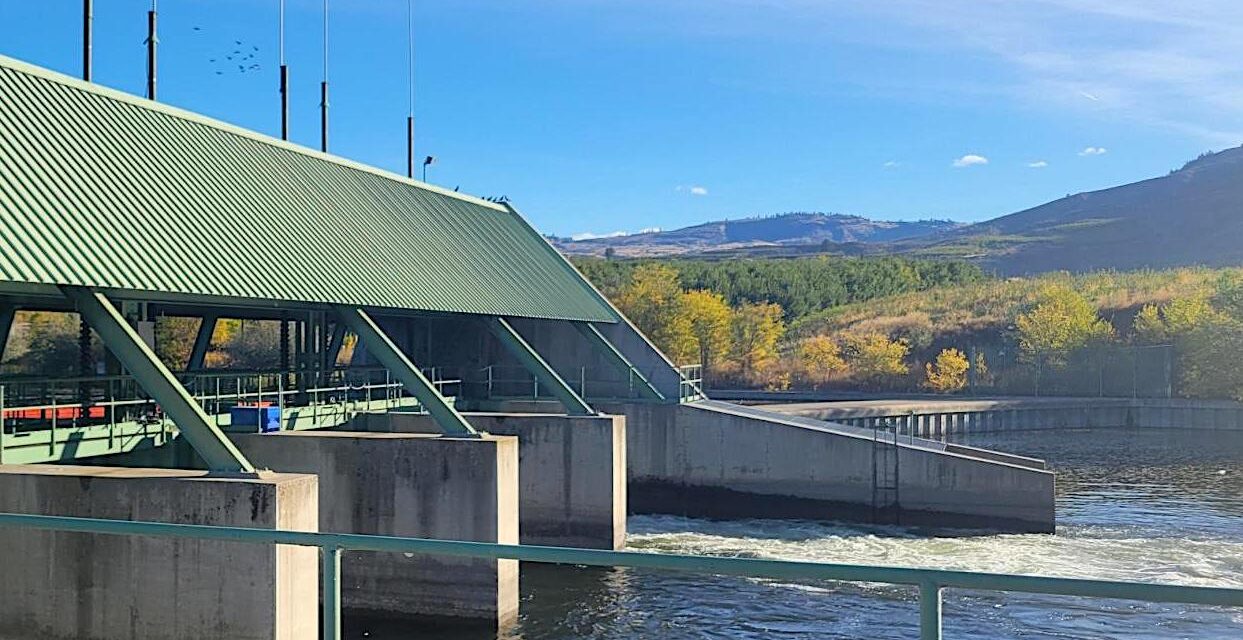
Continuing below average water levels and flows mean Osoyoos lake levels will be kept at about 277 metres (910 feet) according to the International Osoyoos Lake Board of Control which manages lake levels through the operation of Zosel Dam in Washington state.
Osoyoos Lake levels are targeted to remain at this level throughout the winter season until the commencement of the snowmelt in March 2025. Until then, the Zosel Dam will continue to balance the lake level with outflows, the board of control said.
The board of control monitors hydrologic conditions in the Okanagan/Okanogan and Similkameen basins to inform the management of Osoyoos Lake levels.
As of November 12, 2024, Osoyoos Lake elevation (USGS 12439000) is below average at 277.45 metres (910.53 feet), while the Similkameen River discharge is also below average at 17.67 cubic metres per second (624 cubic feet per second).
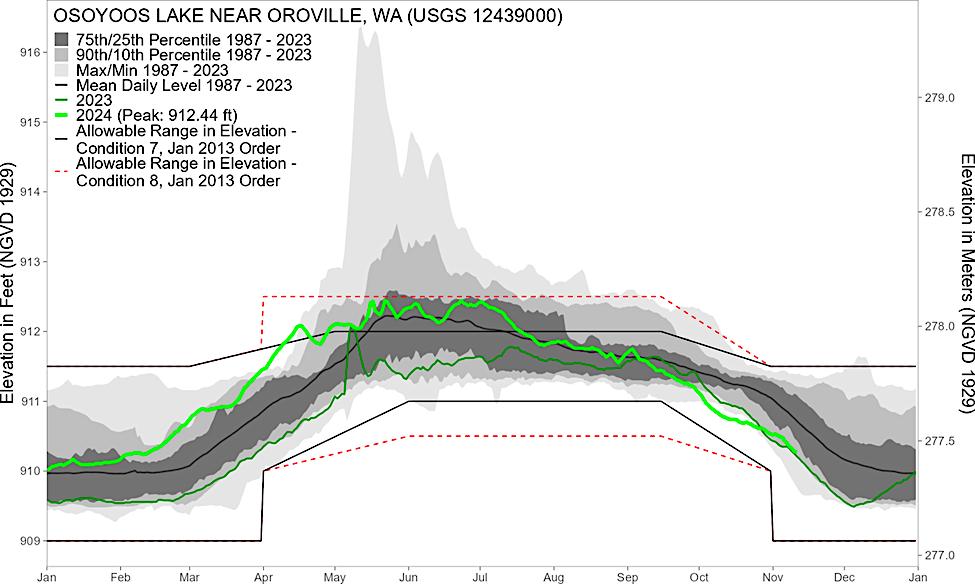
2023 (dark green) and 2024 (light green) Osoyoos Lake levels, and allowable ranges defined by the IJC Order of Approval for Osoyoos Lake (solid black and dashed red).
International Osoyoos Lake Board of Control graphic
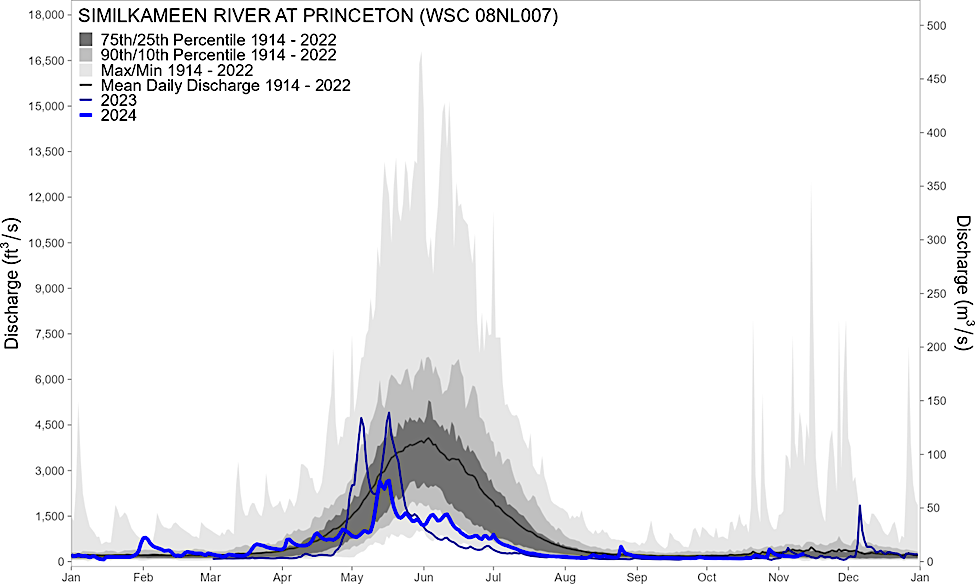
The 2023 and 2024 Similkameen River discharge is delineated by the dark blue and lighter blue curves, respectively, compared to historical discharge in gray.
International Osoyoos Lake Board of Control graphic
“Seasonal weather forecasts predict a 60 per cent chance of weak La Niña conditions developing in the coming months, which could bring cooler temperatures and more precipitation this winter in the basin,” the board said.
The Canadian Drought Monitor notes moderate drought persists in the South Okanagan saying: “Despite the recent rainfall, some drought concerns remain across the Okanagan Valley, with Abnormally Dry (D0) and Moderate Drought (D1) persisting in this area.”
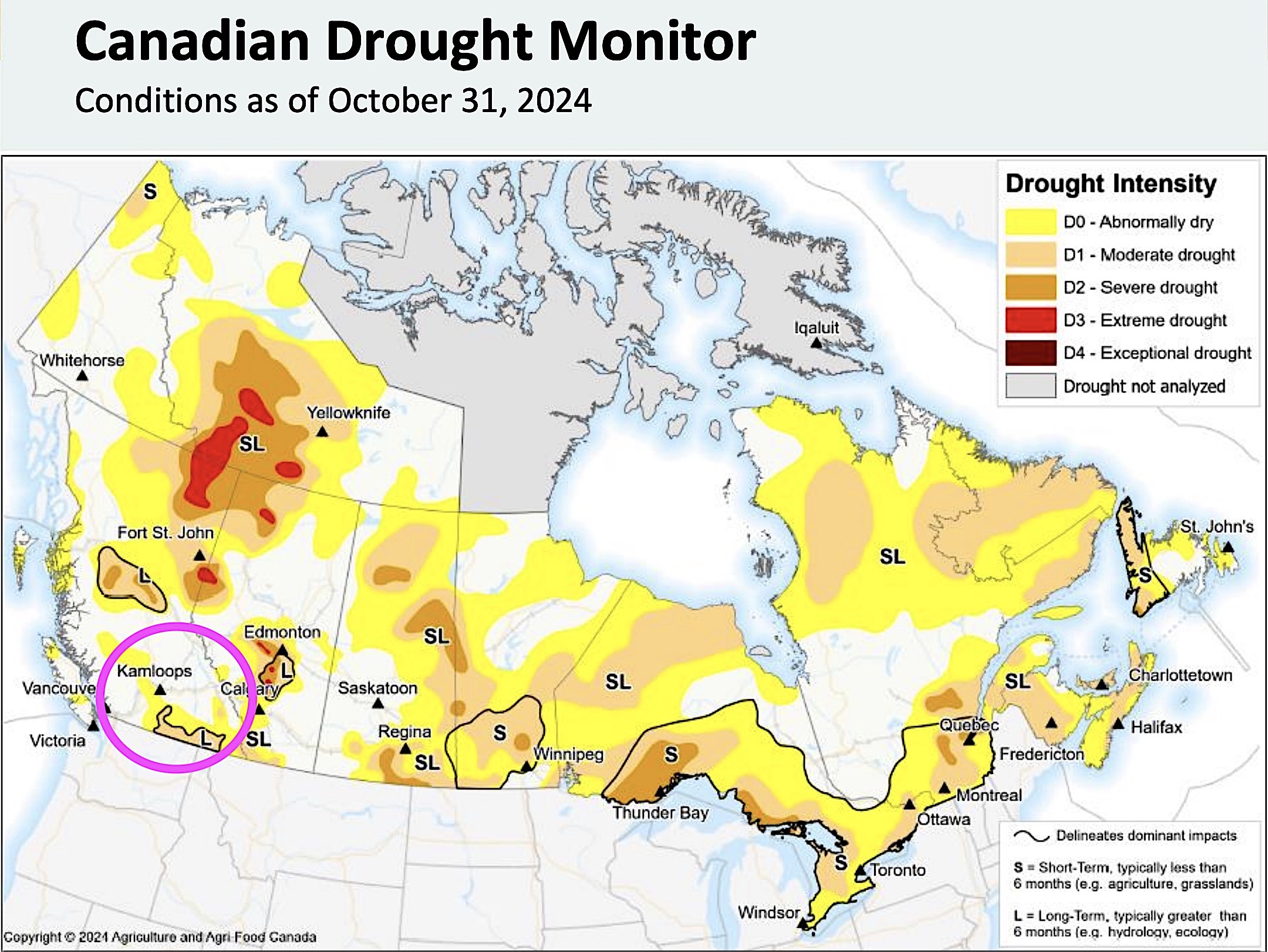
Areas of drought persist in the Okanagan Valley according to an Oct. 31 update to the Canadian Drought Monitor.
Agriculture Canada graphic
In dry years, the International Joint Commission (IJC) allows a wider band of allowable Osoyoos lake levels under the 2013 Supplementary Order of Approval. Conditions remained dry to very dry in southern British Columbia and northern Washington state throughout the summer of 2024, as reported by the B.C. Drought Information Portal and U.S. Drought Monitor.
The wider band of allowable lake levels affords greater flexibility in lake level management to better meet the demands of ecological stream needs, irrigation and recreational users, the board of control said. The higher levels were one of the factors contributing to the record salmon spawning run this year.
In 2024, the Zosel Dam was operated under “drought conditions” as it met two out of the three conditions necessary to declare such a situation.
For Osoyoos Lake, drought conditions are determined by the volume of the flow in the Similkameen River from April 1 to July 31 (condition 8a), the net inflow into Okanagan Lake over the same period (condition 8bi), and the peak Okanagan Lake level in June or July (condition 8bii).
In 2024, drought condition 8a (Similkameen River flow) was met and 8bi (Okanagan Lake inflow) was effectively met, while condition 8bii (Okanagan Lake peak level) was not met.
As such, Osoyoos Lake levels were operated within the wider band. The Zosel Dam operator remained in compliance with International Joint Commission (the international agreement which guides the board of control) Orders during the period of declared drought.
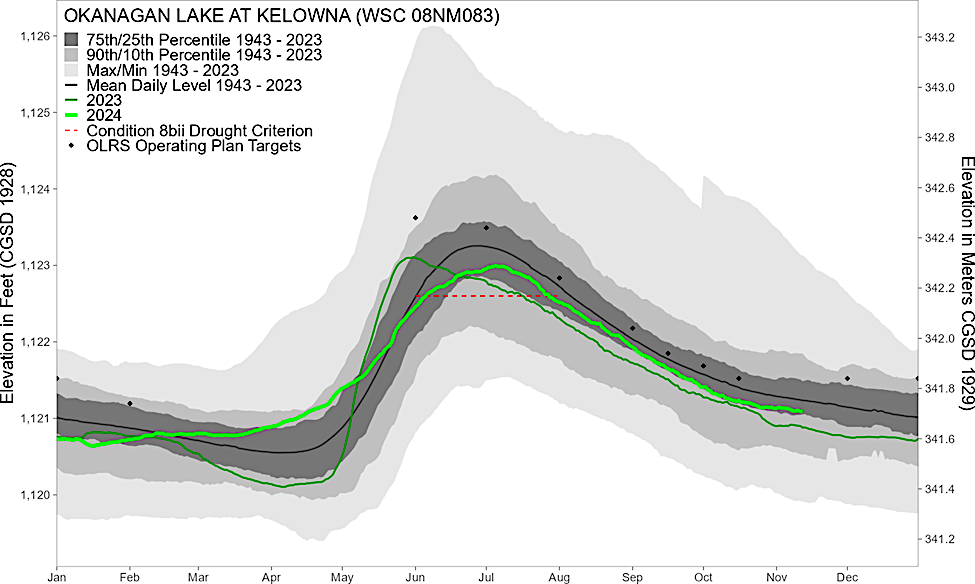
2023 (dark green) and 2024 (light green) Okanagan Lake levels, and the International Joint Commission Order of Approval drought threshold (dashed red) for June and July.
International Osoyoos Lake Board of Control graphic
This led to the Osoyoos Lake levels being maintained at around maximum level which reached a peak elevation of 278.1 metres (912.44 feet) on June 23, 2024.
Okanagan Lake levels were kept high through the spring of 2024 in response to predicted drought conditions in the summer. Peak lake level of Okanagan Lake at Kelowna (WSC 08NM083) occurred on July 5, 2024, at 342.28 metres (1,122.96 feet).
The Okanagan Lake levels also played a key role in the salmon spawning as water was strategically discharged during the start of spawning raising water levels in the Okanagan River and crucially providing cooler water temperatures in the river.
Visit the Osoyoos Lake Board of Control website for further hydrologic conditions updates as the winter progresses and real-time Osoyoos Lake levels, Okanogan River heights at Oroville, WA and Similkameen River heights near Nighthawk are provided by the US Geological Survey.
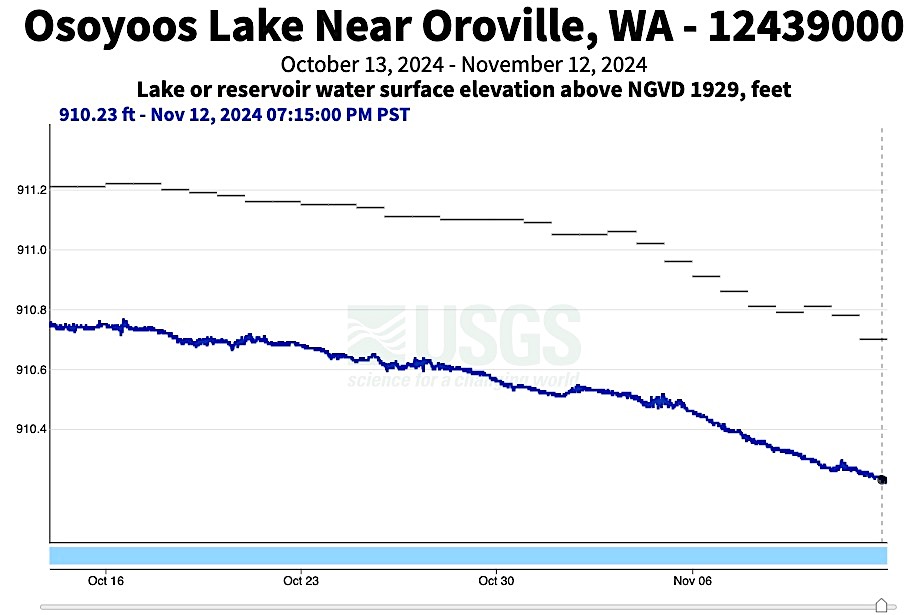
Osoyoos Lake level as at Nov. 12, 2024 near Oroville, Washington.
USGS image