By Don Urquhart, Times Chronicle
The Town of Osoyoos has responded to Kevin Primeau’s Notice of Claim in the Provincial Court of British Columbia (Small Claims Court) denying “each and every allegation” essentially arguing that completion dates for the sale were clear and notice was given that any personal items not removed prior to hand over would be considered “abandoned”.
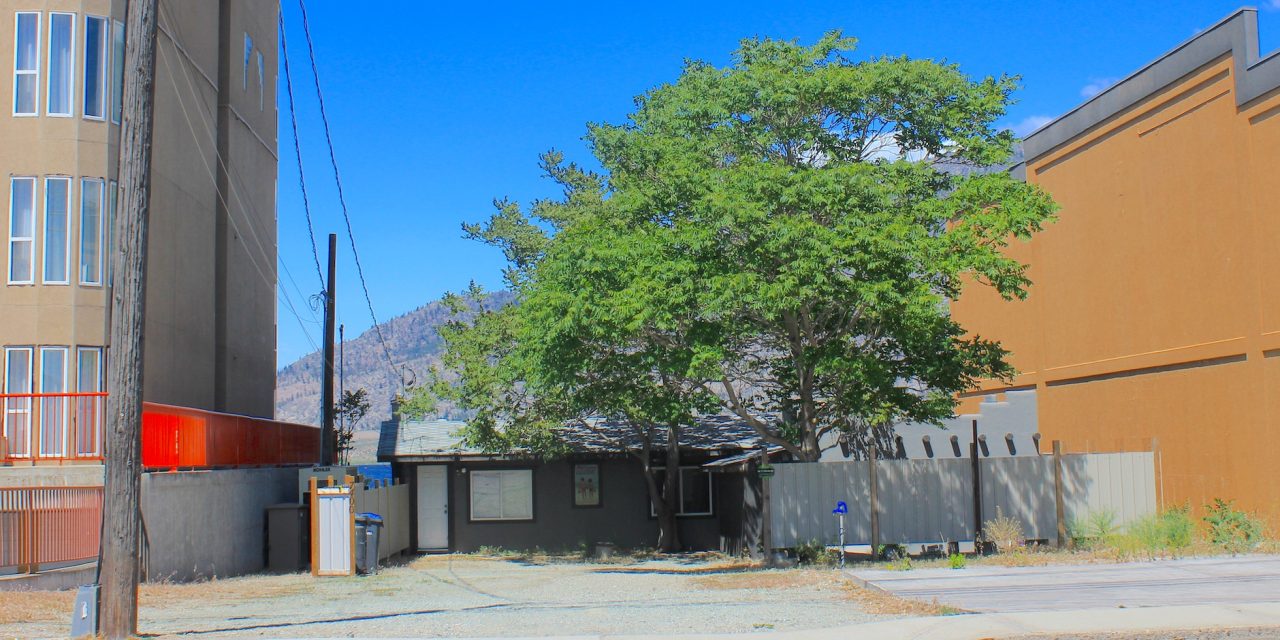
The reply revolves around Osoyoos’ purchase of a property at 7710 Main Street that landed in small claims court after the seller, Kevin Primeau, filed a Notice of Claim with the Provincial Court in Penticton seeking $28,025 in damages for what he says is “retained property”.
Noting a lack of clarity in the legal basis of Primeau’s claim, the Town’s reply says that it appears he is alleging that the Town has committed the torts of conversion (interference with another person’s personal property and selling or disposing of it making it impossible to return) and detinue (wrongful retention of someone else’s property, but still returnable).
In setting out the background the Town noted the completion date was Jan 17, 2025 with a possession date on Jan. 18 at 10 a.m.
According to the sale contract the purchase price includes, “any buildings, improvements, fixtures, appurtenances and attachments thereto, and all blinds, awnings, screen doors and windows, curtain rods, tracks and valances, fixed mirrors, fixed carpeting, electric, plumbing, heating and air conditioning fixtures and all appurtenances and attachments thereto as viewed by the Buyer at the date of inspection.”
The Town’s response, through its lawyer Cary Schneiderat who made the original purchase on behalf of the town, also highlighted that the section of the contract by which the parties to the sale could exclude items, was left blank.
On Jan. 16 Schneiderat provided notice to Primeau that the Town required him to remove his personal belongings from the property by the possession date and time. This notice was given following entreaties by Primeau on Jan. 14-16 that he leave “all furnishings and appliances” which he valued at $26,025, in exchange for allowing the tenant to remain and time to remove the trailer and seacan.
Any remaining personal belongings of Primeau’s would be considered abandoned if he failed to remove them. A number of items were subsequently left on the property.
“The Claimant abandoned the Disputed Items. The Claimant voluntarily relinquished those items with the intention of terminating ownership, possession and control when he decided not to remove them from the Property by the Possession Time despite having received the Notice of Abandonment.”
The Town’s reply also notes that some of the disputed items were not the property of Primeau, but rather include “fixtures”, the ownership of which, passes to the town upon completion of sale.
“The Town has a lawful reason to detain the Disputed Items because all of them were abandoned as of the Possession Date and certain Disputed Items are fixtures whose title transferred along with the Property to the Town on the Completion Date,” the reply continues.
It adds that if these disputed items don’t belong to the town and were not abandoned by Primeau, “he failed to make a proper demand for their return.”
As such the Town argues “he has not suffered loss or damage, as alleged or at all.”
As for the items inside the so-called “business rental hut” located on the foreshore – and hence technically the property of the Crown – the Town says it did not have possession over them. It goes on to note that even if it had “temporary possession” of the beach hut items, Primeau sold them to a third party for value. “There is no legal basis to award compensation when the Claimant has suffered no loss,” it concludes.
The Town had the option to file a counterclaim, but did not pursue that avenue.
The parties will now proceed with further court procedures such as a hearing or alternatively they could settle out of court.