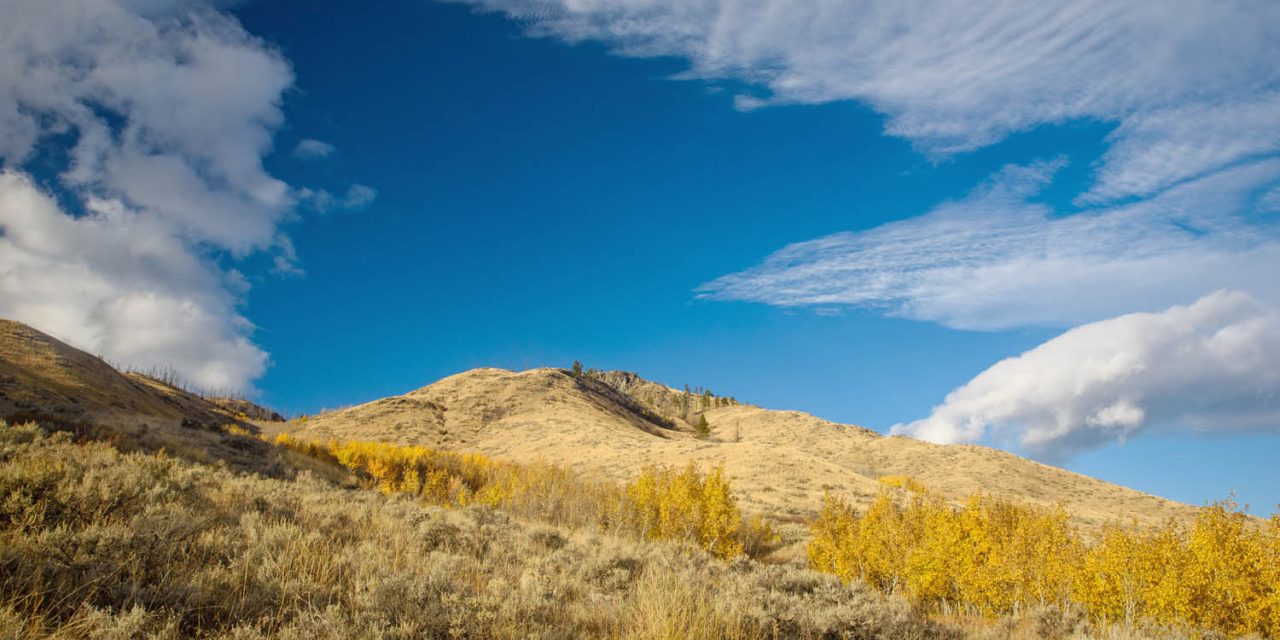
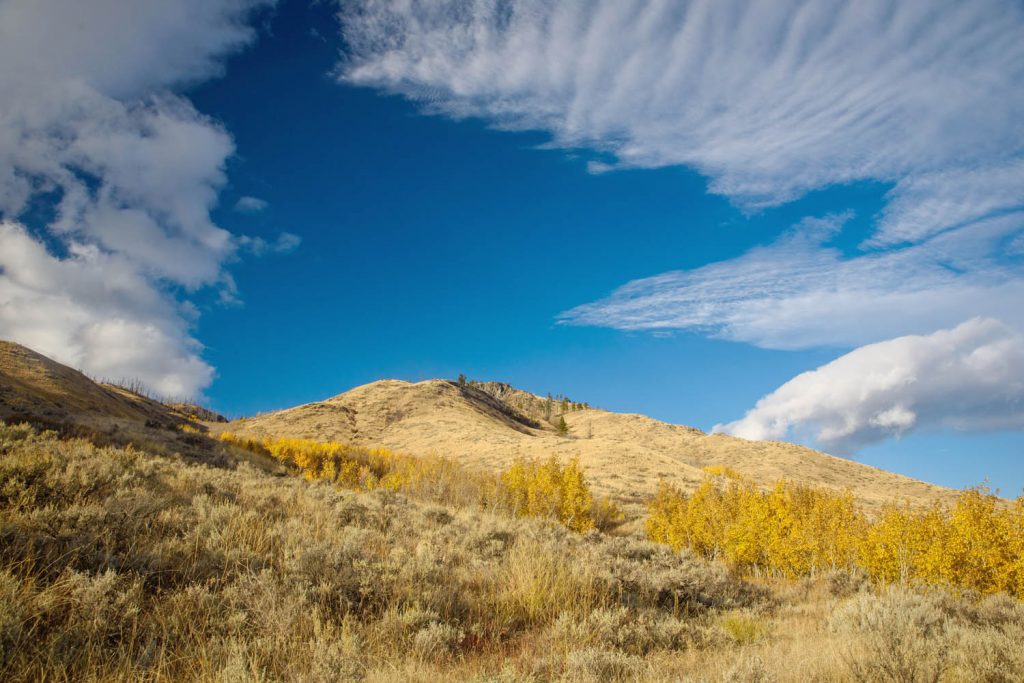
Grasslands, such as those found around Osoyoos, are the world’s most endangered ecosystem – even more so than rainforests and coral reefs, says Dan Kraus, a conservation scientist with the Nature Conservancy of Canada NCC. The NCC has protected some grassland areas such as the Sage and Sparrow Conservation Area to the west of Osoyoos. (© Richard McGuire photo)
Ask any Canadian kid to name the world’s most endangered ecosystem, and chances are you’ll hear one of the following answers: 1) rainforests; 2) coral reefs; 3) leave me alone.
Ignoring the last answer, there’s a good reason why kids, and most other people, think that rainforests and coral reefs are the most endangered ecosystems, the planet’s most critical and urgent habitats in need of conservation.
We are continuing to lose tropical rainforests, and coral reefs are at increasing risk from pollution, rising water temperatures and ocean acidification (the latter two a consequence of climate change). However, you may be surprised to learn the world’s most endangered ecosystem is here at home.
Endangerment comes down to risk — the risk of losing a species, habitat or ecosystem for future generations. When we look at the risk factors for endangerment — past loss, current amount of conservation, potential for future loss – we are concerned about Canada’s temperate grasslands that stretch across southern Manitoba, Saskatchewan and Alberta, and the grasslands of B.C.’s interior.
Globally, temperate grasslands cover about eight percent of the Earth’s land surface and exist in the interior of continents, where there is not enough rain and snowfall to support forests.
There are many reasons why temperate grasslands are endangered. Over 50 per cent have been converted to crops and other land uses. Much of the remaining are intensively grazed.
They face continuing habitat loss, fragmentation and desertification, impacting both biodiversity and local people that rely on healthy grasslands for their livelihood.
More than 70 per cent of Canada’s prairie grasslands has been converted. A 2010 report on the status and trends of Canada’s major habitat types found that our grasslands are the only major ecosystem type in our country that is impaired, and continuing to decline.
The endangerment of grassland habitat in Canada has cascaded into the endangerment of many grassland species. More than 60 Canadian species at risk depend on this habitat, including plains bison, swift fox and greater sage grouse. Just this year, a report on the State of North America’s Birds concluded that many grassland birds are rapidly declining, and some species have lost over 70 per cent of their population in the last 40 years. The songs of birds such as Baird’s sparrow, Sprague’s pipit and chestnut-collared longspur are slowly dimming.
In addition to wide-open prairies, our grasslands also contain wetlands, lakes, rivers and valleys. Canada’s grasslands support fishes, waterfowl and millions of birds that stop to rest and feed during their migration to the boreal and Arctic.
Grasslands can also showcase how people and nature can coexist. Many of Canada’s grasslands have a long history of sustainable cattle grazing supporting generations of prairie ranchers while help maintaining grassland health. This benefits many wildlife.
The loss of Canada’s prairies is also a loss for the world. Among the last places on Earth to shelter grasslands at a meaningful scale are the grasslands of North America’s Great Plains, and despite a loss of 70 per cent, Canada has some of the largest and best sites remaining. A global assessment of critical places to conserve temperate grasslands identifies Canada’s prairies as a priority.
From early efforts to protect the last wild plains bison, to the establishment of “regeneration” national parks, to protect dwindling populations of pronghorn antelope, to the return of swift fox to its native habitat in 1983, Canadians have shown a passion and ability to conserve and restore our grassland heritage.
The Nature Conservancy of Canada has protected more than 197,684 acres (80,000 hectares) of grasslands. There is also an immediate, opportunity to conserve large areas of prairie and maintain local ranching economies by protecting community pastures in Alberta, Saskatchewan and Manitoba that are managed to protect both biodiversity and sustainable grazing in local communities.
Here in Canada, we have opportunities to protect and restore habitats, including grasslands, that are important for Canadians, and important for the world.
DAN KRAUS
Special to the Times
Dan Kraus is a Conservation Scientist with the Nature Conservancy of Canada