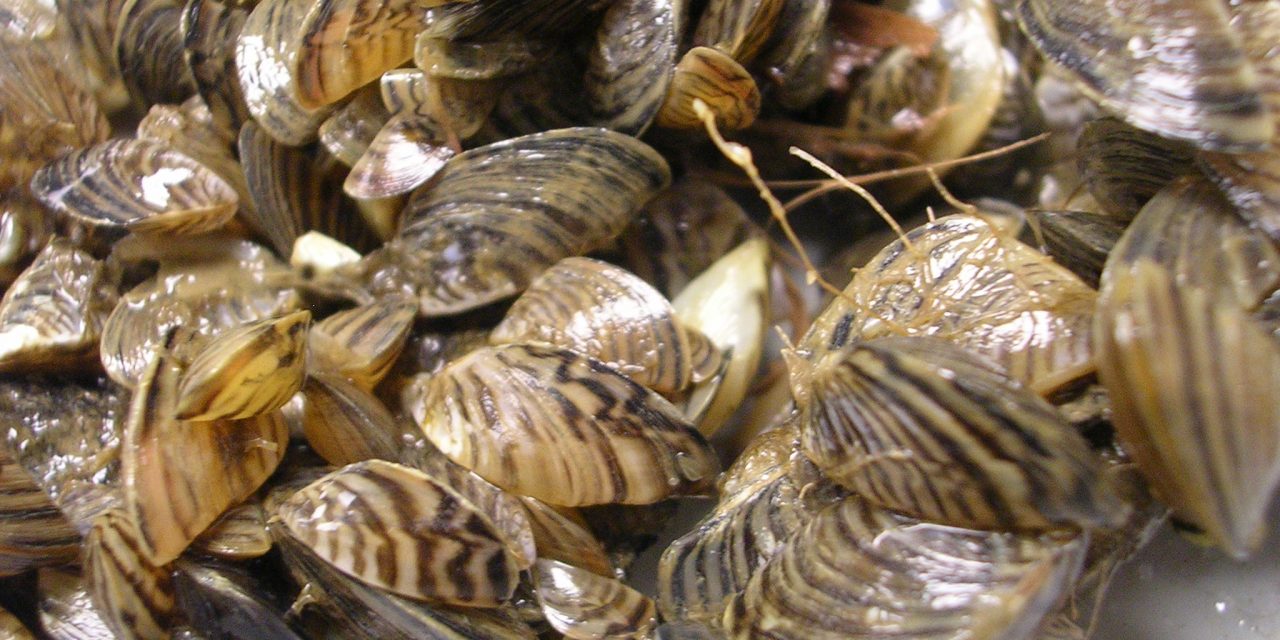
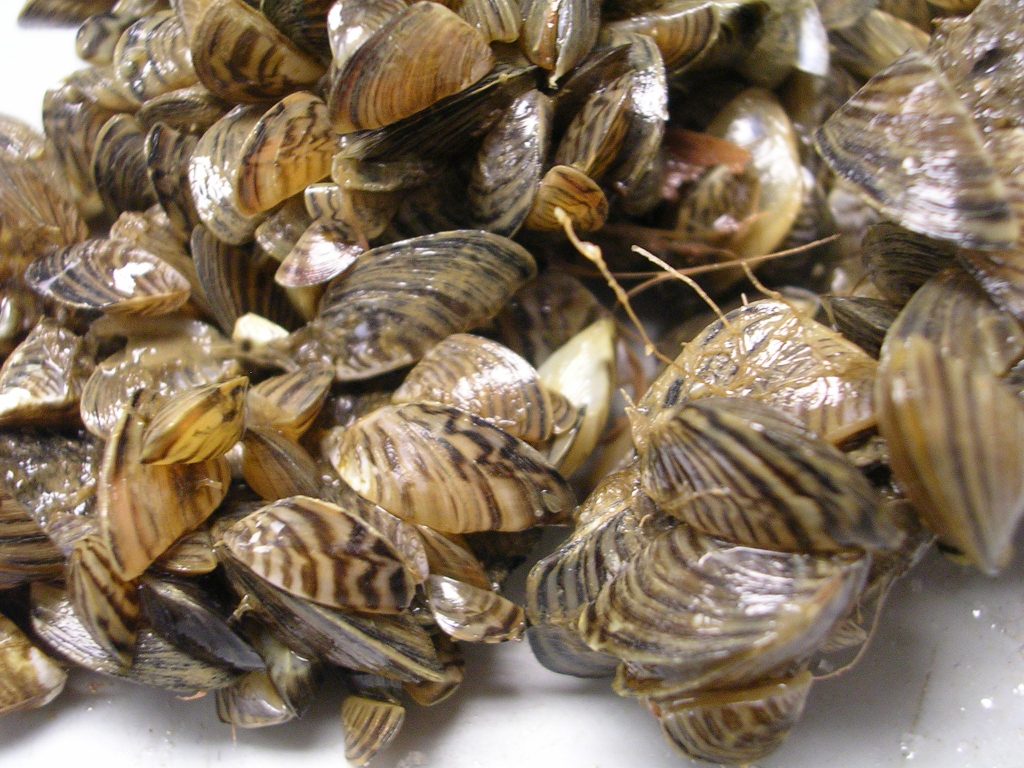
Invasive zebra mussels, like those pictured here, are being spread on boats that have not been properly cleaned, drained and dried after use in infested waterways. (U.S. Fish & Wildlife Service)
The B.C. Ministry of Environment has provided new details about boats intercepted carrying invasive mussels, including that four found with adult mussels were intercepted at Osoyoos.
The ministry also said that nearly one in five drivers with boats is failing to stop at mandatory inspection stations at highways entering B.C.
Of the 15 watercraft confirmed to be carrying adult mussels that were intercepted between April and the end of July, six were inspected in the Lower Mainland, four at the Osoyoos station, two at Golden and one each at Dawson Creek, Mt. Robson and Nelson.
“It is important to note that we did receive advanced notification on 13 of the 15 mussel-fouled boats,” said Ministry of Environment spokesperson David Karn.
Notification came either from another jurisdiction (e.g. Alberta, Montana or Idaho) or from the Canada Border Services Agency (CBSA), he said.
“For two of the boats, the owners actually contacted the program in advance to arrange for inspection when they arrived in B.C.,” said Karn in an email. “This is an excellent example of how the perimeter defence approach is working across the B.C. inspection stations, notifications from CBSA and inspection stations in other jurisdictions.”
Recently the ministry provided details on interceptions of invasive zebra and quagga mussels entering B.C., as well as on numbers of boats quarantined and coming from high-risk areas.
Earlier in August, the ministry said it identified 1,100 watercraft as high risk, 166 decontamination orders were issued and 117 watercraft were issued quarantine periods required to meet the drying time of 30 days to ensure any mussels are dead.
Inspectors reported that nearly one in five drivers with watercraft are failing to stop at inspection stations, even though this is mandatory.
“The inspectors are recording the number of boats that fail to stop at the inspection station for each shift and to date this year, the average compliance rate across all the inspection stations is around 81 per cent of boats are stopping,” said Karn, adding that this is the same as last year’s compliance rate.
“We don’t have statistics regarding the numbers of boats that failed to stop and have been intercepted by police or the Conservation Officer Service,” he said.
RICHARD McGUIRE
Osoyoos Times