By Sebastian Kanally, Times Chronicle
The fire alarm shouldn’t be pulled yet as a new report cools some concerns over Oliver’s current and future housing needs.
Oliver was given a positive assessment around how it is addressing its housing needs in all instances except rental housing, the newly completed housing needs report shows.
Housing needs are increasing; Oliver will need to build 302 additional housing units over the next five years and an estimated 1,107 housing units over the next 20 years to keep up with demand.
This averages out to building 55 to 60 housing units annually, which Lorraine Copas, executive director of the Social Planning Research Council of British Columbia (SPARC BC) noted the town is on target to hit those numbers.
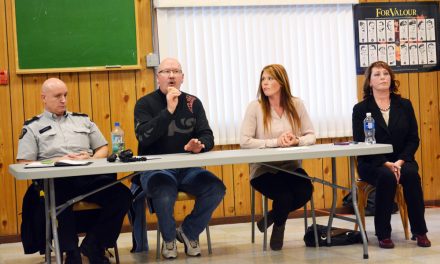
This was one of the positive notes that came out of Copas presentation of Oliver’s 2024 Housing Needs Report to town council on December 9, 2024.
Under the Local Government Act, all local governments in the province are required to complete a housing needs report and certain changes were made to how they must be prepared in June of this year.
In her presentation, Copas noted that when it comes to areas such as Oliver’s housing profile, whether the town is building the right type of housing, and whether there is a diversity of housing stock, “all of these measures Oliver did extremely well, except the rental.”
“Your rental has been relatively flat, and a lot of your rental is in that secondary rental market, which as ownership opportunities emerge, you are displacing those renters and without that inventory of social housing, or purpose-built rental housing, this can be very difficult for the community to keep up with rental demand.”
For example, Copas noted Oliver only has 29 units of non-market family housing, pointing to the fact that there is a higher need for rental in the community.
This demand for rental housing was identified as an important area of focus for Oliver, along with “planning for the needs of an aging population as well as seeking to understand the needs of those who are precariously housed or living with a high level of housing insecurity,” the report explains.
Mayor Martin Johansen commented that this report will help the town “when we decide what type of housing to support here in Oliver, it’s going to give us some direction.”
Johansen continued to explain that multi-family housing and rental housing are what the town needs the most and they have tried to support that, “but it is not an easy thing to get off the ground with development costs and stuff like that.”
Councillor Petra Veintimilla also commented on the report, saying “It is always reassuring to hear that we are on track to meet the projected targets in every instance except rentals, that helps us in making decisions about projects in which we may want to be a little more flexible, maybe make a few more allowances, those sorts of things, to be able to target the energies towards the specific housing which we are deficient in.”
Copas did explain that even though the report says that they are on target for building the needed number of houses for future needs, it doesn’t prescribe whether it is ownership or rental housing.
“The idea is that you have the infrastructure in place, that you are using your regulatory and zoning approvals in ways that can incentivize denser forms of housing still suitable to the community, and that you are looking at ways to encourage partnerships that can help meet the needs of the lower end of the housing and income continuum.”
The diagnosis that the town is on track to reach those projected numbers is based on the number of building permits issued, development approvals, and zoned capacity within the town.
When it comes to the underlying numbers about how much housing Oliver actually has and how affordable it really is, the numbers are as follows.
As a community, as of 2021, there were 5,094 people living in Oliver in 2,312 households. Of this population 1,905 residents were aged 65 and older, 800 were under 20 years old, and 350 people moved to Oliver in 2020.
Who can afford to live in Oliver?
- The average household income in Oliver was $83,400. For renter households, it was $57,600.
- The median household income was $71,000, with renter households being lower at $46,400.
- The average monthly housing cost for owners was $1,100, which is compared to $904 in 2016.
- The average monthly cost for renters was $1,028, which is compared to $877 in 2016.
- The affordability threshold for average rent in 2021 was $41,120.
There are people who are in core housing need, and extreme housing need in Oliver. This means that they are paying more for housing than what is considered “affordable”. Affordability is defined nationally as spending no more than 30 per cent of your income on housing.
There are 440 households spending 30 per cent or more of their income on housing. That is 19 per cent of all households in Oliver.
The affordability numbers are much worse for renters in Oliver.
While 130 households are in core housing need, 5.6 per cent of all households, 80 of these are renters. That means 61.5 per cent of all households in core housing need are renters.
There are 65 households in extreme core housing need. Extreme core housing need means that you are spending more than 50 per cent of your income on housing and are likely at risk of losing it.
The last housing needs report was completed in Oliver in 2020. Veintimilla noted this in the discussion, explaining that she hopes this report will be more relevant for longer. She explained it seemed like the 2020 housing report was irrelevant within six months because of the COVID-19 pandemic.