By Sebastian Kanally, Times Chronicle
Oliver has approved overarching plans to reduce the town’s energy and emissions, and will now create a work plan to be more green.
Two separate plans were presented to council on April 2: the Corporate Energy and Emissions Plan and the Community Energy and Emissions Plan.
The Town began developing these plans in 2022 with the help of the Community Energy Association (CEA). The plans provide background information to develop strategic priorities for the next five years when it comes to carving a path toward a low carbon future.
The Corporate Energy and Emissions Plan is focused on the internal actions of the town. This includes things such as the town’s buildings and the town’s fleet of vehicles.
The Community Energy and Emissions Plan is focused on working with the community on specific actions to help reduce emissions and become more energy efficient. This includes working with organizations, businesses, residents and visitors to achieve these goals.
Peter Robinson, director of planning and research for the CEA, presented an overview of both plans to council.
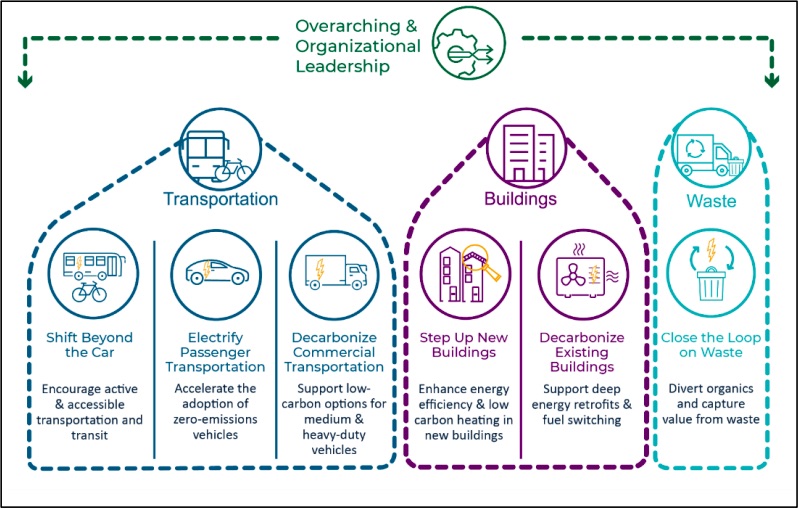
For the community plan, seven “big moves” have been identified for the town to support energy emissions in Oliver.
These big moves include an overarching and organizational leadership role that the town must play. The report notes that this is crucial because it “ensures that climate action becomes part of regular decision-making and operational process within Oliver”.
Under this umbrella move, the focus is broken down into transportation, buildings, and waste.
When it comes to transportation, the plan includes shifting beyond the car by encouraging active and accessible transportation and transit.
It also includes electrifying passenger transportation by accelerating the adoption of zero-emission vehicles. And lastly, decarbonizing commercial transportation by supporting low-carbon options for medium and heavy duty vehicles.
When it comes to buildings, the plan includes stepping up new buildings by enhancing energy efficiency and low carbon heating in new buildings. This focus on buildings also includes decarbonizing existing buildings by supporting deep energy retrofits and fuel switching.
The last area is closing the loop on waste by diverting organics and capturing value from waste.
When it comes to the corporate plan, the five areas identified are new buildings and infrastructure, existing buildings and infrastructure, renewable energy, transportation, and enabling actions and corporate leadership.
The primary concern for council after the presentation was “where is the money going to come from and how much will the town save?”
Councillor David Mattes asked about a cost benefit analysis, which Robinson responded has only been conducted based on some projections and no actual costs.
These projections estimate that the town could save nearly $150,000 by 2030 implementing the planned actions in the corporate plan.
The top three actions identified that will result in a reduction in GreenHouse Gas (GHG) emissions are investing in Electric Vehicle (EV)’s and EV charging stations for the town’s fleet of vehicles, implementing building energy retrofits, and low carbon heating retrofits for buildings.
Mayor Martin Johansen explained that there is some good work in the plan particularly in identifying strategies going forward, but noted Oliver is a “small community we don’t have tons of money to throw at corporate energy emissions, but there are definitely opportunities that come up that we can make some good decisions about moving forward.”
The town adopted the plan, which means the next stages will include constructing a project work plan to begin identifying the opportunities for implementing some recommended actions.
Since these plans are an overview to provide background information to develop strategic priorities, adopting the plan does not commit any money to projects now.
This work of developing a project work plan will be entirely grant funded using the climate action fund, which comes in at around $78,000 annually from the province for the Town of Oliver.
John Kurvink, chief financial officer for the town, explained that the money is going towards looking at solar panels for the public works building in 2024. But the province provided the town a lump sum for the next three years.
The town’s plan is to begin implementation of the plan by fall of 2024.