By Lyonel Doherty, Times Chronicle
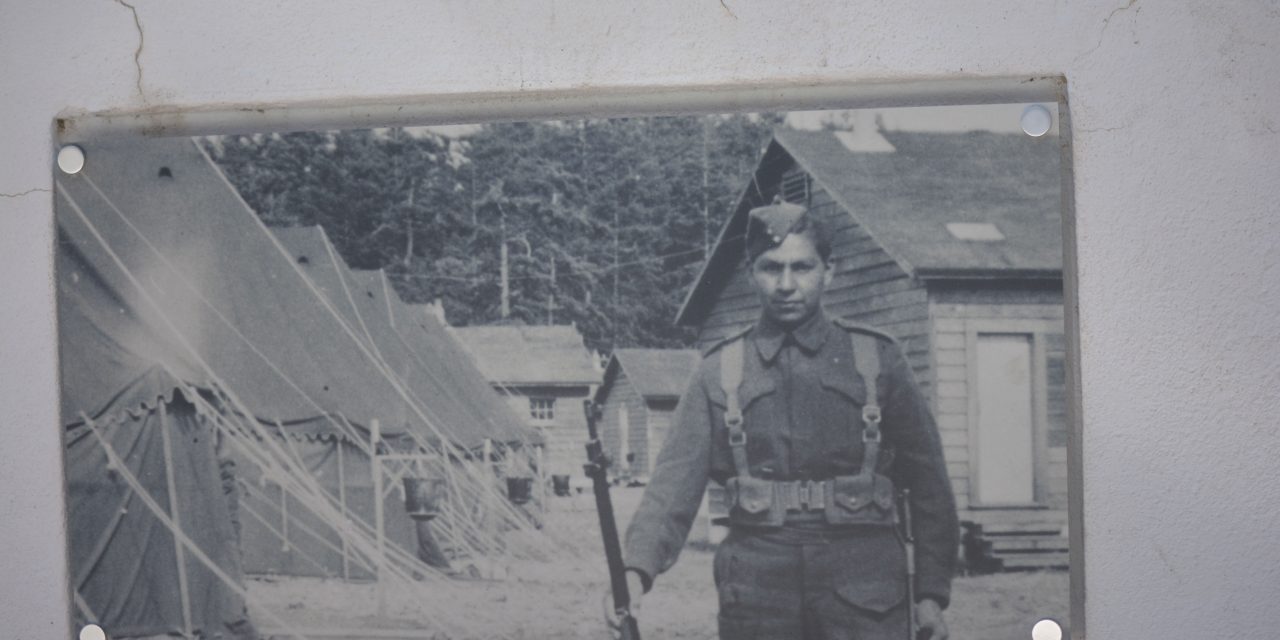
Corporal Ernie Baptiste George is a name long remembered and honoured by the Osoyoos Indian Band (OIB).
George fought and died in the Second World War so that everyone back home could have their freedom. He was 26 when he died in Italy on Dec. 13, 1944.
Five months ago the OIB rededicated a war memorial for George on June 21. His cenotaph was previously located on the St. Gregory’s church property on Nk’Mip Road where it burned to the ground last year. The memorial was moved to the site of the OIB offices on McKinney Road, where many people gathered to pay tribute during a special ceremony.
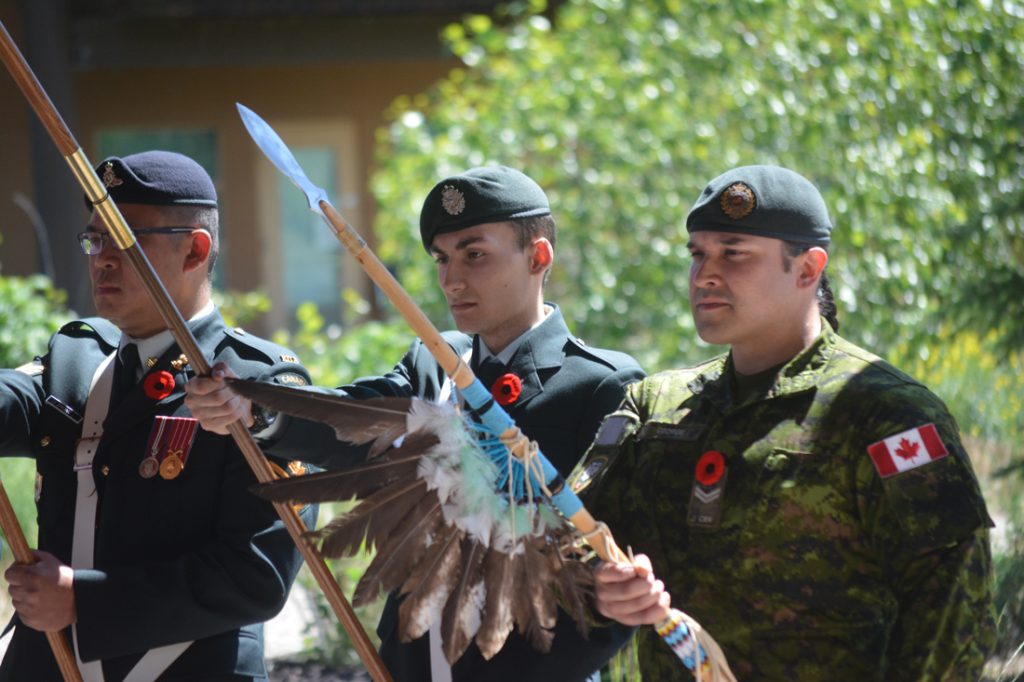
Former and current veterans honoured Cpl. Ernie Baptiste George during a special ceremony this summer at the Osoyoos Indian Band office. Lyonel Doherty photos
George was the son of Narcisse and Victoria George. His father was chief of Nk’Mip Indian Reserve, now known as the OIB.
Many speakers honoured Ernie and the many First Nations members who fought in the wars.
Oliver Legion padre Ray Turner said more than 6,500 First Nations people enlisted in the two world wars, and approximately 500 were killed in action.
Legion president Estelle Pavan said the young corporal from Oliver left home and country to fight for everyone’s freedom but sadly never returned, “but he is well remembered.”
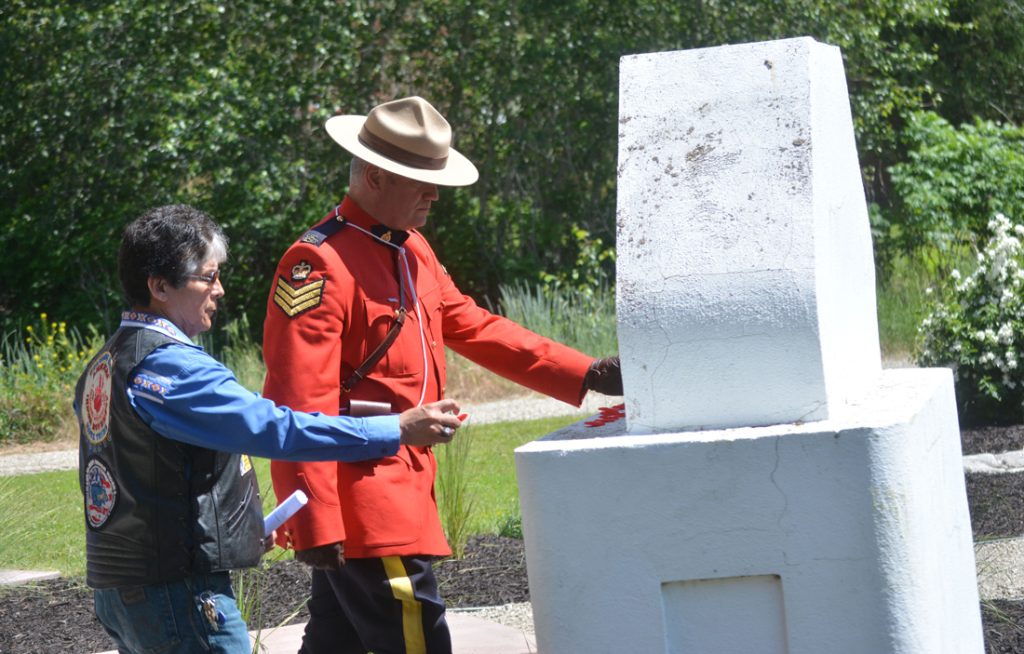
IB Chief Clarence Louie and Oliver RCMP Sgt. Don Wrigglesworth place their poppies on Cpl. George’s memorial. Lyonel Doherty photo
Pat Hampson, 2nd vice-president, commented: “We are almost always at war. This may never end, but we want to teach the young people of our communities to think about the fact that it shouldn’t be this way.”
The Osoyoos Legion also expressed its sorrow for the loss of George and his contributions.
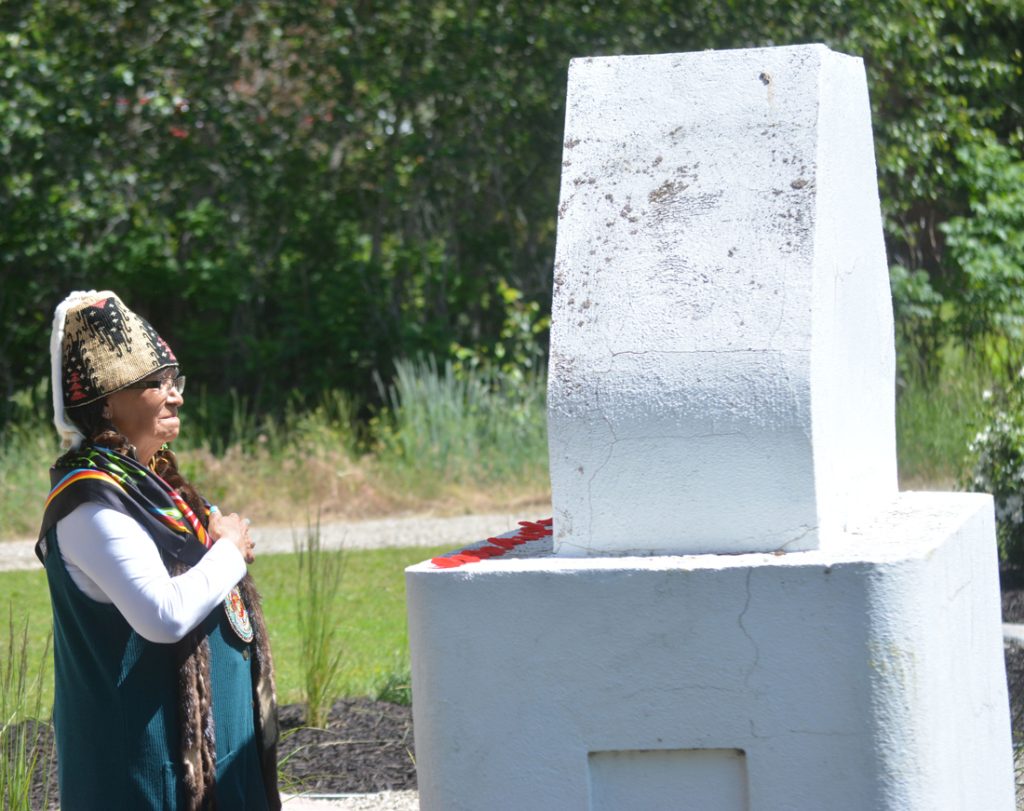
Deb Louie from the Colville reservation. Lyonel Doherty photo
OIB Chief Clarence Louie welcomed his cousin Deb Louie from the Colville reservation. He noted she is a Vietnam war veteran with the 101st Airborne Division. Her dad was Francis Louie, a member of the OIB.
Clarence thanked Deb for her service, saying, “It had to be tough in Nam all those years.”
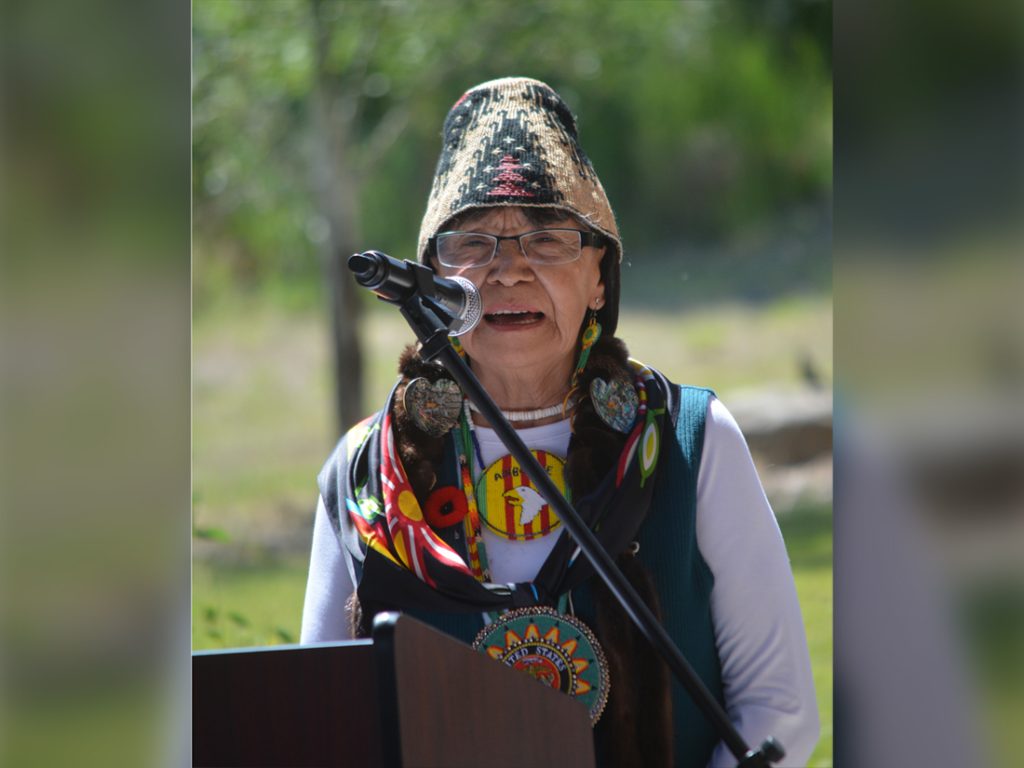
Deb Louie from the Colville reservation
Lyonel Doherty photo
Wilfred Louie, another Vietnam war veteran, recalled as a child watching an older gentleman run, dive and roll on the ground several times.
After laughing at this, he asked an elder what the gentleman was doing. He was told the fellow was “going back to the war” in his mind. Back in those days there was no compensation for post-traumatic stress disorder, Wilfred said.
He noted that many veterans came home and lived in the hills because of the way they were treated.
“When I landed in California and got off the plane, hundreds of people were spitting on us and calling us baby killers.
I asked my partner, what the shit happened here? Did we land in the wrong country?”
Wilfred said he was very fortunate to live with his own people on the mountain, away from others.
“I had a woman who stayed with me all these years. A lot of Vietnam veterans’ wives never stayed with them, it was just too crazy.”
His wife Jeanie Louie said her three fathers fought in the wars. She noted the Vietnam conflict was the only war that was televised, depicting the soldiers fighting and dying.
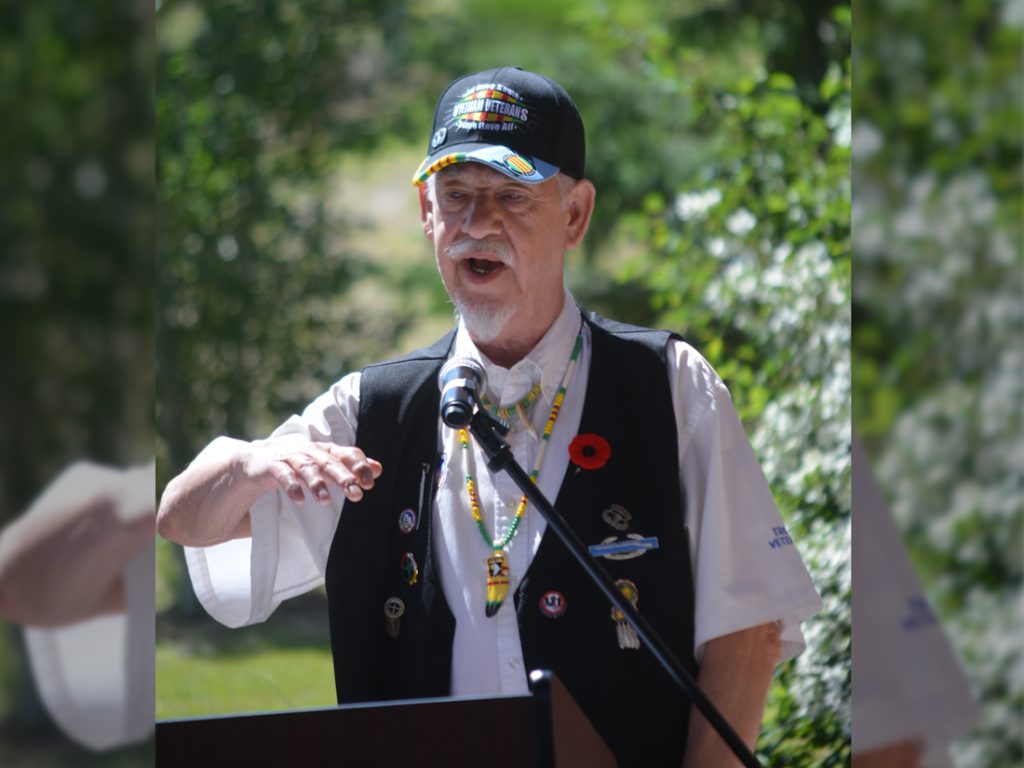
Wilfred Louie speaks about George during a memorial re-dedication in June.
Lyonel Doherty photo
“When they came home they were spit on and called names,” Jeanie said, adding that some veterans lost their arms and legs, while others were left blind.
“They still disgraced them, the American people. It was heartbreaking for the families that lost soldiers.”
Jeanie said these soldiers are “always in our hearts” and expressed her pride in the ones who are currently serving.