By Times Chronicle Staff
Although only days into the fall season and with no one wanting to admit the inevitable creep towards cold weather, the Oct. 1 requirement to have winter tires on vehicles for travel on provincial highways is upon us.
BC law requires winter tires on many provincial highways starting on October 1 which is the same day Road Safety at Work launches its annual Shift into Winter safety awareness campaign.
“Winter tires aren’t just for snow and ice. They also provide better traction in rain and the cooler temperatures we’re already seeing at night,” says Trace Acres, program director of Road Safety at Work, a WorkSafeBC-funded Injury Reduction Initiative.
“They’re one of the best safety features on any vehicle at this time of year. Putting them on now, before poor weather really hits, can help keep drivers and their passengers safe.”
He added that road and weather conditions in the fall around the Okanagan can change quickly, even more so when heading out of the valley to the Similkameen or Boundary/West Kootenay regions.
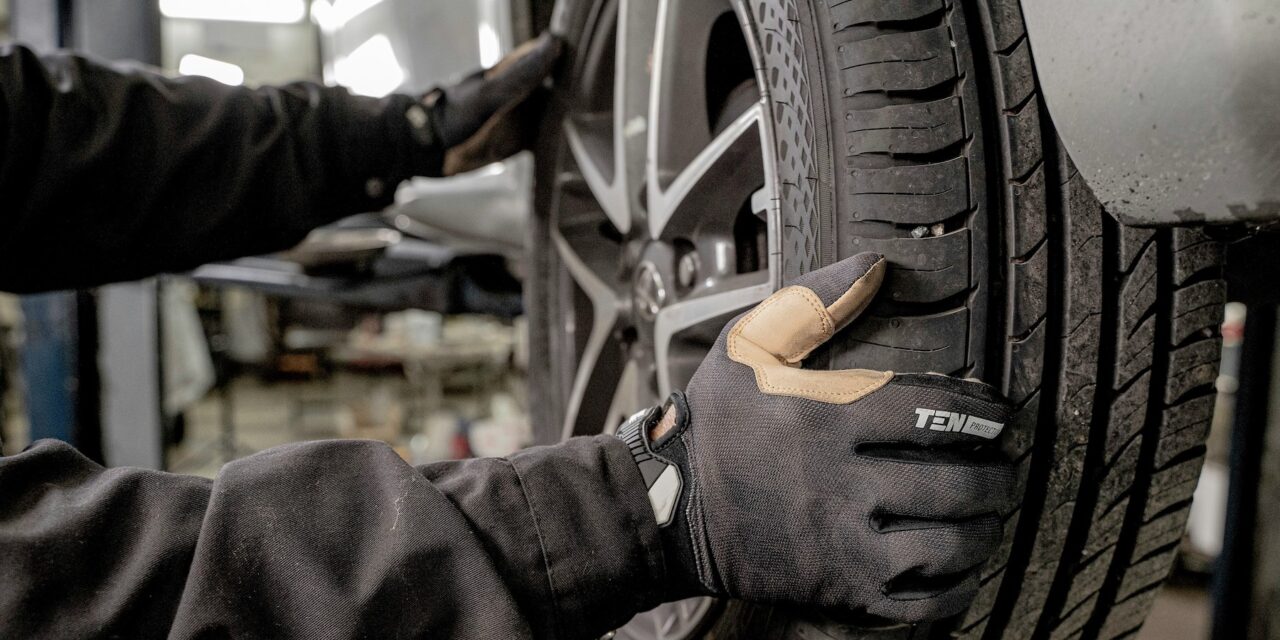
To be legal, winter tires need to have at least 3.5 mm of tread. Tires displaying the 3-peaked mountain/snowflake symbol provide better traction and stopping distances when temperatures drop below 7°C. Tires with the M+S (mud and snow) symbol also meet the legal requirement.
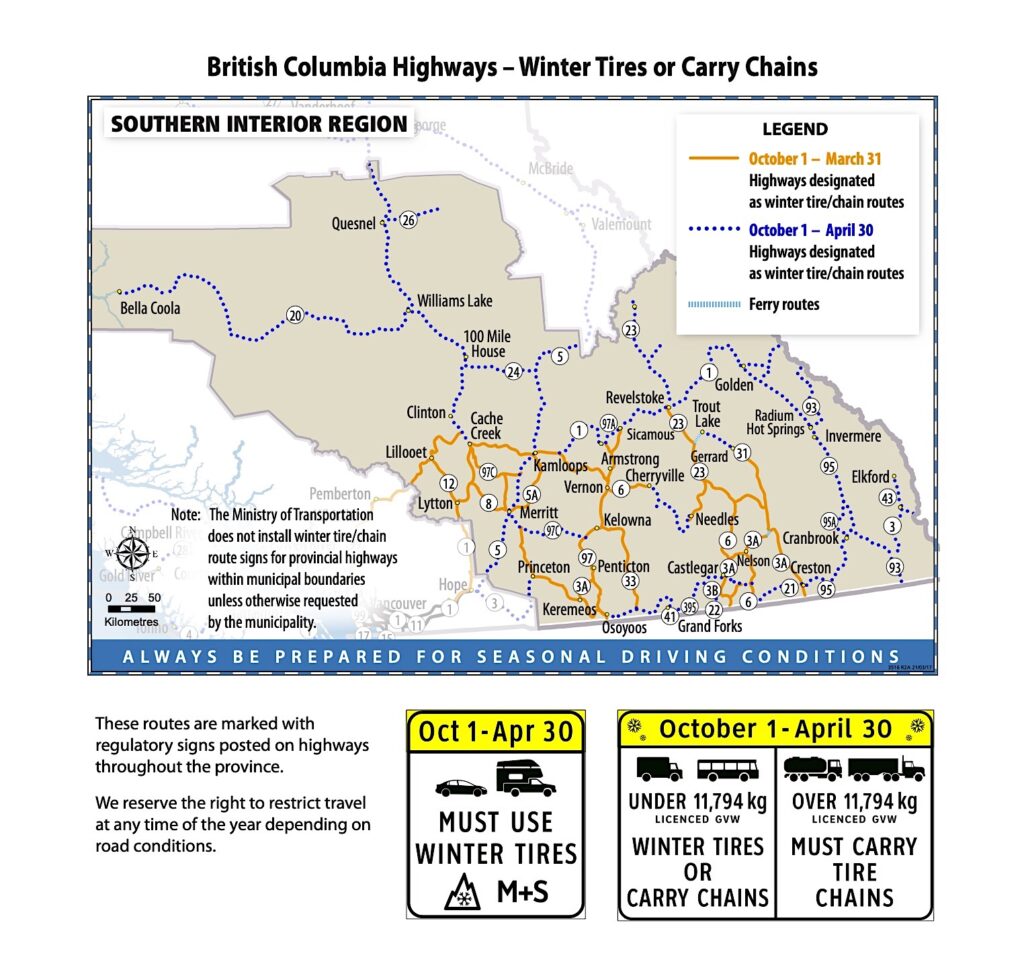
Ministry of Transportation graphic.
Designated highways in the Okanagan require winter tires or chains from October 1 to March 31. The timeline extends to April 30 for select highways, such as mountain passes and rural routes in high snowfall areas.
Preparing for winter driving
The 16th annual Shift into Winter campaign starts in fall to remind drivers of the need to start preparing themselves and their vehicles for winter.
“Drivers haven’t dealt with heavy rain, freezing temperatures, ice, snow, and fog for months and need to adjust their driving to suit the conditions,” Acres says.
While tires are important drivers also need to adjust their mindset he adds. “There’s a misconception that crashes are always the fault of other drivers. We can get a little over-confident in our own abilities.”
Driving too fast for the conditions and distracted driving are two of the leading contributors to crashes in BC at this time of year. “Both are within your control as a driver,” he adds. “Your driving decisions can affect the lives of other people on the road.”
Drivers can help keep themselves and their passengers stay safe by following these tips from the Shift into Winter campaign:
- Give your vehicle a seasonal check-up – add anti-freeze and check tire pressure, inspect brakes, lights, and engine belts and install winter wiper blades and winter-rated washer fluid.
- Avoid driving when conditions are poor and check DriveBC before you depart to see what you can expect on your route.
- Slow down and recognize that posted speed limits are set for ideal conditions and fall and winter conditions are typically less than ideal.
- Leave at least four seconds of distance between your vehicle and the one in front of you. Following too close can lead to rear-end crashes on slick roads where stopping can be a problem.
- Put away phones and focus on driving. Drivers are 3.6 times more likely to crash when using a phone while behind the wheel, according to ICBC.
- Keep vehicle lights on at all times as drivers need to see and be seen.
- Pay attention to instructions in roadside work zones. Flag persons and traffic control devices help you safely travel through uneven surfaces and narrow lanes.
For more tips on fall and winter driving visit ShiftIntoWinter.ca.