By Roy Wood, Special to the Times Chronicle
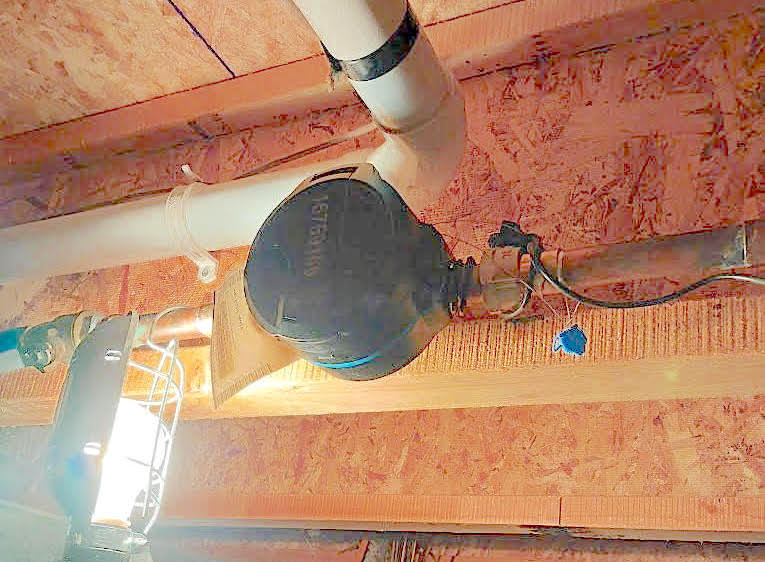
Installation of water meters in homes and businesses in Osoyoos is moving along just swimmingly, according to a progress report to a council committee this week.
Town CAO Rod Risling was joined Tuesday by two representatives of Neptune Canada to update members of council on progress and to answer questions.
So far, 432 residential and 25 commercial meters have been installed in the 1,716 homes and 74 businesses on the list to receive meters. Neptune Canada won the contract budgeted at $4.7 million.
Predictably enough, given how many snowbirds live in Osoyoos, one of the challenges installers have faced so far is the number of homeowners who are away for extended periods of time.
According to the written report from Risling, a registry has been created to arrange for the postponement or advancement of installations.
The other challenge listed in the report was misleading information being spread through the community, particularly on social media.
“Misleading information and misinformation about the project on social media or other informal sources have led to waves of questions and concerns to the municipal hall and the Project Manager,” the report says.
“Significant staff resources have been invested in responding to upset homeowners (who) accepted social media information as fact.”
An unanticipated wrinkle that has emerged is the higher-than-expected number of so-called “pit meters” that are going to have to be installed.
Pit meters are required when there are two feeds on a property, one for domestic use and one for irrigation. In those cases, the meter must be located adjacent to the main water line, often under a driveway.
The installation involves digging a hole, usually around five feet deep, and installing a vertical tube allowing access to the water line. The actual meter is attached to the lid that goes on top of the tube once the driveway or other area has been restored.
Water users will know if they require a pit meter if the shut-off valve for their irrigation system is located outside their home of business.
Asked how soon water users will know how much they will be paying for water, Risling said it won’t be until late next year or sometime in 2026. He said experts prefer to have at least a full year of data to analyze before setting rates.
He said Osoyoos will likely employ a “flat fee plus variable rate” system, under which everyone will pay a basic fee and then a volume-based charge on top of that.
Risling told council that the system here will employ so-called Advanced Metering Infrastructure (AMI) technology rather than the older Automated Meter Reading (AMR). The main advantage of AMI is that the individual meters transmit water-use information automatically to a central database, rather than having someone drive by to collect the data.
Another potential advantage of AMI is that individual users might have access to real-time information about their water consumption.
One of the Neptune representatives pointed out that software to allow such individual access is available but is not part of the installation project. Ben Van Mierlo, Director of Services at Neptune Technology Group said the town would need to decide whether to buy and install it.
Councillor Johnny Cheong asked about “adverse events” that have taken place during the project. Neptune’s Sheldon Peart said that fewer than five per cent of installations have met roadblocks to finishing the job or have needed follow up.
As for problems that have resulted in “some sort of damage remediation,” he said he doesn’t have specific numbers for this project, but that Neptune’s global record would be “less than half of a per cent” of installations.
Risling pointed out that installations come with a one-year guarantee from Neptune and that after that the town is responsible.
Among the other highlights covered at Tuesday’s meeting:
- Neptune currently has more than 30 similar projects going on and has installed more than a million water meters;
- The life of the batteries powering the meters is guaranteed for 20 years, but many have been running for much longer; and
- Old meters that are removed in the program are turned over to the town. The brass in the old meters is usually recycled.
Risling reminded councillors and residents that the Frequently Asked Questions section on the town’s website is a trove of useful information about the project.