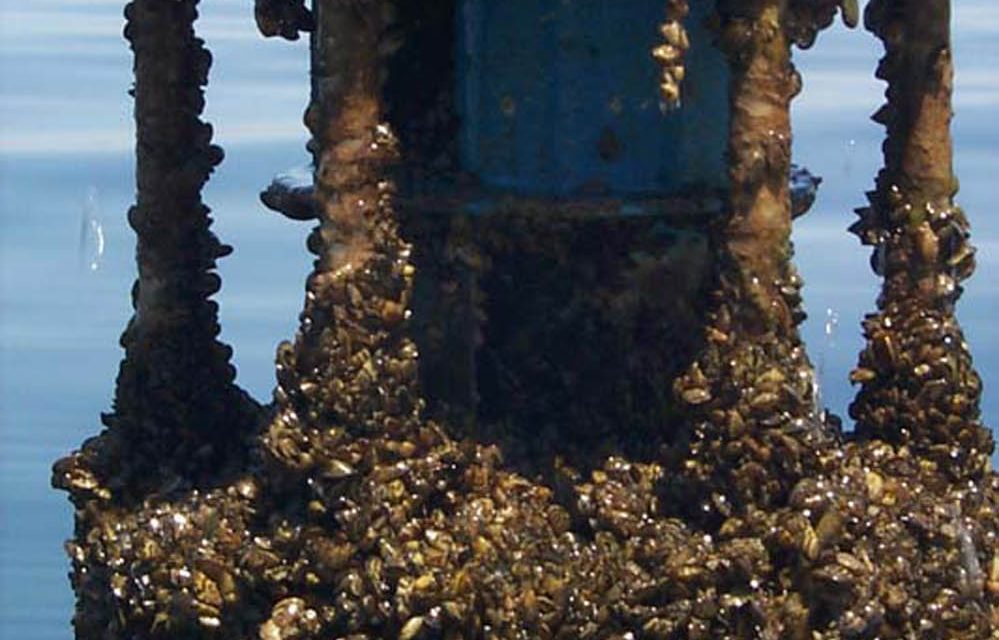
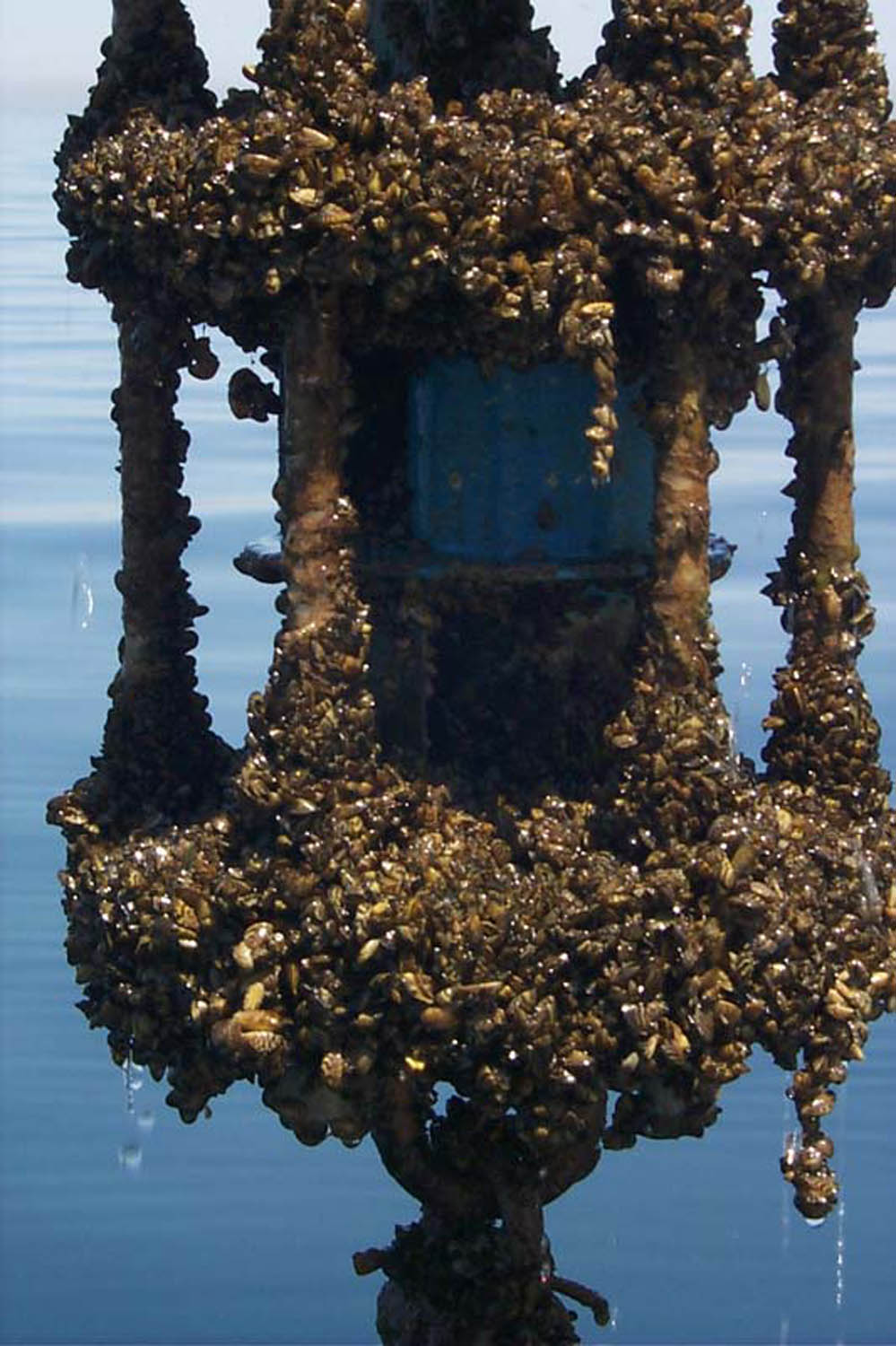
Zebra mussels encrust a current meter retrieved from Lake Michigan. Mussels cover every imaginable surface in the water once they infest a waterway. They are spread by careless boaters, but Canada lacks federal regulations needed to stop them at the border. (U.S. National Oceanic and Atmospheric Administration)
An early detection and response plan to deal with invasive mussels by the provincial government was delayed because its scope was expanded and not because it’s a low priority.
That’s the word from a Ministry of Environment spokesperson who was addressing concerns raised in Osoyoos recently by NDP Environment Critic Spencer Chandra Herbert.
Chandra Herbert said both provincial and federal governments have been talking about taking action against the threat of invasive zebra and quagga mussels, but they haven’t provided much action.
“I can’t understand why they’re not being proactive,” Chandra Herbert said in an interview. “We need a strong proactive provincial government. Every day you delay doing something is another day where we could have invasive mussels in our lakes. I don’t understand why the government isn’t making this the priority it deserves to be.”
On May 29, Environment Minister Mary Polak told the B.C. Legislature that the mussel early detection and response plan “is being finalized for action this summer.”
In a June 30 letter to the Okanagan Basin Water Board (OBWB), Polak said the plan “would be completed over the next several weeks.”
The plan still hasn’t been completed.
The Ministry of Environment spokesperson explained the delay was caused by a decision to add extra elements to the plan.
“While developing the Provincial Zebra and Quagga Mussel Early Detection and Rapid Response (EDRR) Plan in collaboration with the Inter-Ministry Invasive Species Work Group (IMWISG), it was decided to expand the scope from a plan that solely focuses on how to respond to the detection of mussels in a lake, to also include the roles and procedures to respond to watercraft intercepted in transport, as well as a B.C. risk assessment,” the spokesperson said in an emailed statement.
“Adding these two extra pieces meant that it’s taking longer to finalize the plan, but now it will be a far more comprehensive document. In particular, as the procedures around interception and decontaminating boats are likely to be a key component of a rapid response to mussels in B.C. waters.”
The EDRR subcommittee, which is the last step before approval and publishing, is currently reviewing the plan he said.
Zebra and quagga mussels infest many waterways in eastern North America and they have made inroads into the U.S. Southwest.
Recreational boaters taking boats from infected lakes to non-infected lakes without cleaning, draining and drying them usually spread them. The cost of a mussel invasion in the Okanagan lakes is estimated by the OBWB at $43 million a year just for mitigation measures.
Local water officials have been frustrated by the slow response to the problem by provincial and federal governments.
RICHARD McGUIRE
Osoyoos Times