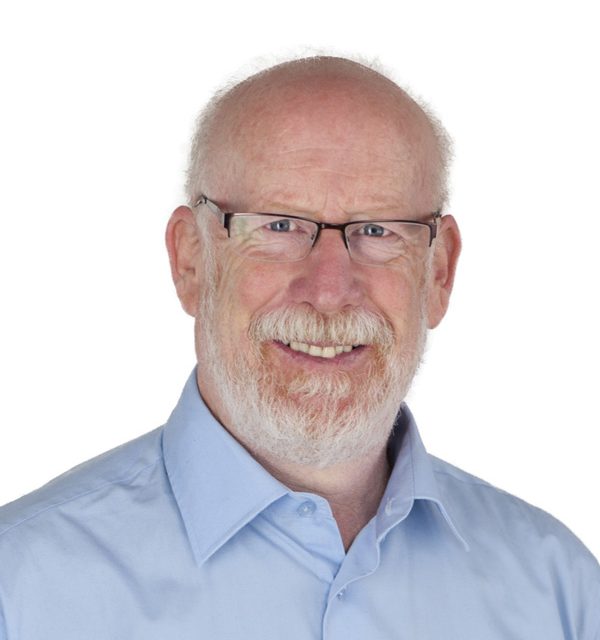
In the next federal election, Members of Parliament could be chosen by an entirely new voting system and current MP Richard Cannings wants to hear what constituents think about it.
He’s planned two town hall meetings in South Okanagan-West Kootenay (SOWK) to discuss electoral reform, one in Penticton on Sept. 12 and one in Castlegar on Sept. 1.
Although no meetings are planned for Osoyoos or Oliver, Cannings said he welcomes views by email or mail from those unable to attend.
“Both the Liberals and the NDP were elected on mandates that the 2015 election would be the last first-past-the-post election,” said Cannings, noting that the government has struck a special committee of the House of Commons to look into a possible new system.
The government has also asked MPs to consult with their constituents across the country to find out their thoughts, he said.
“I’m only too happy to do that,” he said.
Canada’s elections have used a “first-past-the-post” system, in which the candidate with the most votes in an electoral district is elected as the MP, regardless of whether they win by a landslide, or by a single vote margin against two strong opponents.
Cannings, who along with his NDP colleagues, supports a form of proportional representation (PR), argues that the current system means parties don’t campaign much in ridings they don’t think they can win.
Instead, they focus on “swing” ridings that could go either way.
He also argues that the present system creates majority governments where the party in power may win with only 39 per cent of the vote.
The Liberals won the October 2015 election with 39.47 per cent of the popular vote, but they took 184 seats, well over half the 338 seats in the House of Commons.
In the 2011 election, the Conservatives won a majority of seats with a similar vote percentage.
“The reason people want to change the system is because we’ve had a series of false majorities,” said Cannings, who suggests that a government with a majority has “100 per cent of the power.”
He says PR “would be the fairest system and be the system that would engage the most voters across the country.”
The Conservatives support the present system, while Prime Minister Justin Trudeau has indicated he leans toward a preferential ballot in which voters rank the candidates in order of preference.
Cannings said he’s already received emails and messages from constituents with detailed comments on the system they would like to see. Comments have come from across the spectrum of viewpoints, he said.
He acknowledges, however, that like many federal issues, this is not one that most people have thought a lot about.
Cannings said that despite his preference for PR, he is open to hearing from constituents with all viewpoints.
“My job is to listen to my constituents and I will pass on whatever insight I get from constituents to the government and the committee,” he said.
Provincially, B.C. held referendums in 2005 and 2009 on a single transferable vote form of PR and both times it was defeated.
Ontarians also soundly defeated a mixed-member proportional representation system in a 2007 referendum. Prince Edward Island rejected a similar system in a 2005 plebiscite.
The Castlegar meeting is Thursday, Sept. 1 from 7 p.m. to 9 p.m. at Fireside Inn Hotel and Conference Centre.
The Penticton meeting is Monday, Sept. 12 from 7 p.m. to 9 p.m. at the Penticton Library Auditorium, 785 Main Street.
People can also write to [email protected] or send mail postage free to Richard Cannings, MP, House of Commons, Ottawa, ON K1A 0A6.
RICHARD McGUIRE
Osoyoos Times