By Ted Malmberg, Special to the Times Chronicle
Full of heartache, despair and faint hope as this story will reveal. No body to bring home – just a memory.
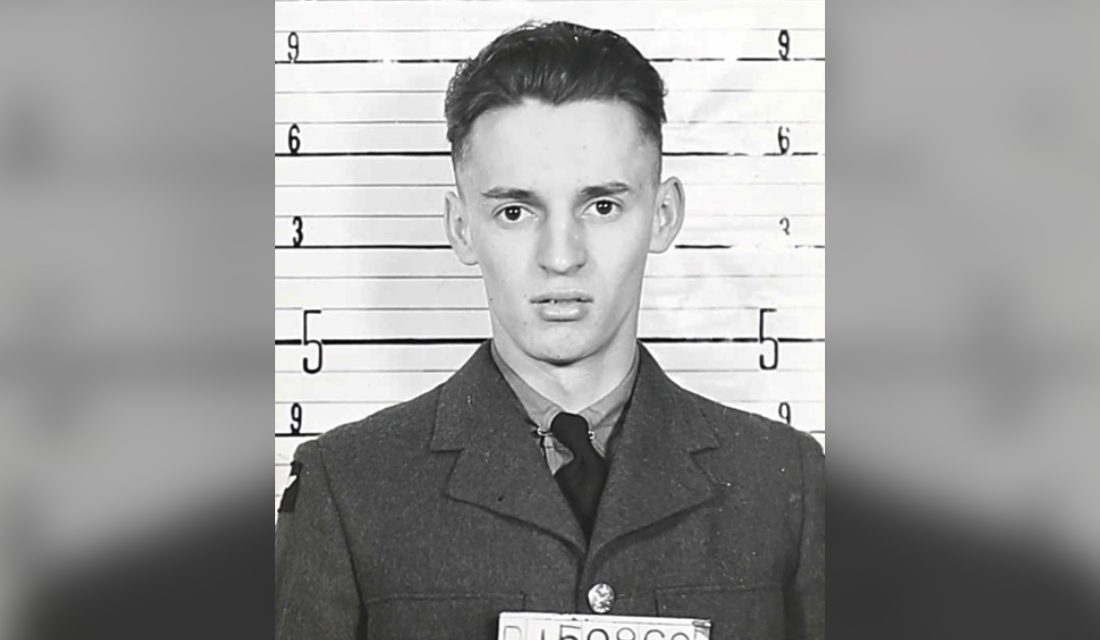
My Uncle Gordon Lorne Rowe was killed (MIA) at age 23 on New Year’s Day, January 1, 1945.
(Gee, Gordon, if only you could have made it four more months and eight days, how this story would have had a different ending.)
Gordon was co-pilot of a Liberator B24 Bomber – KH360 with an all-British 10-member crew.
After bombing the Burma Siam railroad, (Burma is now known as Myanmar) they were returning to base when they were hit by AA (anti-aircraft) fire and were forced to ditch in the Gulf of Marta in the Bay of Bengal and Indian Ocean.
The Liberator Bomber was a great airplane, very rugged and durable except the bomb bay doors were a new style (roll-ups). They were not the strongest in the event of a ditching attempt.
Of the crew, only three survived. One of the three drowned and the other two were taken as prisoners. Gordon’s body was never found.
My grandmother was convinced that Gordon survived the crash, and as he was an excellent swimmer, swam to a nearby island and hid out for the rest of the war. He would then come home.
She was so convinced of this fact, that when it came time to sell her home in Edmonton and move into a care home, one of the conditions of sale was that she be able to leave a short note with her new address and phone number taped on the window of the back door for Gordon to find when he returned. This was agreed to, but I don’t know how long the new owners left it in the window.
Grandma died in 1963 still believing that her son would return to her arms.
The day that Gordon left for war was, of course, not the happiest day. Although Grandpa was very proud of his son, he was very worried about his safety and Gordon knew this. The morning he left, Gordon and Grandpa exchanged handshakes and hugs on the sidewalk in front of the house. Gordon said, “Dad, don’t worry for me, I will be careful and I will be fine. When the war is over, you come out here and I will return.”
With that, Gordon saluted and turned to walk to the end of the block. He turned right and disappeared forever. It was just four short blocks to the train station.
After the war in Europe ended, VE Day 1945 (my 4th birthday) Grandpa started a ritual of every morning with a cigar and cup of coffee; he would go out to the sidewalk, stand and stare up the street to the corner for a few minutes hoping for Gordon’s return. He did this every day for the rest of his life until he died of a broken heart in 1953.
As no automobiles were made during the war, the Ford Motor Company transferred their assembly lines from making automobiles to making Liberator bombers. A total of 18,482 were made.
I know that there are many stories like this that affect thousands of families. As long as we have to send our men and women off to war to protect our freedoms, the names will continue to add up. Will we ever learn?
I have a book entitled “They Shall Not Grow Old.” It contains the names of 18,000 Canadian airmen and airwomen lost during the Second World War. The book is 892 pages. Most casualty names have a small biography and their burial sites.
If anyone would like to see if their loved ones are in the book, give me a call at 250-498-2396.