Three Indigenous organizations are receiving $1.5 million in provincial funding to address the urgent need for culturally safe and trauma-informed mental health and wellness supports for residential school survivors and Indigenous peoples as a result of the ongoing findings at former Indian residential schools.
This funding is part of $12 million announced in June 2021 for the BC Residential School Response Fund. More specifically, the $1.5 million will be directed to the First Nations Health Authority, and be split between three Indigenous-led organizations: $750,000 for the Indian Residential School Survivors Society, $500,000 for the Tsow-Tun Le Lum Society, and $250,000 for the Métis Counselling Connection Program.
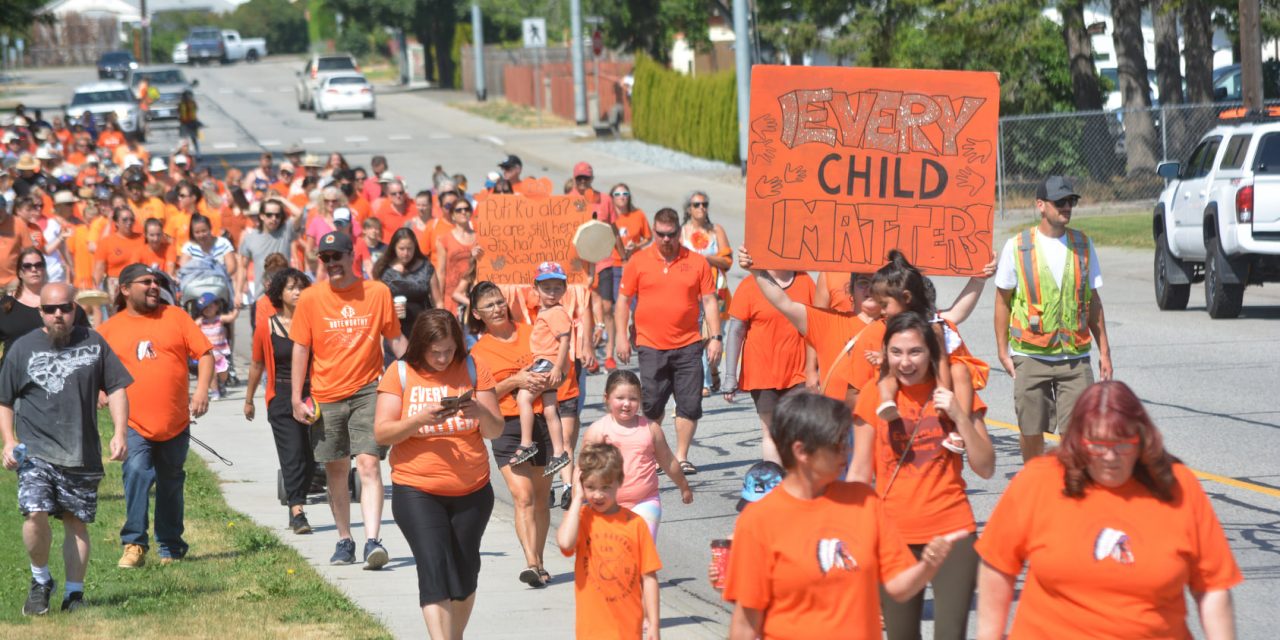
Since the findings of 215 unmarked graves at the former Kamloops Indian Residential School earlier this year (in May), more unmarked graves have been found in sites across the country. So far, there have been more than 1,300 graves found.
Angela White, executive director at the Indian Residential School Survivor Society (IRSSS) stated at the provincial press conference on Monday that soon after the announcement of the 215 graves came out, their crisis line was inundated with about 500-600 calls between the hours of 8:30 a.m. and 4:30 p.m. The demand and need for support was overwhelming.
“It has now subsided, but it just goes to show the need, how necessary these places are and I can’t express enough for the province to step up to ensure that this line on its own can carry forward for the rest of this fiscal year,” said White.
Colette Trudeau, Senior Director of Operations and Administration at Métis Nation British Columbia, emphasized the importance of providing Indigenous-led support for survivors who will understand their experiences.
“It’s about having someone on the other line who’s Indigenous, who understands the lived experience, has cultural competency associated with having these types of conversations and that empathy that comes with these conversations,” said Trudeau.
In providing these culturally appropriate supports, Trudeau explained that those who do seek help will hopefully have those difficult conversations and work through their traumas without experiencing further trauma by having someone who doesn’t truly understand.
“Our Métis survivors have had to process multiple traumatic discoveries of mass graves and they’re facing these painful announcements in a time of increased isolation due to the pandemic. Through this investment, we aim to connect with residential school survivors and their families, offering them targeted supports and connections to other survivors,” added Trudeau.
The funding announced today focuses on expanding and strengthening existing Indigenous-led mental health and wellness and cultural services. It will also provide resources for ongoing engagement and supports for survivors, intergenerational survivors and communities during this difficult time. This includes:
enhancing the 24/7 cultural support line managed by the IRSSS, including additional counselling and cultural support staff;
adding capacity for Tsow-Tun Le Lum Society to provide more in-person health and wellness and cultural supports, including services for communities carrying out work on the sites of former Indian residential schools and Indian hospitals; and
expanding the Métis Counselling Connection Program delivered by Métis Nation BC with a specific focus on the experience of Métis survivors.
“The findings at the sites of former residential schools across Canada have been confirming what we have been told for a very long time. They are heartbreaking and they are revealing and terribly sad. It’s a sharp reminder of the work we have to do, of the pain that takes many generations to heal,” said Sheila Malcolmson, B.C.’s Minister of Mental Health and Addictions.
“It’s important that we talk about it. And we keep sight of the supports that survivors and their families need to do that healing work today and into the future.”
The Residential Schools Crisis Line is available 24-hours a day for anyone experiencing pain or distress as a result of the ongoing impacts of the residential school system. Call 1-866-925-4419.