Lyonel Doherty, Times Chronicle
This is part one of a series on the housing crisis in Oliver and Osoyoos. For part two, visit https://www.timeschronicle.ca/evicted-senior-struggles-to-find-housing/
A social worker who has witnessed people’s struggles with affordable housing is calling for real change in Oliver and Osoyoos.
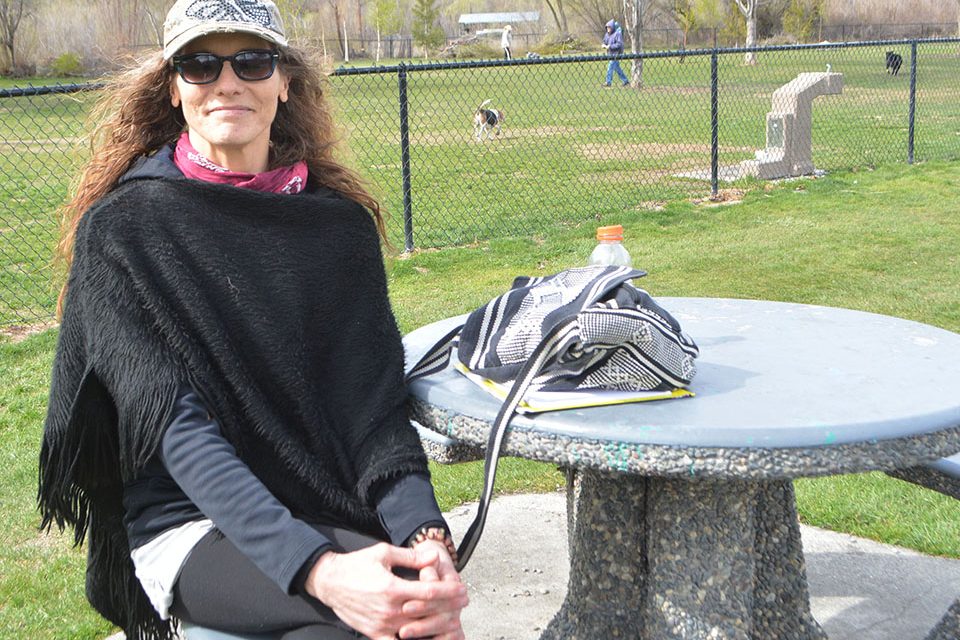
Janice White, 52, says the current housing crisis is hurting young families who are trying to survive from one month to the next.
“Children are being displaced and moving around all year. It’s a typical pattern: motels in winter, kicked out in the spring. Nowhere to go.”
White said there is not only a shortage of affordable housing, but there is a lack of “supportive” housing for people with disabilities.
White moved to Oliver four years ago from Saskatoon and was told by a friend to “expect challenges” finding a rental.
“I did what a lot of people did and camped and stayed in campgrounds the first summer and thought, it won’t be a problem to find a place to rent in the fall.”
How wrong she was.
She ended up living in a motel in Okanagan Falls before moving in with a friend. However, she subsequently found herself scrambling to find another rental. Finally, she was able to secure a three-bedroom house in Oliver for $1,500 a month (shared with two other struggling women).
Over the past year White’s main focus has been supporting a young family – a parent with four children who were previously in a home where the power was shut off and they were evicted with nowhere to go.
White said one of the children has special needs but is strong and independent. “She is my hero.”
White pointed out that one member of the family has a nine-month-old baby.
She explained the family was taken in by a “sweet” couple at the Lodge at Gallagher Lake, but in April they had to vacate for the season.
“I know she’s struggling. The mother is so proud, she doesn’t want to ask for help.”
White’s goal at the moment is to get the special needs girl into safe, supportive housing.
She would like to see more housing set up with caregivers, and/or old motels transformed into living units with the basic necessities.
“It’s all they need. Check on them daily to ensure the room is being cleaned and maintained . . . and someone there as an outreach worker.”
White also suggested cooperative housing for $700 a month, where the clients can work to maintain the property.
White acknowledged that Loose Bay Campground provides accommodation and has improved its services over the years. But people are always asking for rides to the farms they work at.
“How silly is that? There’s no transportation system for these workers.”
Years ago, a shuttle bus was discussed around the political table, but the wheel fell off and the idea went nowhere.
“Yes, there are problems, a lot of problems. But if you provide better services in the community your crime will go down,” White said.
One unfortunate reality is discrimination by some landlords, she pointed out.
“That is a whole other issue. If you have age, colour, ethnicity . . . if you are French, all of those are strikes against you.”
She added that domestic violence is another problem fueled by drugs and alcohol, which police have to contend with on a regular basis.
In many cases it’s the children who are paying the highest price, White stated.
Her hope is that people will offer solutions by making more homes available for rent.
Keith Urton, manager of the Lodge at Gallagher Lake, houses those in need during the winter months. But in the spring they have to look for other accommodation.
“It’s horrible telling people to leave . . .
we have at least two or three struggling families every year.”
While Urton agrees there is a housing crisis, he goes a step further by saying there is a “society crisis” where change is needed in how we deal with vulnerable people.
For example, he said discrimination exists in the rental market where people pass judgement based on skin colour and heritage.
“We (at the Lodge) don’t discriminate. We believe in one colour and one race.”
Urton offers one solution to the housing crisis by establishing ATCO-like storage containers for housing on Indian band land in the Gallagher Lake area. He is even offering to manage them.
Randy Houle, the Town of Oliver’s director of development services, said they are supporting the new affordable housing project behind Oliver Place Mall and “continue to make changes to our zoning bylaw to encourage the development of more dwelling units.”
Houle noted a grant application for a new Town Hall/affordable housing project on Main Street was denied by BC Housing , but staff are exploring other options in partnership with Kiwanis Housing Society.

BC politician Rich Coleman and Kiwanis Housing representative Larry Larson in front of Kiwanis Manor after its renovation.
(File photo)
Kiwanis Housing administrator Amanda Casorso Urry said they have been in a housing crisis for quite some time.
“I’m getting a lot more calls these days from people who are losing their rental because the owners are selling.”
She noted this is happening because of high selling prices and the aging population.
“Combined with tenancy laws that almost always favour the tenants, selling is one of the best options at the moment,” Urry said, adding that owners have become jaded with renting.
“So, we have this perfect storm of increasing costs and dwindling stock that is displacing some of the most vulnerable of our residents.”
Urry said Kiwanis operates 50 units of low-cost seniors housing, with a current waitlist of 25. She added that many on the waitlist are either homeless or living in motel/hotel rooms.
Urry said the waitlist for families is higher, with 60 local applications on file.
“In my five years in this office I have placed five families in subsidized units. What this means is that my waitlist sits at a point where most applicant’s children will age out before a unit becomes available.”
She reiterated this is a crisis for many.
“I can’t even begin to imagine the amount of individuals in our community alone who are couch surfing, living in their cars, or bouncing between winter hotel rentals and Loose Bay in the summer.”
Urry said Kiwanis is currently working on a submission to BC Housing for the next round of funding. But the reality is their board is “aging” and they are not seeing that interest (from anyone) to carry on.
“Our current president has been in his position for 30 years and finding enough members to fill the board has been challenging.”
Urry said without a dramatic increase in housing stock, they really need to look at more creative ways of bridging the gap. “I would love to see a group come together to work on solutions.”
For a single person working full time at minimum wage, affordable is $814 a month, Urry said.
“I’m watching the rental market and I haven’t seen anything below $1,200 for a one-bedroom for a while, which for some people is their entire income.”
Urry said there are some creative solutions such as modifying the BC Building Code to include “tiny homes,” which have grown in popularity.
Local MLA Roly Russell said he is aware that many people are finding it a challenge securing homes right now and the impact that it’s having on communities. “Having a stable, safe, accessible and affordable place to live is vital for every single person in B.C.”
Russell noted the NDP government has been working hard to make this a reality. He said more than 18,000 homes have returned to the rental market in the province since the NDP introduced the Speculation and Vacancy Tax.
“Last year we broke the record for housing starts in the province, increasing rental starts by nearly 50 per cent from the previous year.”