By Lyonel Doherty
Despite ongoing education, many South Okanagan residents are still not recycle-savvy.
In fact, some need to go back to class because they failed the first one.
Putting an engine block in a recycling container will not win you any awards, not even for thinking outside the box.
Yes, someone actually did that, according to
Cameron Baughen, solid waste management coordinator for the regional district.
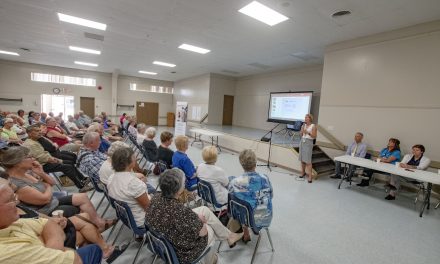
Baughen recently addressed the Town of Oliver regarding the district sending out a request for proposal (RFP) for rural curbside collection in Osoyoos, Oliver, Summerland and Penticton. The existing contracts expire June 30, 2018.
The regional district operates the collection program in Area C (rural Oliver), while the Town runs its own program.
As part of the RFP, the district is looking at the potential price of both cart-based collection and its current bag/can collection.
Baughen said they are looking at several options, including organics collection, using cameras to monitor recycling, and introducing the cart program.
“We’re doing a lifecycle study at the Oliver Landfill and looking at different options to collect food waste.”
He noted that some communities are banning organics at their landfills.
The regional district is looking at an organics management study to determine the location of facilities capable of diverting organic materials (food waste) from landfills.
One of the issues that regional staff will have to mitigate is odour.
Moving forward, public consultation on the curbside cart system (currently used in the City of Penticton) will be scheduled this spring, Baughen said, noting the primary benefit of carts is the safety of workers.
“Our understanding is that some drivers have been injured. The main issue is emptying cans, which can be difficult as the driver has to hold the cans high as materials fall out.”
Because the cart system is now automated (a mechanical arm picks the carts up and dumps them), the process has been shown to reduce injuries, Baughen pointed out.
In addition, more people can be hired for this type of job because strength is not necessary.
However, there are issues with the cart system, such as long driveways and garbage stored outside the carts, Baughen said.
The coordinator said cameras are being used in the Central Okanagan to monitor what homeowners are throwing out and recycling.
These cameras are located in the trucks, where drivers can look at the loads coming in. Baughen said they look for hazards, such as flammable liquids, pressurized tanks and contaminants.
“Drivers need to know what they are collecting for safety. They can also help educate residents on what can be placed in each bin.”
If they find a contaminant, photographs are taken and identification is sent to local government, followed by an automated letter sent to the homeowner.
“Many people do not know the rules. Our contamination rate of recycling is sometimes over 12 per cent,” Baughen said.
He noted that common contaminates include batteries, electronics, plastic items such as kiddie pools or floaties, and food waste.
He said discarded batteries are often the reason garbage and recycling catches fire.
They also get needles and used medical waste in recycling because people think plastic is acceptable.
“We don’t recycle plastic. We only recycle food grade packaging, some of which is plastic. Other plastic items are not recyclable even when they print a recycling symbol on the product.”
This spring Baughen will be promoting a campaign entitled “Put in What Works, Keep Out What Hurts.”
“In terms of needles we had drivers sent to hospital due to loose needles. One audit of recycling pulled out a full sharps container that had cracked open. You can’t put needles in your home collection program!” Baughen stressed.
He also recalled a load of recycling that caught fire from a battery. The load had to be dumped in a parking lot to be extinguished.
“There are safe and/or free ways to dispose of hazardous materials, but not through residential collection,” he pointed out.
The Town of Oliver has a recycling agreement with Multi-Material BC (MMBC) and uses a contractor to collect all of its recycling. MMBC conducts audits from time to time to ensure that they are receiving the correct recyclables.
Public Works director Shawn Goodsell said if contaminants reach a certain threshold (three per cent by weight), the Town can be subjected to failure credits and face financial penalties.
“For the most part Oliver is doing a decent job,” Goodsell said.
The director said the Town is asking for proposals/quotes on a new cart retrieval system. This will help determine if it makes sense to change the current system or not.
Baughen acknowledged the fact that some people are not happy that the curbside program does not accept plastic bags (or glass) like it did before.
He noted that glass shatters and contaminates the rest of the recycling.
“Our materials are hand sorted and people can get cut.”
He pointed out that plastic bags get snagged in paper, metal and other plastics, reducing their ability to be recycled. Plastic bags also wrap around rollers and machinery, raising the cost of recycling, he said.
Baughen said a separate collection has been looked at but the price is very high.
“We tried that with glass and we were paying between $300-$500 a tonne just for collecting a little bit of glass. That is very, very expensive.”
Baughen recommends that homeowners buy food that doesn’t come in glass. He also encourages people to bring plastic bags to the grocery store for recycling. He said most grocery stores have free plastic bag recycling.