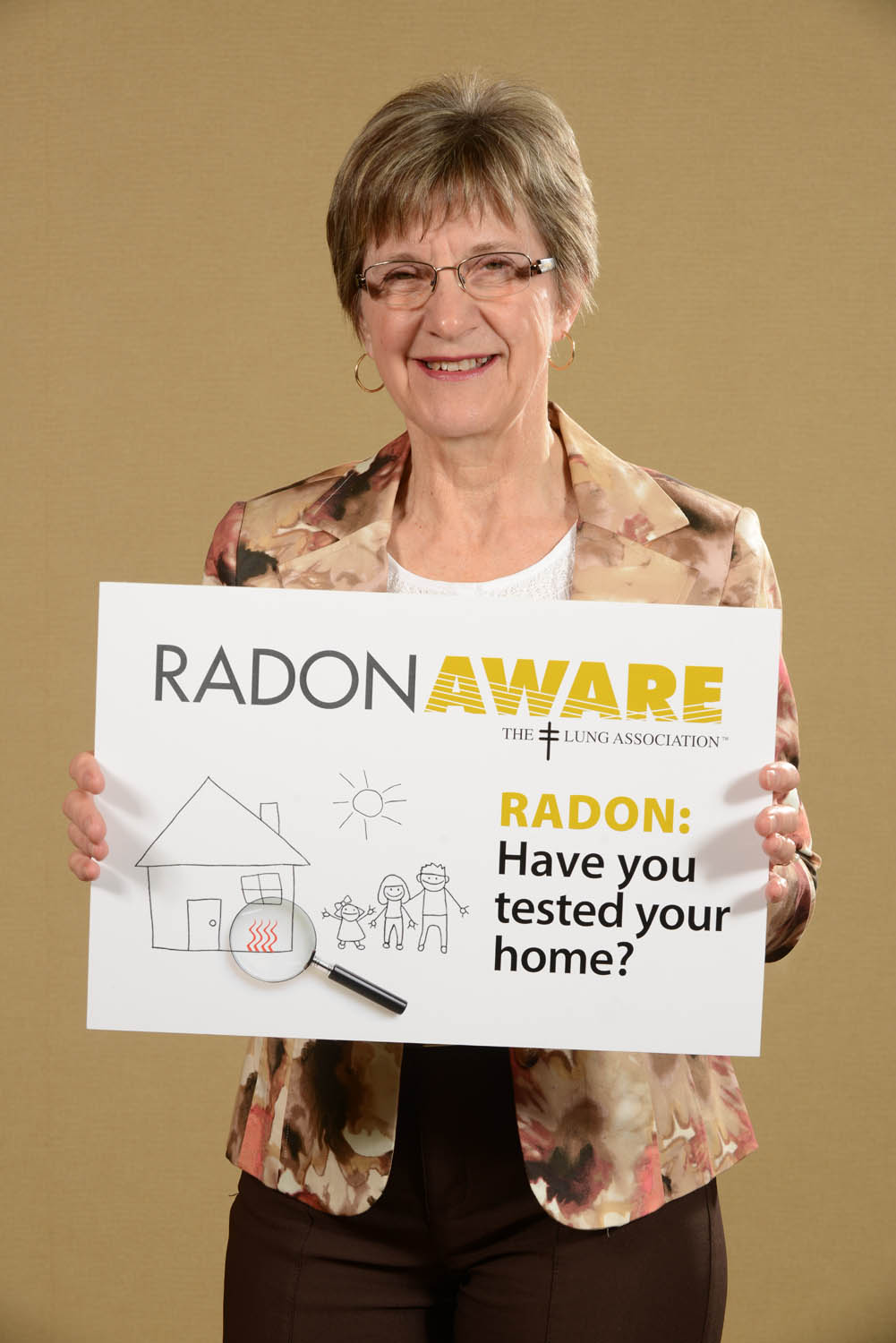
Lil Rusch, Volunteer BC Lung Association Director for Osoyoos, encourages B.C. homeowners to test for radon gas. Exposure to the colourless, odourless radioactive gas is the leading cause of lung cancer after smoking. (Photo supplied)
Exposure to colourless, odourless radon gas is the leading cause of lung cancer after smoking. Radon is a radioactive gas that comes from the breakdown of uranium in the ground.
It can seep undetected into homes, schools, workplaces and other buildings through cracks in the walls or foundation.
“Radon gas is accountable for up to 16 per cent of lung cancers. We suggest all B.C. homeowners test their home’s radon levels,” says Lil Rusch, Volunteer BC Lung Association Director for Osoyoos.
When radon is released into the atmosphere, it gets diluted. But if it finds its way into your home it can accumulate to high levels, and that’s when it can become dangerous.
In a few areas, depending on local geology, radon dissolves into ground water and can be released into the air when the water is used. Radon gas usually exists at very low levels outdoors. However, in areas without adequate ventilation, such as underground mines, radon can accumulate to levels that substantially increase the risk of lung cancer.
Being exposed to high doses of radon over a long period of time is a serious lung cancer risk.
“Should British Columbians be concerned about radon exposure? Yes, absolutely. Should they panic? No,” says Britt Swoveland, Provincial RadonAware Co-ordinator for the BC Lung Association. “Virtually every house in B.C. contains some radon. The question is, how much? The only way to know for certain, is to test.”
Measured in becquerels per cubic metre (Bq/m3), Health Canada recommends home radon levels not exceed a safety threshold of 200 (Bq/m3).
As there is no known safe level of exposure, the BC Lung Association recommends making every effort to minimize home radon levels.
“One house can have radon levels next to zero while the house next door can be off the charts,” continued Swoveland. “And if your radon levels are high, it’s not hard to fix. A certified radon mitigation professional can reduce radon levels in most homes by more than 80 per cent for about the same cost as other common home repairs, rarely more than $1,500 to $3,000.”
To order a radon test kit, to find a certified radon mitigation and learn more about how radon affects your lung health, go to the BC Lung Association’s website RadonAware.ca or call the BC Lung Association toll-free at 1-800-665-5864.
SPECIAL TO THE TIMES
Osoyoos Times