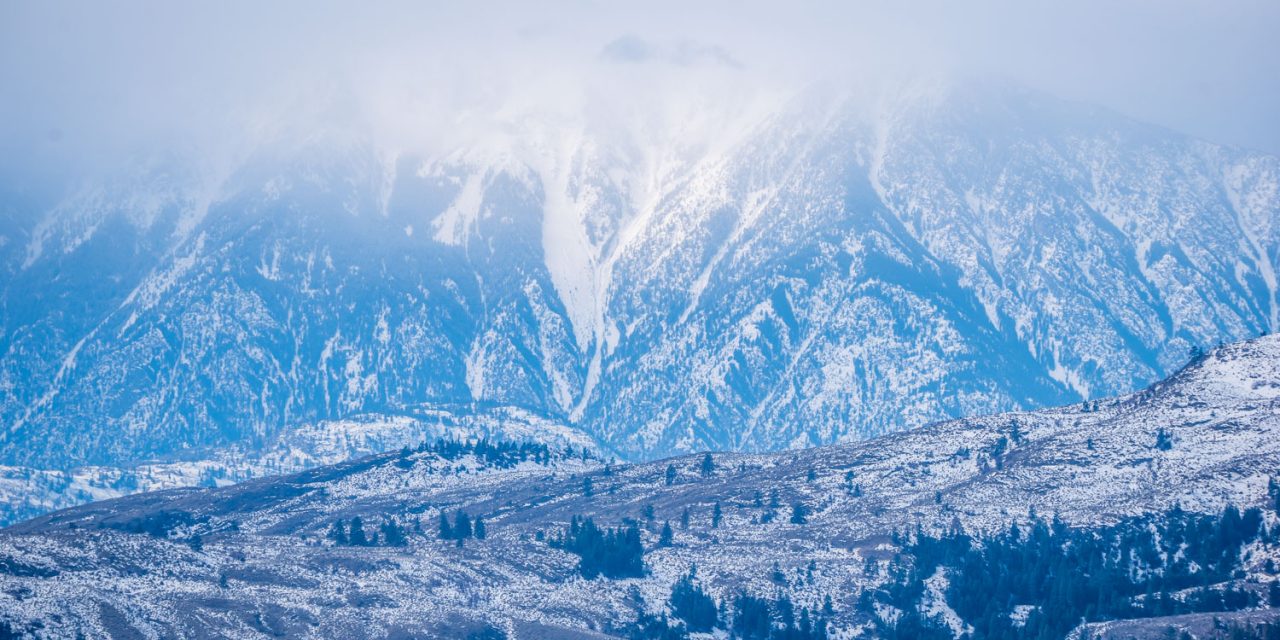

There is currently well-above normal snowpack in the Okanagan and Similkameen based on information from March 1 released recently by the River Forecast Centre. Snowy Mountain, above the Similkameen Valley, seen here from Anarchist Summit, has plenty of snow on top. (Richard McGuire file photo)
Snowpack accumulations well above normal in the Okanagan and Similkameen basins are increasing the risk of seasonal flooding this spring.
Temperatures well below normal in February and precipitation well above normal have contributed to this accumulation, says the most recent Snow Survey and Water Supply Bulletin released by the BC River Forecast Centre last Thursday.
The Similkameen basin leads the province in snowpack accumulation at 144 per cent of normal, closely followed by the Okanagan basin at 141 per cent of normal. Those figures are based on conditions as of March 1.
Whether or not flooding actually occurs will depend on other weather conditions such as extreme temperatures in the spring causing rapid melting or intense and prolonged rainfall.
Contributing to this year’s colder and wetter weather are La Niña conditions in the equatorial Pacific Ocean.
The Climate Prediction Center at the U.S. National Weather Service predicts that La Niña conditions will likely wane this spring leading to a more neutral pattern.
However, the River Forecast Centre cautions that the effects of La Niña can persist for several months after La Niña ends.
“While there is still uncertainty over how weather patterns will play out over the next few months, continued increases in snow basin indices into April and May are likely to occur, given this year’s La Niña context,” the snow bulletin says.
Environment Canada is predicting an increased likelihood of normal temperatures across most of B.C. from March to April.
Nearly 80 per cent of the annual B.C. snowpack typically accumulates by early March, and the very high snowpacks in the South Interior indicate an increased risk of seasonal flooding, the bulletin says.
“Given this year’s La Niña conditions, it is unlikely that the risk will ease much prior to the melt season,” the bulletin adds.
RICHARD McGUIRE
Osoyoos Times