Lyonel Doherty, Times Chronicle
An Osoyoos resident whose doctor in Oliver is leaving her practice must now join a long lineup of people seeking a family physician.
“I do not know what to do without a doctor,” she said, referring to stories from all over Canada from people losing their family doctors.
The woman, who gave her name as Matilda, received that dreaded correspondence from her doctor (Elzaan de Witt) that she was leaving her practice at Bridgeside Medical Clinic.
Matilda explained that her doctor originally practised out of Osoyoos but later moved to Oliver.
In an email to patients, de Witt said despite best efforts over the past two years, Oliver has been unable to recruit new physicians. As a result, she is not able to provide care for patients after Sept. 30 and has not found a doctor to replace her.
She added that the remaining physicians at Bridgeside are not taking on new patients and no waitlist has been established.
However, de Witt urges patients to sign up for the South Okanagan centralized patient waitlist program.
The Times Chronicle called de Witt for an interview but was told by a receptionist that she would likely be too busy to respond. As of July 20, there was no response.
Matilda asked what can be done to make family physicians, doctors and nurses happy so they will stay in their profession?
“Why do we expect them to work such long shifts and hours? We should demand from our provincial governments, unions and health authorities that they create better working environments for our medical professionals.”
She noted that the universal health care model is unsustainable and badly managed by the government.
“I would like to see private health care open up. I would like to see the bulk of the health care dollars spent on front-line medical staff.”
Matilda said the province must stop this exodus of medical staff. She questioned why B.C. is not hiring more foreign qualified health care professionals.
“If people do not have a doctor to go to, they might forego care because they do not want to wait in the ER for hours or drive one hour and 15 minutes for a check-up or annual exam at a walk-in clinic.”
Matilda asked why doctors can’t cut their patient load in half to prevent burn-out. “Are they not in control of the hours they set?”
Tracy St. Claire, executive director of the South Okanagan Similkameen Division of Family Practice, said great efforts are made to replace doctors when they leave communities, but it is increasingly difficult to attract new physicians into family practice.
“Other aspects of primary care often provide better work-life balance and better pay.”
St. Claire said there are currently 13 doctors in Oliver and Osoyoos. She noted the number of patients that each doctor has varies, but the target for newer provincial primary care contracts in rural communities is approximately 800 patients.
She stated that a local doctor recently retired from an Oliver practice after 30 years as a family physician. Patients of that practice have been notified and will need to register on the Health Connect Registry for a new doctor or nurse practitioner.
Patients can register by visiting healthlinkbc.ca/health-connect-restiry/south-okanagan-similkameen or calling HealthLinkBC at 8-1-1, or for the deaf and hard of hearing, 7-1-1.
St. Claire said there were approximately 3,000 Oliver and Osoyoos patients on the Health Connect Registry as of the end of June. “It is impossible to estimate how long patients will be on the registry as it is dependent on doctors’ ability to take on new patients.”
She acknowledged the stress on the primary care system across the province, especially in the wake of the pandemic. But the Division and local doctors remain committed to working collaboratively to find solutions, she pointed out.
Interior Health told the Times Chronicle that doctor recruitment relies on collaboration among different stakeholders, “however, family practice physicians often operate outside of Interior Health, so our involvement is more limited.”
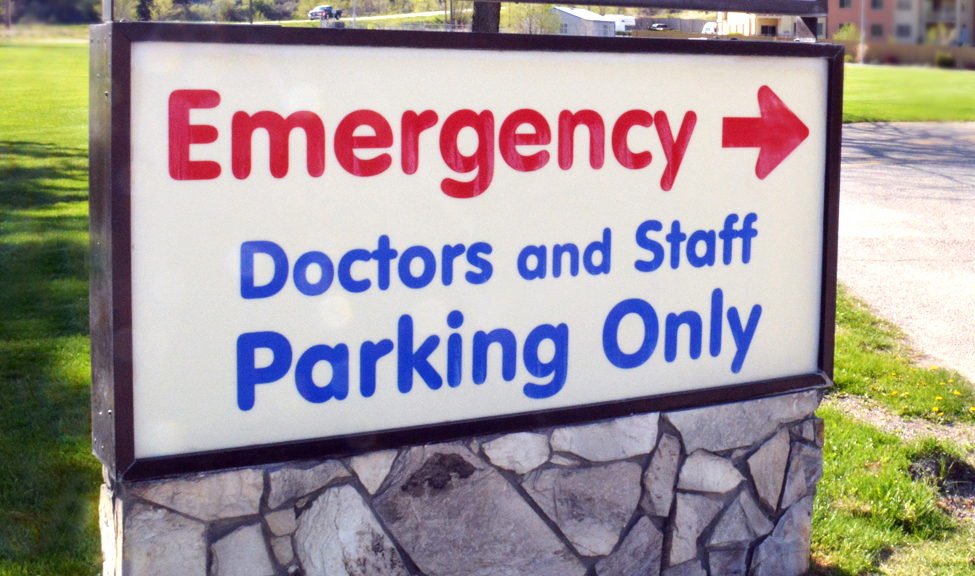
On July 17, limited physician availability prompted the closure of the Oliver hospital’s emergency department for six hours. The last time that happened was in spring of 2020.
Oliver Mayor Martin Johansen and Osoyoos Mayor Sue McKortoff recently met with BC Health Minister Adrian Dix to discuss the doctor shortage in the South Okanagan. Joined by MLA Roly Russell, they are seeking solutions such as establishing primary care network (PCN) clinics where physicians work together to achieve a sustainable work/life balance.
However, there have been reports that the province is having difficulty adequately staffing these PCNs.
Johansen said Dix is slated to visit the South Okanagan this summer to talk about the issue which the mayor deems a public health care “crisis.”
Meanwhile, a group calling itself BC Health Care Matters, a patient advocacy group, is petitioning Dix for immediate action to rectify the doctor shortage problem. Nearly 50,000 people have signed the petition to date.
According to the advocacy group, there are one million citizens (one in five) in B.C. without a family doctor.
“They have no one to monitor their disease progression, provide prescription refills or determine if their treatment plan needs adjusting,” said the group’s founder Camille Currie.
She noted that B.C. has 6,800 licensed family doctors, but only 3,200 are choosing to work in B.C.
BC Health Care Matters says new medical graduates are choosing to specialize or practise as hospital doctors because they see how discouraging and financially draining it is to work as a family doctor.
The group also says family physicians in B.C. are the lowest paid in all of Canada (at $162,237 median pay).
The Times Chronicle contacted the group for an interview, but there was no response.