By Tracy Sim, Times-Chronicle
A comprehensive report produced by the province’s Governance and Analytics Division shows that local Indigenous students are moving toward parity with non-Indigenous students and excelling in Indigenous language and culture programs.
“It’s moving in a great direction. The staff is doing a great job. It’s something to celebrate,” said Marcus Toneatto, assistant superintendent of School District 53 over Zoom to colleagues on Jan. 26.
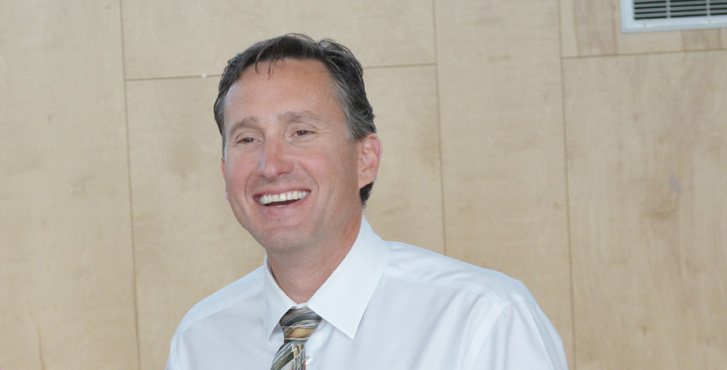
Marcus Toneatto, Assistant Superintendent and Director of Learning and Inquiry for School District No. 53.
Toneatto is optimistic overall, but adds, “although there has been outstanding work done in the district to help improve the success of Indigenous learners, we are aware there are still challenges that need to be overcome in order to reach the goal of equity.”
Some of the challenges for Indigenous learners have been amplified recently by COVID, said Toneatto, but he added, “we are extremely proud of the work our staff has done to support students and families during these trying times. We are pleased Indigenous learners have been able to show improved results during the 2020/21 school year and that the district is committed to the goal of achieving equity for Indigenous learners and improving success for all students.”
The HAWD (How Are We Doing) report for Indigenous students in 2020/21 highlights some of the district’s achievements through the adversity of recent disruptions. The highlights include the highest five and six-year completion rates in the district. And there were significant gains in the FSA (Foundation Skills Assessment) numbers overall.
In Grade 4 reading, the gap was not only reduced, but Indigenous students scored eight per cent higher than non-Indigenous learners. Grade 4 numeracy skills also improved, closing that gap by another eight per cent, indicating an overall improvement of about 16 per cent.
Adult completion certificates were at 32 per cent over the last three years, but dropped to 24 per cent last year, showing that Indigenous students are completing their education in traditional streams at a greater rate.
Another area of note is the percentage of alternate students in the district who are Indigenous. There was a 42 per cent average over the past three years, but dropped to 32 per cent last year, a 10 per cent reduction. Although this number still represents a disproportionate number of Indigenous students in alternate programs, it is a significant improvement, the HAWD report summarizes.
Toneatto is grateful for what the district, its staff, and teachers are doing. “I want to acknowledge the incredible work the entire School District 53 team has done to keep schools open during the pandemic as they supported students with their educational and social emotional needs.”