By Times Chronicle Staff
Aimed at raising awareness of bats and the threats they are facing, April 17 is International Bat Appreciation Day which celebrates the diverse and fascinating world of bats.
While there are over 1,400 species of bats globally on all continents except Antarctica, BC has the largest number of species in Canada with 15 species along with acoustic records of three other species. This variety of species is largely because of the wide range of ecosystems found in the province with bats inhabiting the desert and forests, the islands, lowlands and high elevation landscapes of BC.
Three-quarters of all bat species consume insects and all Canadian bats eat insects and invertebrates. In a laboratory study the Little Brown Myotis, which is common in the Okanagan, ate 600 mosquitoes in one hour in a lab setting.
Another resident South Okanagan bat is the Pallid Bat which has evolved to eat scorpions without being affected by their venom.
Bats are the only mammals that can fly like birds, they are agile and quick in their flight, easily navigating mountain ridges, waterways and even dense forests at night. While they don’t have feathers, their wings are made of elastic skin and spread between their fingers and down to their ankles, creating a membrane for a well-sustained flight.
Bats use echolocation and high-frequency calls not just to catch insects or move around but also to communicate and even sing. Another resident bat of the Okanagan Valley, the Spotted Bat, is the only species that humans can hear echolocating – all other bats are more elusive as they echolocate in high frequencies above the hearing range of people.
Ten out of the 15 BC bat species are listed as at-risk or endangered. Bats face a myriad of threats including White-nose Syndrome (WNS), which is caused by a fungus that attacks bats during hibernation. The fungus was detected in BC in 2022, but volunteers and researchers have not found any bats sick with WNS in BC yet.
This disease does not affect pets or people but has killed millions of bats in North America and is slowly advancing northwards from Washington State.
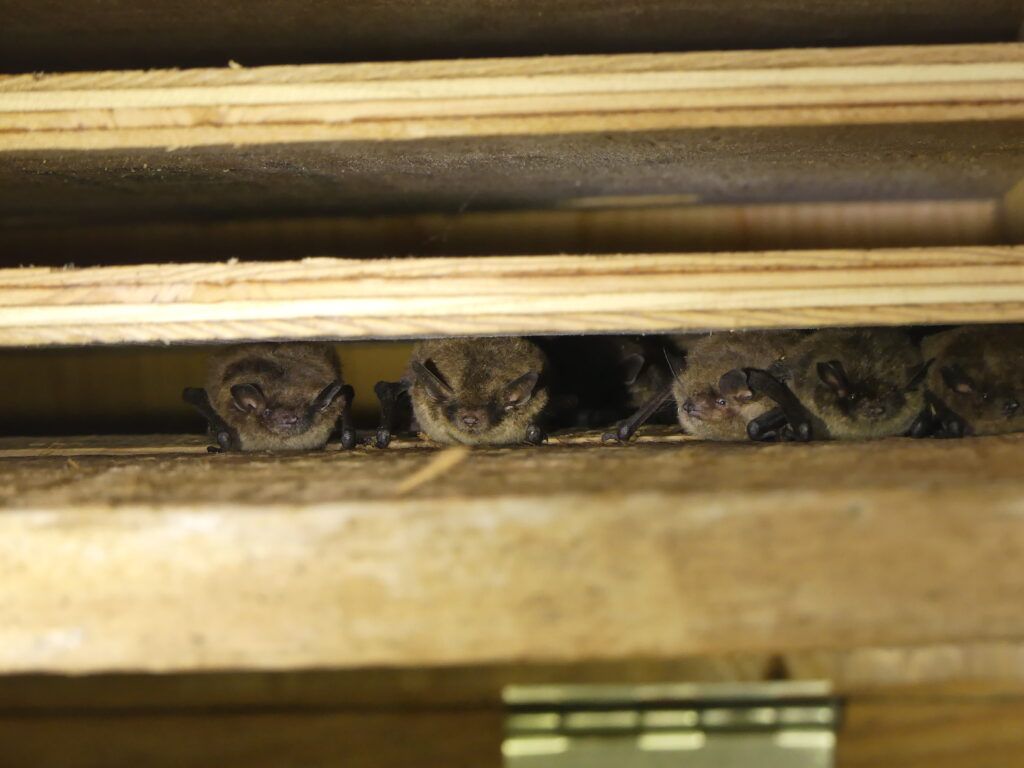
Bats are important to our environment and economy: Each of these little bats roosting in a bat box can eat half their body weight in insects every night. J. Saremba photo.
Help the bats
Locally, the BC Community Bat Program conducts outreach, research and community engagement to share science-based information about bats, learn about local bats and protect them. Here is what you can do to help:
- Report any sightings of live or dead bats in your area on bcbats.ca.
- Sign up for bat counts during the summer and help collect information about how many bats are roosting in the Okanagan.
- Become a Bat Ambassador to be a bat champion in your community.
- Get involved and get your community certified as a Bat Friendly Community.
- Visit bcbats.ca to find free resources, ask questions, read about different species and their life history, and find opportunities to contribute to the program.
- Donate to bcbats.ca to help us help bats.
The BC Community Bat Program Okanagan Region partners with the Habitat Conservation Trust Foundation, Forest Enhancement Society of BC, the Habitat Stewardship Program, North Okanagan Conservation Fund, South Okanagan Conservation Fund, and the Province of BC.