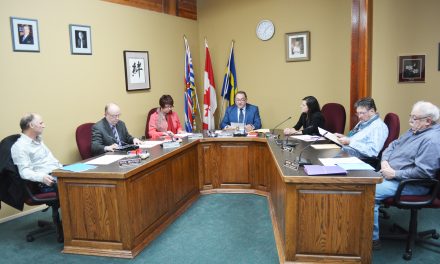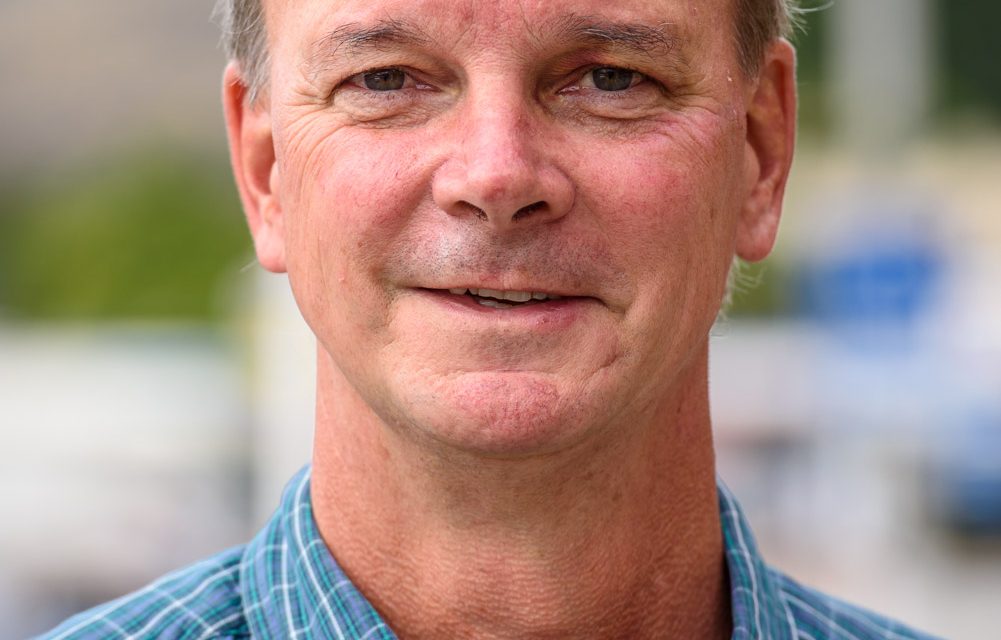

Lawyer Brian Harvey spoke to the Rotary Club of Osoyoos recently about the importance of having a will. (Richard McGuire file photo)
Several years ago, an American lawyer contacted Brian Harvey out of the blue. The lawyer told Harvey he was entitled to an inheritance from a deceased relative he’d never heard of.
Harvey, a lawyer, who was elected on Saturday to Osoyoos Town Council, told of this incident when he was guest speaker recently at the Rotary Club of Osoyoos.
The scenario seemed eerily similar to what has become known as the Nigerian Inheritance Scam. An email purportedly from an African lawyer informs the recipient they’ve received an inheritance, but it turns out to be a fraud.
Except in Harvey’s case it was legitimate and he got the money. The relative had died “intestate,” or without a will and with no direct descendants.
Harvey used the personal story to illustrate the importance of having a will.
In his speech, entitled “Death and Taxes,” he discussed the importance of wills and estate planning and “the taxing effect on your family” if one does not have these documents in place before death.
In 2014, the Notary Foundation of B.C. reported that 55 per cent of British Columbians are without a will. This is in line with the Canadian average of “almost half,” according to a 2013 CIBC survey.
Harvey explained that when it comes to wills, there are three types of situations that might pose a problem:
- Intestate – when there is no will;
- Partial intestacy – when the will is deemed invalid or all the named beneficiaries pre-decease the will-maker;
- Some of the person’s assets are not included in the will and those assets would then be distributed according to the rules of intestacy.
He described the different ways assets can legally be distributed, based on the Wills, Estates and Succession Act, which came into effect in 2014.
When an individual dies with a proper will in place, a previously appointed executor or estate trustee is responsible for distributing estate assets to the intended beneficiaries.
Harvey explained that when an individual dies without a will and with no surviving descendants, the surviving spouse is entitled to the estate.
When an individual dies without a will and leaves behind a spouse and children, the surviving spouse is entitled to a preferential share of $300,000 with the remainder going to the children. When the surviving spouse is not the parent of those children, their preferential share is $150,000.
If there is no surviving spouse or children, the individual’s estate would be transferred to any surviving parents and then grandparents. When the search for surviving descendants has been exhausted, the province takes possession of all assets.
Rotary members had a lot of questions for Harvey and told him, and each other, about experiences of their own.
Harvey said he believed the reason so many people do not prepare wills in advance is because they tend to “procrastinate.”
Harvey concluded by saying that preparing a will and planning an estate in advance saves one’s family from time and energy and he stressed the importance of making sure that “your estate goes to the people you want it to go to.”
MICHELE WEISZ
Osoyoos Times