Parks Canada is unwilling to consider the provincial government’s conditions for a national park in the South Okanagan and won’t come to the table, says Boundary-Similkameen MLA Linda Larson.
“Parks Canada has been engaged by the Minister of Environment’s [Mary Polak] staff and has not been receptive to an ‘out-of-the-box’ national park,” Larson said in an email last week.
“Talks are continuing and I am still hopeful that they will partner in some way with the province on park development,” she said.
Larson said talks have only occurred at the staff level, but “Parks Canada is not at the table with regard to the provincial conditions… We are still hopeful they will show an interest in doing something different.”
Her comments appear at odds with a statement by Parks Canada saying, “we have not been approached by the province to discuss next steps.”
Larson recently told the board of the Regional District of Okanagan-Similkameen (RDOS) that area residents have told the province that regardless of what kind of park is developed, they want ranching, hunting, fishing and use by a helicopter school to continue.
In the provincial government’s August 2015 Intentions Paper on protected areas in the South Okanagan, the government says it supports the principle that existing uses of the land must continue.
These include protection of ranching and existing grazing tenures, as well as other tenures such as helicopter training use.
In fact, documents obtained by the Osoyoos Times under the federal Access to Information Act show that in 2011 Parks Canada was engaged in discussions aimed at allowing ranching and grazing tenures to continue, with protections for the most environmentally sensitive areas.
Parks Canada has since stated on several occasions that grazing would be allowed to continue and that private land would only be acquired for a national park on a “willing-seller, willing-buyer” basis, with no expropriation.
There were also sporadic discussions prior to 2011 between Parks Canada and Canadian Helicopters, a company under HNZ, aimed at resolving its concerns.
The Osoyoos Times has not located any Parks Canada documents clarifying the agency’s position on hunting in a South Okanagan national park reserve. Parks Canada does, however, permit hunting by locals in the Mealy Mountain National Park Reserve in Labrador.
All talks between Parks Canada and stakeholders came to an abrupt halt in early 2012 following the provincial government’s announcement that it was ending consideration of a national park reserve.
Park’s Canada Agency (PCA) was asked to respond to Larson’s characterization of its position. While a PCA spokesperson did not directly address Larson’s comments, she did issue a statement suggesting there have not been discussions between the two governments on moving forward.
“Parks Canada is aware of the report released by the government of British Columbia summarizing public comment on its August 2015 protected areas framework document,” said the statement.
“At this time, we have not had any discussions with the province on its report nor have we been approached by the province to discuss next steps. Therefore, no work is currently being conducted on the South Okanagan proposal.”
Instead, Parks Canada is focused on other park initiatives at this time, the statement continued.
“Parks Canada will continue to respect the province’s position on the national park reserve proposal and not engage stakeholders on this potential project,” the statement said.
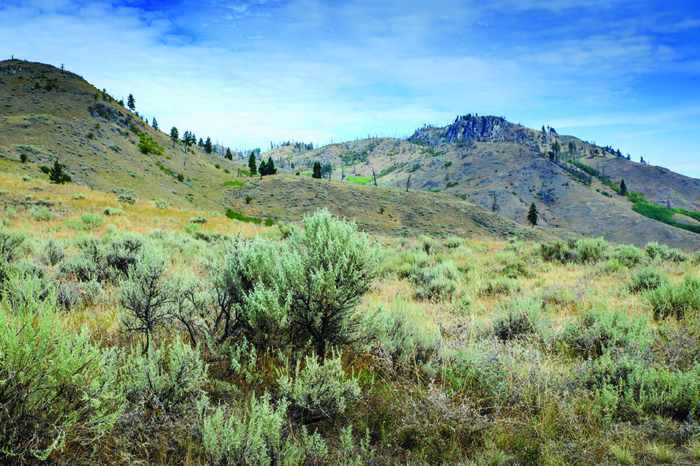
“The South Okanagan-Lower Similkameen region is located in the southern most extent of the Interior Dry Plateau natural region of Canada that is not yet represented in Canada’s system of national parks.
“The proposed national park reserve would provide an opportunity to conserve and present one of Canada’s iconic natural and cultural landscapes, as well as to facilitate unique and inspiring visitor experiences, forming a living legacy for future generations. It would also allow for the continuation of grazing and is recognized as an important element of the regional tourism strategy because of the opportunities and economic benefit that it would bring to the area.”
The B.C. Ministry of Environment was also asked to clarify Larson’s comments, but no response was received by press time.
By Richard McGuire