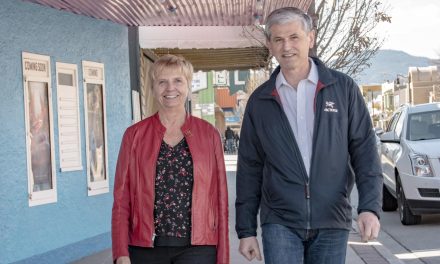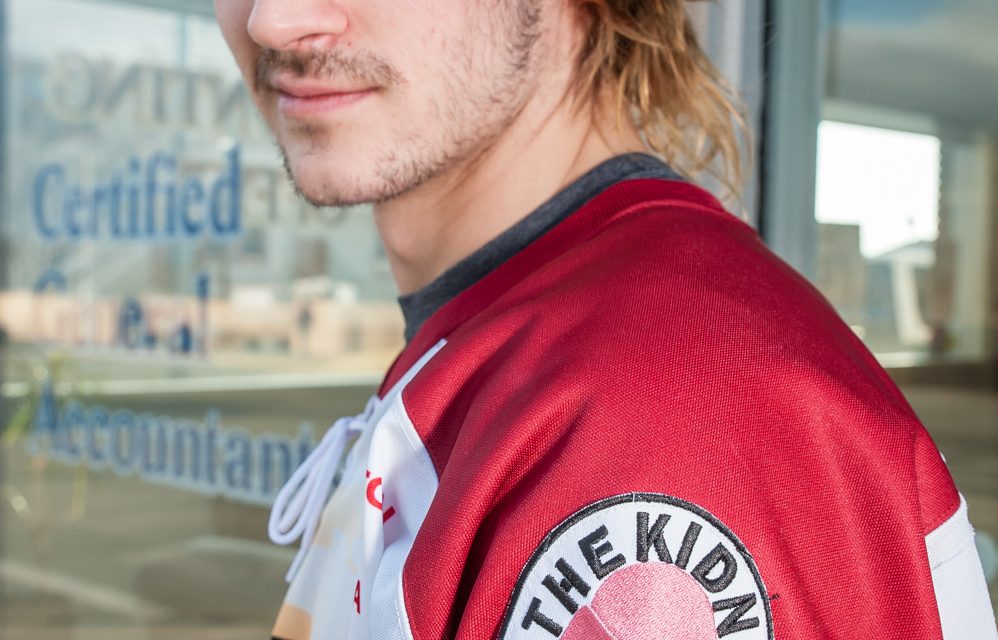
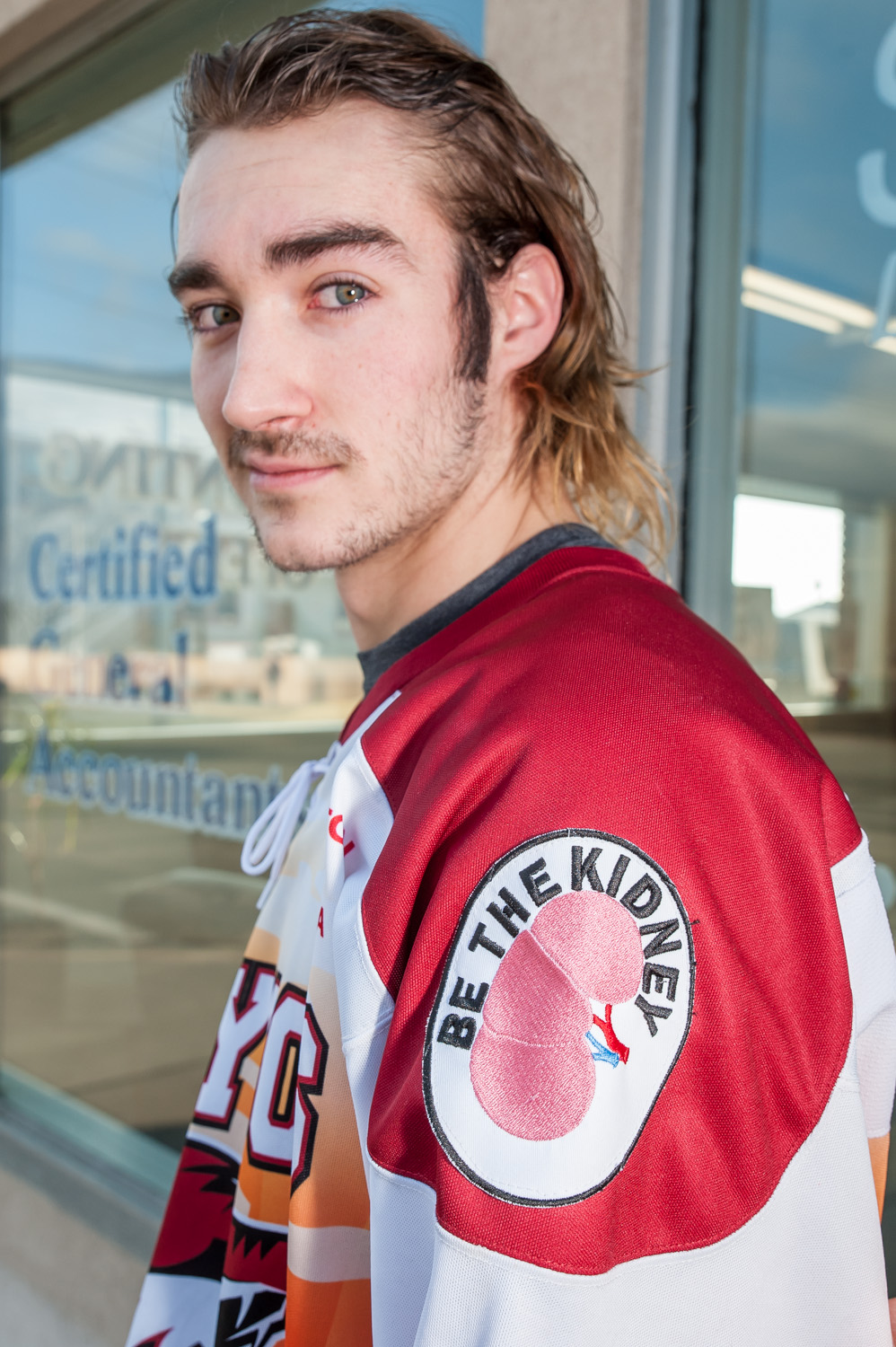
Julie Wolter (left) is shown recovering in hospital after receiving a kidney donated by Brian Rawlings (right). Both were out of hospital in days after the March 11 operation. Rawlings is back in Osoyoos and has lots of energy. Wolter is staying in Vancouver until around the beginning of May in case there are setbacks. (Diana Rawlings photo)
An Osoyoos woman is recovering after receiving a kidney donated by an Osoyoos man one day before World Kidney Day.
Both the recipient, Julie Wolter, and the donor, Brian Rawlings, were operated on in Vancouver on March 11.
Rawlings has returned to Osoyoos with a surprising amount of energy.
Wolter was released from hospital on March 16, but will remain in Vancouver until around the beginning of May in case there are any complications.
“Overall, the kidney function is good and my numbers are all really good,” said Wolter in a telephone interview from a Vancouver home for kidney patients. “Personally, I’m a little weak and they’re trying to tweak all my meds, but so far everything is looking really good. I just need time to heal.”
March is Kidney Health Month and March 12 was the 10th anniversary of World Kidney Day, a global event drawing attention to kidney health.
The Kidney Foundation of Canada, B.C. and Yukon Branch, recently announced it is embarking on a mission to increase the number of kidney transplants in B.C. by 50 per cent over the next five years.
Rawlings, 61, originally planned to donate his kidney to another Osoyoos woman, Judy Sloan. When they turned out not to be compatible for a direct donation, the two entered into a “paired exchange” program in which Rawlings would give his kidney to another recipient in Canada if a compatible living donor could be found for Sloan.
In November, however, a kidney from a cadaver (deceased) donor in Winnipeg was given to Sloan. This freed Rawlings to donate his kidney to Wolter, who was believed to be the only remaining patient in Osoyoos waiting for a kidney. The two were compatible matches.
Most people have two kidneys, but can function normally with just one. A transplant from a living donor has a better chance of success than one from a cadaver donor.
Rawlings said he did surprisingly well after the operation and refused offers of a morphine drip and other pain killers as his pain was minimal.
Last Thursday, he bounced into the weekly meeting of the Rotary Club of Osoyoos, full of energy and looking like nothing had happened. Only that night did everything catch up with him.
“For the first five days, I was unbelievably good and probably did become a little bit rambunctious,” Rawlings said last Friday. “I felt myself just dipping off a bit last night and I went to bed at seven o’clock and slept for 13 hours and felt much better.”
The three-and-a-half-hour operation, he said, required a general anesthetic. Three laparoscopic incisions were made to disconnect the kidney and one incision was made below his navel to remove it. That incision was the only thing causing any discomfort, and mainly when he moved, Rawlings said.
Rawlings has been told to take things easy for six to eight weeks and to listen to his body. This waiting period would be longer for someone who works in a physically demanding job.
He must avoid heavy lifting for eight weeks and any contact sports for three months. That didn’t stop Rawlings from picking up a vacuum when he got home until his wife Diana told him to stop.
For Wolter, the recovery is more difficult because she must take various medications to prevent her body from rejecting the kidney. However, the challenges, she said, have all been expected.
Glomerular filtration rate (GFR) is a measure of kidney function. A normal measure is in the range of 90 to 120, while a sustained level below 60 is a sign of chronic kidney disease.
Wolter said she had a GFR of just 10 before her operation, a sign that the transplanted kidney she received from her father 36 years ago was failing.
Since her operation, her GFR has improved to a more healthy 63, she said.
Wolter has been staying with her husband Stan in a suite for kidney patients at a seniors’ housing facility in Vancouver operated by the Royal Canadian Legion.
There and at the hospital she has had a chance to meet and talk to other kidney patients. One, she said, is a Penticton woman hoping to return home soon.
Wolter’s transplant is a milestone for the “Share Your Spare” group based at the Kemp Harvey Craig accounting office, which has been working since 2013 to raise kidney awareness in Osoyoos.
The group set a goal of eliminating the waiting list for kidneys in Osoyoos. With Wolter’s transplant, that goal has now been met.
Rawlings’ wife Diana had initial concerns when he first announced he planned to give up a kidney. Now, however, she feels good about his decision as well as relieved that it’s over.
“I feel really good about this,” she said. “The fact that he has helped somebody else and changed her life totally, saved her life, is something that we know as Christians we need to do for each other.”
The Rawlingses and Wolter both attend Osoyoos Baptist Church and Wolter and Diana Rawlings both work at the Osoyoos Branch of Okanagan Public Library.
The operations have brought them all closer together.
At one point Wolter told Rawlings he could sit on her bed because the two were now related.
Rawlings said his decision to give up his “spare” kidney was absolutely the right thing to do.
“If I had another kidney to give if somebody needed it, I would do it tomorrow,” he said.
RICHARD McGUIRE
Osoyoos Times
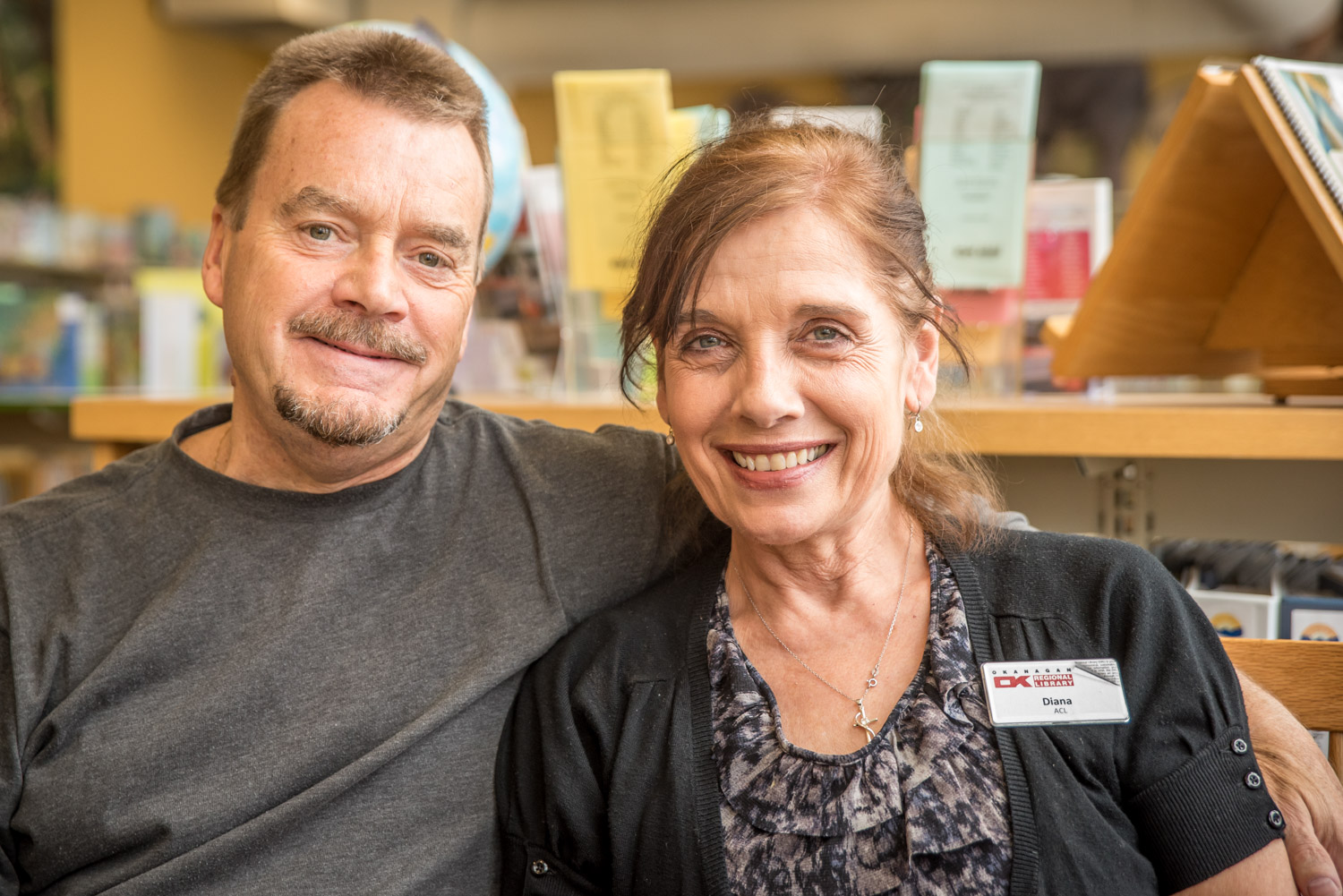
Brian Rawlings (left) donated one of his kidneys to an Osoyoos woman, Julie Wolter, who needed a transplant. His wife, Diana, right was worried about his decision initially, but now she says she’s proud of her husband and feels very good about his decision. “It’s something that we know as Christians we need to do for each other,” she said. (Richard McGuire photo)