
Letter to the Editor:
I am encouraging the Town of Oliver council to begin the process of emulating the City of Penticton.
Clearly, they have heard that video surveillance is legal, easily implemented, inexpensive and administratively well adapted to our situation in the South Okanagan.
Let’s stop spending money on projects like the aquatic centre, which I don’t believe the people of our communities overwhelmingly support for financial reasons. Instead, let’s look at helping our RCMP with this type of expenditure (for video cameras).
Our past CAO spent many months trying to convince us that this could not be done for privacy reasons; so much so that I tired of the argument. Clearly, she was wrong.
Four years ago you town councillors all committed, at the all-candidates meeting, to follow the wishes of your community. I remind you, we have another election next year.
Let’s do the right thing; we have made many inroads in mitigating crime in this area, Let’s keep the pressure up and join the future.
Penticton City Council has approved a $40,000 grant to the Downtown Penticton Association to implement a security surveillance pilot program in downtown areas.
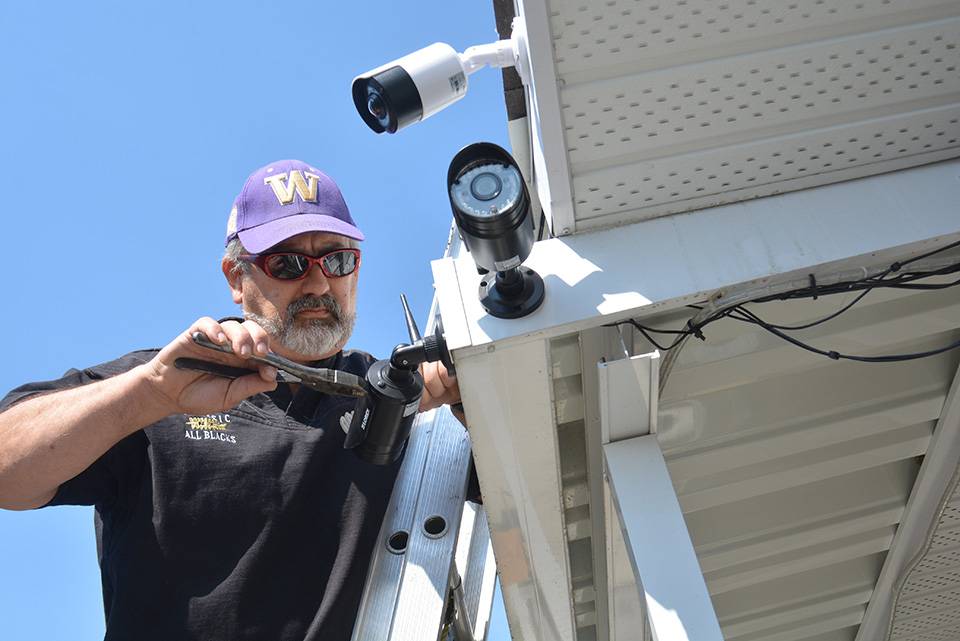
The DPA will be working with Bett’s Electric Security to install cameras and signage in three to five undisclosed locations in the downtown core with strobe lights and two-way voice capability, monitored by a remote security officer from 9 p.m. to 9 a.m.
The immediate interaction should deter most people, and if not, the guard will dispatch bylaw or RCMP to the location as the issue is happening versus when it happened.
“The location of those cameras will not be identified, and they will be moved around; that will be part of the administrating of this pilot that the DPA will do,” said Coun. Judy Sentes, liaison to the DPA.
“They know where some of the key problem areas are. And so, they will have the discretion to put them up and move them as the priorities change.”
Video streams will be stored for 14 days offsite and will be used only to assist RCMP in criminal investigations.
Choosing to give the grant to the DPA and allowing them to operate the pilot program instead of the city doing it in-house is a strategic move.
Data, including video, collected by a public body in British Columbia falls under the Freedom of Information and Protection of Privacy Act, which is subject to requests from the public for access.
“So ultimately, that data could be requested amongst members of the public for us to then provide, and then there would be significant costs in administrating that program, as well as restrictions,” CAO Donny Van Dyk explained to council.
The DPA, as a private sector organization, falls under the Personal Information Protection Act instead.
Council voted to provide the funding by the end of the year.
Michael Guthrie, Oliver

