By Lyonel Doherty
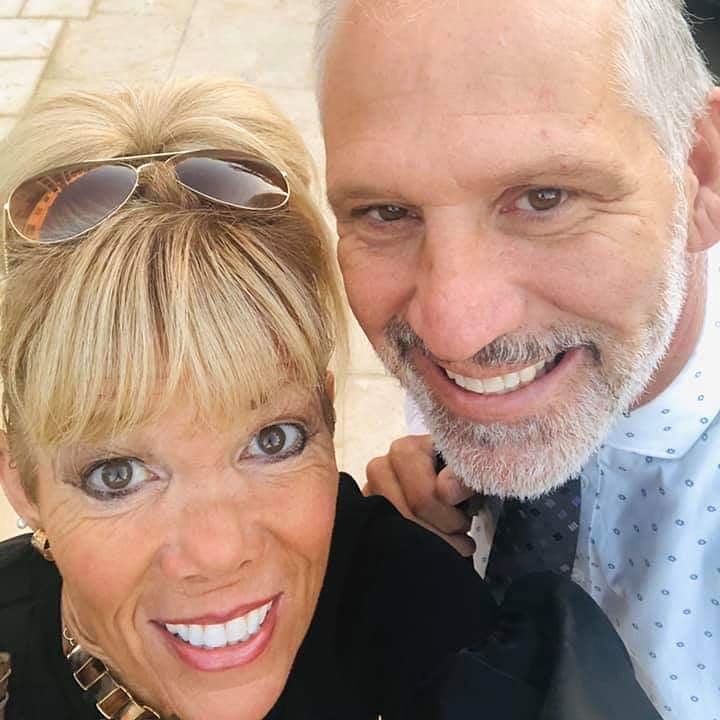
Photo contributed)
Despite having three days to get out of Egypt during COVID-19, a couple of Oliver teachers can’t wait to return.
Maurice and Marji Basso recently completed their 14-day isolation period at home and are itching to get back to Africa where they spent several months teaching in a private school under B.C. curriculum standards.
Surprisingly, there wasn’t much culture shock to recover from.
“Everyone talked about a culture shock and, honestly, we didn’t really feel one,” Marji said. “The heat took some time to adjust to, especially because I was mindful to wear longer clothing in public spaces.”
Marji said the noise was another matter. Because traffic is so dense, people use a chaotic honking system as opposed to traffic lights, and it oddly seems to work.
“They have a honking communication similar to Morse code; each type of honk means something, either I am on your left, on your right, watch out, etc.”
Marji said Egyptians don’t exhibit road rage; they just seem to make this chaotic system work.
“We have seen cars drive on the wrong side of the road, children hanging out of sunroofs, an entire family on a motorcycle with no helmets, and 20 workers crammed in the back of a pickup.”
Marji said seatbelts are not used, and texting/talking on your phone while driving is common practice.
The Bassos also noticed a call to prayer that resonates through the streets five times a day, starting at 4 a.m. People literally stop their routine and pray. Even schools, airports and shopping malls have designated prayer rooms.
One of the first things they observed was how social Egyptians are.
“They are very much a night-orientated culture where 8 p.m. is when things are just getting started, and often stores, restaurants and malls are open past midnight,” Marji said.
She noted that Egypt has a population of 100 million people, with no shortage of babies.
Marji had to watch how she dressed (more out of respect), and she was careful not to draw too much attention.
She observed the men displaying the most affection for each other, saying it’s not uncommon to see male teens holding hands.
“I would only shake a man’s hand if he extended his hand first as it can be considered offensive. It is also prudent for couples not to show affection in public.”
(Photo contributed)
Marji never rode in the front seat of a car because females don’t do this in the land of the pyramids.
She was once shooed out of a mosque because it was call to prayer and only men were allowed in there.
“I would not make eye contact with men when walking by myself, as it could be misconstrued.”
The school they worked at is a guarded facility, housing students from pre-school to Grade 12.
“Egyptian boys are very physical with each other; whether it is play fighting, wrestling or actual disputes.”
Because students are there to learn English, speaking Arabic in class is not permitted. So, monitoring that and the fighting were probably Maurice’s two biggest challenges as vice-principal.
“I think their record this year was 14 suspensions in one day, but overall, the students are very respectful of authority and have a great sense of humour . . . always working an angle like all teenagers do,” Marji said.
Maurice’s charisma seemed to rub off on everyone he came in contact with, including the guards, the drivers (who giggled at his attempt to speak Arabic), and the local shopkeepers.
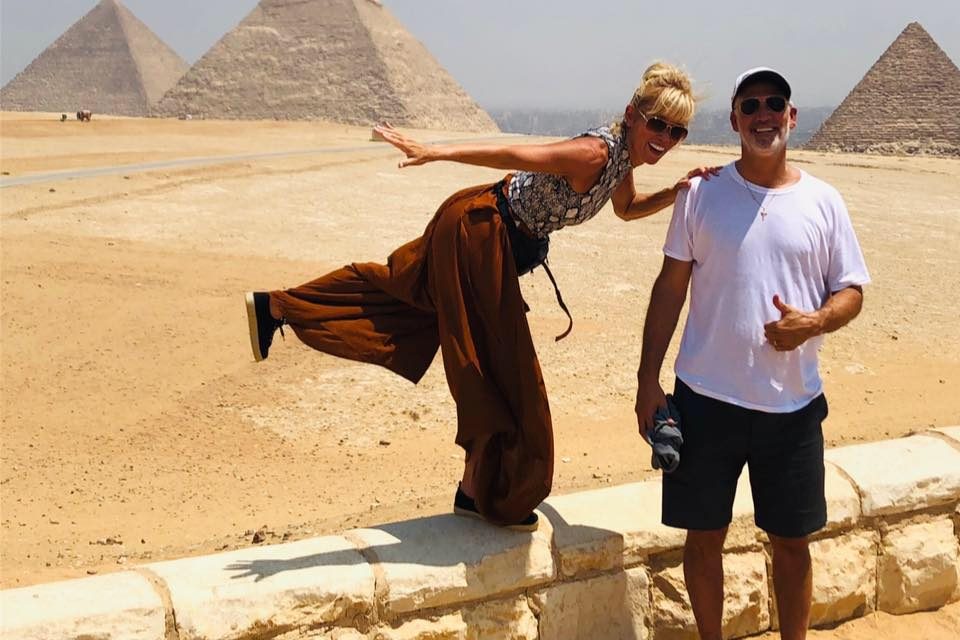
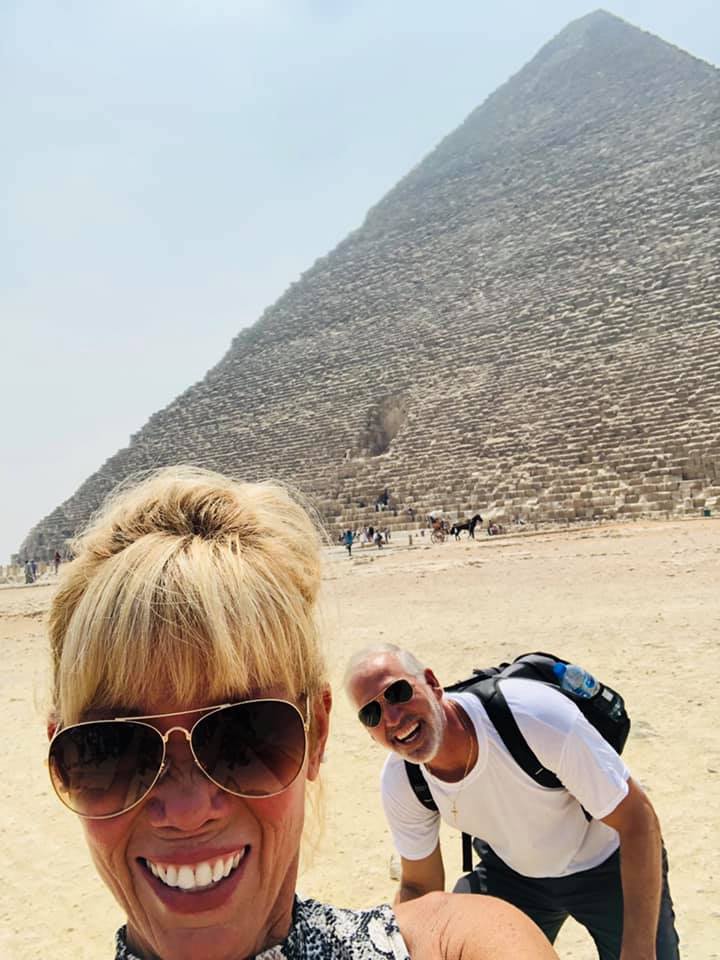
Visiting the great pyramids left the Bassos in awe every time. Marji learned that it took 85 years to construct the monoliths.
When the pandemic hit,
the government took strict precautions, such as closing schools, airspace, hotels and tourist destinations.
“What didn’t occur was the hoarding. Shelves were stocked, toilet paper in ample supply, and handwash and masks readily available,” Marji said. “When we asked locals about this, their retort was why would they? They had lived and survived through a revolution.”
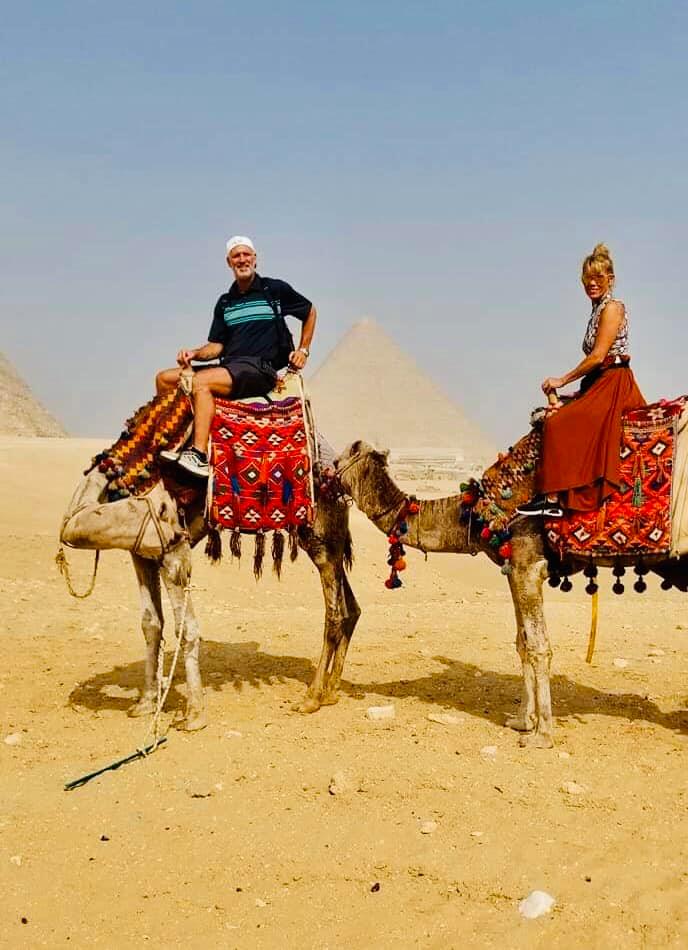
Maurice and Marji felt an overwhelming sense of concern for people whose jobs were in jeopardy. For example, the pandemic impacted their friend Emad, a camel operator who takes visitors to the pyramids.
The Bassos made the difficult decision to cut the year short and return home. The Canadian Embassy organized a repatriation flight but would not guarantee any future opportunities, and since Ramadan (a month-long religious celebration) was fast approaching, the Bassos grew concerned about social gatherings.
“We were given three days to get our things in order to make the journey home, including our stray cat, Oscar,” Marji said.
Because the Bassos still have goals to accomplish in Egypt, they are going back for another year this fall.
“We feel so fortunate to be back home with family and friends, but also so excited to continue where we left off at the school (in Cairo),” said Marji.
She noted the experience has made such a profound impact on their global view of life.
(Photo contributed)