By Sebastian Kanally, Times Chronicle
New innovative solar energy systems may be a way for South Okanagan farms to protect their crops against extreme weather and create renewable energy, but land-use bylaws still need to catch up.
A unique application to use farmland for dual purposes, farming and energy, requires new considerations of Agricultural Land Reserve (ALR) land use bylaws.
The application to the Regional District of the Okanagan-Similkameen (RDOS), did receive support and got pushed along to the Electoral Area “C”, Advisory Planning Commission (APC) for consideration, getting one step closer to becoming a reality.
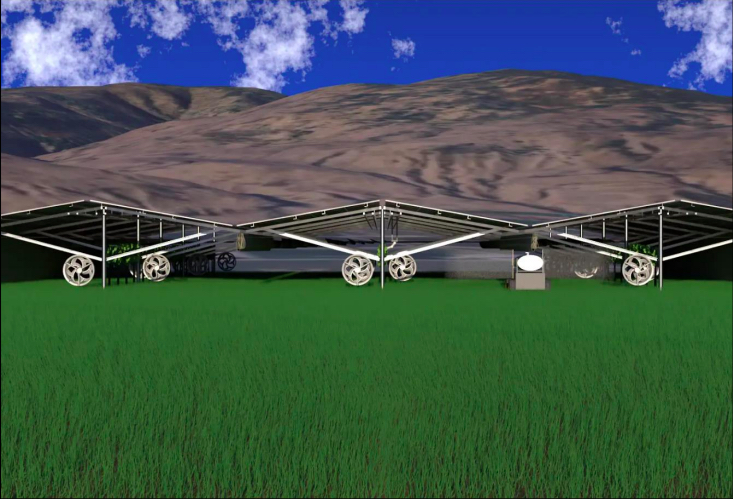
The unique application proposes a solar energy system, “to enhance our ability to grow grapes by protecting the crops using … solar panels above (the vines) and a ground source heat pump system along with an air movement system … under the panels to prevent damage from frost, winter kill from extreme temperatures, and stress from heat, humidity and drought,” the application explains.
This type of innovative renewable energy system is referred to as “agrivoltaics”, which is the dual use of land for solar energy production and agriculture.
These types of systems are gaining traction in Canada as they can greatly increase land use. Agrivoltaics Canada explains that combining solar and agriculture can potentially achieve 186 per cent land use efficiency by raising the solar systems above the crops as you almost double the usable space.
The application seeks this type of system for the property at 4353 Ryegrass Road outside of Oliver and needs RDOS and Agricultural Land Commission (ALC) approval before it can move forward.
The application needs approval because the “solar energy system” is considered a non-farm use within the ALR.
Specifically, the applicant is seeking the Commission’s approval to allow for the installation of solar panels over 33 per cent of the subject 17 ha property adjacent to the Okanagan River.
The proposed solar energy system would include “a series of solar racks that support solar panels, irrigation, data collection, and rail-mounted robotics drive head that connect to various attachments for weeding, testing and picking of fruit, pruning and tying vines, and a glycol heat and air current system. This system is aimed to address specific issues of winter freeze, heat domes and drought conditions.”
The system has to be approved under “non-farm use” because the ALC restricts the use of farmland to agriculture and limits maximum parcel coverage.
In the report, the RDOS explains that these provisions are in place primarily to “protect and preserve the land’s agricultural viability ensuring it remains productive for farming.”
They further explain that this situation represents “a unique use of farmland” where the agrivoltaics system “as an alternate form of power generation . . . may benefit agricultural use of the property and requires the consideration of a new use and parcel coverage not currently contemplated by the Regional District’s land use bylaws.”
Since the Official Community Plan (OCP) bylaws do not directly address this type of use of parcel coverage, the RDOS notes that the closest the bylaws come to support this type of application is “in relation to encouraging secondary “value-added,” uses for the purpose of diversifying and enhancing farm income.”
According to the RDOS, this new agrivoltaics system presents benefits including enhancing productivity by creating microclimates benefiting crops through reducing extreme heat and lower water evaporation by providing shade.
It also allows the land to maximize its utility by allowing the production of food and renewable energy, promoting renewable energy generation helps contribute to climate change mitigation, and it makes farming more financially sustainable by providing an alternate source of revenue.
More information on this type of farming can be found at agrivoltaicscanada.ca/