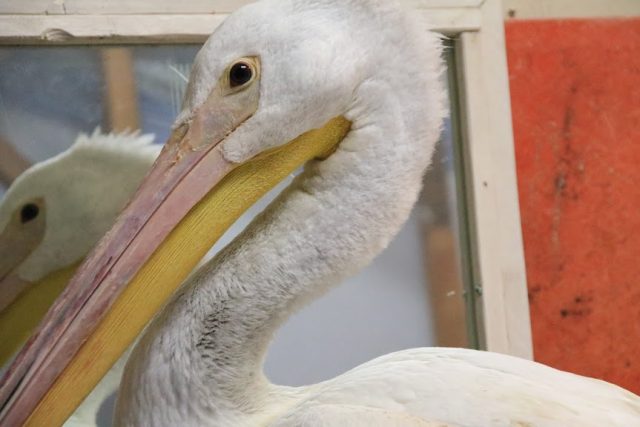
This pelican that was injured in Oliver last year was released back into the wild. (Photo by Wildlife Rescue Association of BC)
Times-Chronicle Staff
An injured America White Pelican hurt ini Oliver last year has been released back into the wild
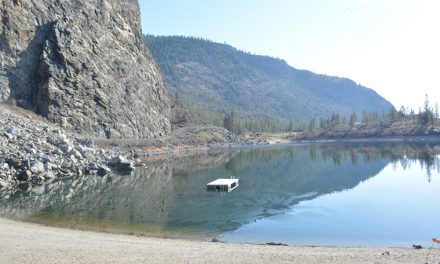
The endangered bird was separated from its migratory flock due to entanglement in a fishing line hook on Tucelnuit Lake. After notification by local residents, a Wildlife Rescue Association team rescued the long-billed bird. It has been treated and rehabilitated at the Wildlife Rescue hospital for the last seven months.
Biologists from Williams Lake recently spotted the migratory flock return to one of their breeding grounds at Puntzi Lake, where the pelican was released.
American White Pelicans are a rare but majestic sighting in Canada. During the spring and summer months flocks migrate to the Williams Lake area – the only witnessed breeding ground in British Columbia. In the fall they head for warmer climates in California and further south.
Tucelnuit Lake is one of the resting stops during that migration.
“These types of situations are challenging because of the specialized care and treatment facilities needed,” said Janelle Stephenson, Wildlife Rescue Hospital manager.
Pelicans are large-bodied birds with small legs and feet. They are designed to be floating on water, not walking or sitting on hard surfaces.
Stephenson said their local climate was one of the biggest challenges, so they adapted by setting up an indoor heated pool to mimic the pelican’s natural winter environment.
“He stayed in there as we spent countless hours managing his wound, infection, nutrition and waterproofing of his feathers.”
Once healed and as the weather warmed, the bird acclimated to the local climate where he learned how to fly again in a larger outdoor enclosure.
Severe damage to the left-wing including multiple punctures and a large tear in the skin above the elbow indicated long-term treatment over winter to ensure a safe and successful return to the wild.
With the help of generous donors, volunteers and staff, Wildlife Rescue purchased an indoor pool with hot water and filtration equipment to mimic warmer water temperatures during the winter. Outdoor enclosures were modified for “Peli” to finish his rehabilitation.
Ongoing treatment included intensive wound management, daily physiotherapy and pool time, encouraging self-feeding of a healthy diet of fish and nutritional supplements.
Weekly veterinary examinations helped rehabilitate Peli for a safe return to his flock.
As a non-profit organization, Wildlife Rescue relies on the generosity of donations to continue caring for injured, orphaned and pollution-damaged wildlife.
You can give your support to wild animals at www.wildliferescue.ca/checkout.
If members of the public see wildlife in distress, they can contact the Wildlife Help Centre at 604-526-7275.
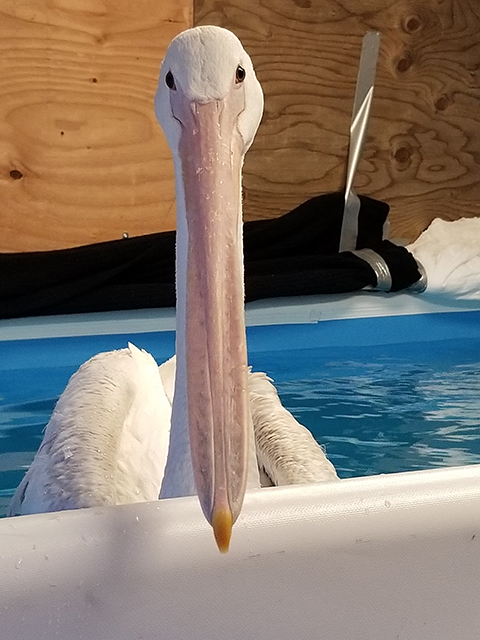
(Photo by Wildlife Rescue Association of BC)