First Nations, Inuit, and Métis service members who have served in the Canadian Armed Forces were honoured on Indigenous Veterans Day across Canada, three days prior to Remembrance Day.
November 8 marks an annual day of remembrance and commemoration of the contributions of Indigenous veterans in the Boer War, First and Second World Wars, Korean War, Middle East conflicts, Afghanistan and various peacekeeping missions.
National Indigenous Veterans Day began in Winnipeg in 1994 after decades of being denied the same respect in Remembrance Day activities across the country as non-Indigenous veterans.
Over 12,000 Indigenous people are estimated to have volunteered in the two World Wars and the Korean War, including 7,000 First Nations members, with approximately 300 dying during these conflicts.
“For over 200 years, Indigenous Peoples have been – and continue to be – an integral part of Canada’s military history,” said Prime Minister Justin Trudeau who added that there are currently more than 2,700 Indigenous members serving in the Canadian Armed Forces.
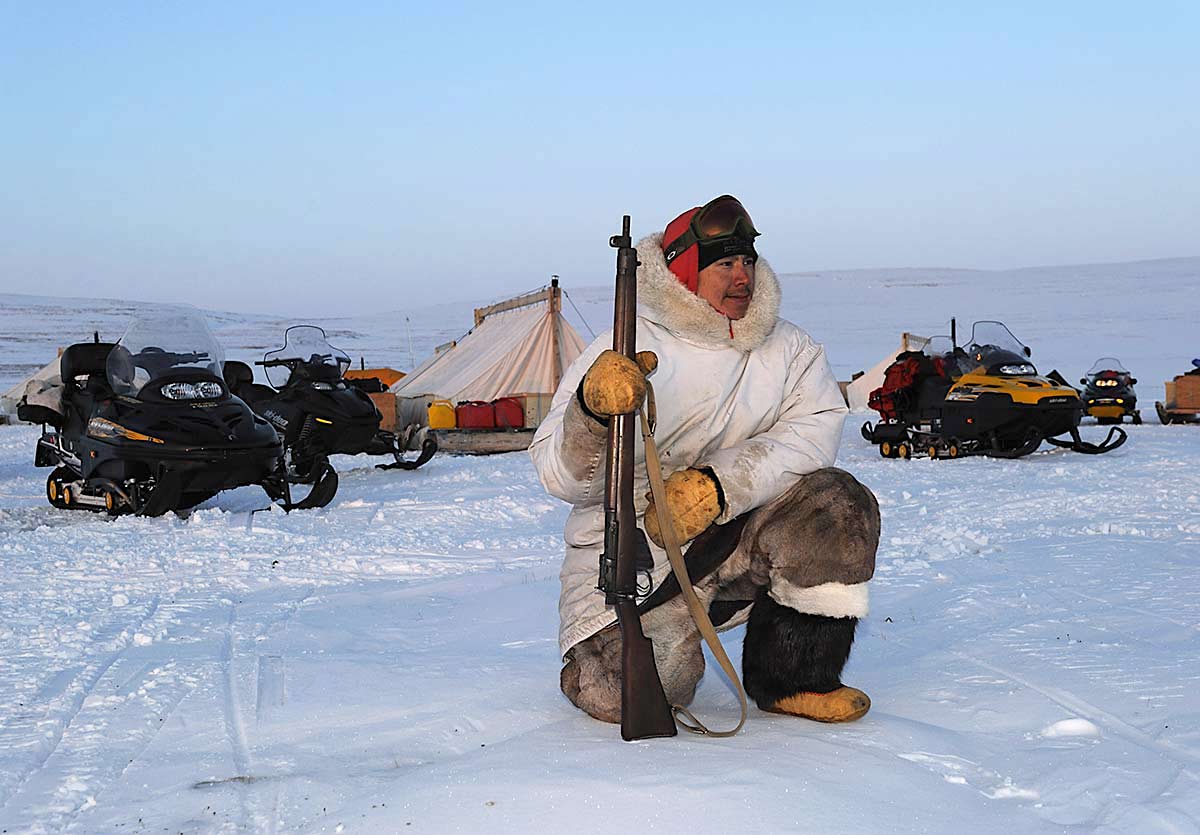
A Canadian Ranger during a patrol in Nunavut in 2012. Department of National Defence photo.
“Key battles in the War of 1812 were won thanks to the contributions of brave First Nations and Métis people. In the last century, thousands of volunteers from Indigenous communities across the country enlisted to serve in the First and Second World Wars, in the Korean War, and in peacekeeping missions under the United Nations,” Trudeau said.
“While serving, a number of Indigenous soldiers became specialized reconnaissance scouts and snipers due to their ability to adapt to different landscapes. In the Second World War, some First Nations soldiers earned the title of ‘code talkers’ for secretly communicating and delivering military intelligence in the Cree language.” Code talkers provided a unique service that helped protect Allied forces and ultimately win the war.
Many also became successful snipers and reconnaissance scouts based on traditional skills of hunting and trapping.
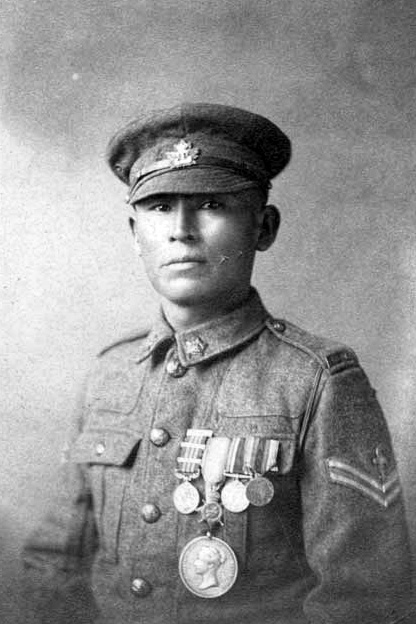
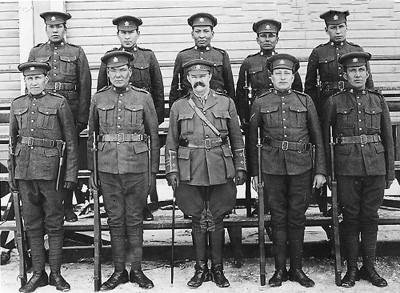
Francis Pegahmagabow, a Wasauksing First Nations soldier, politician and activist. He was the most highly decorated Indigenous soldier in Canadian military history and said to be the most effective sniper of the First World War. Three times awarded the Military Medal and seriously wounded, he was an expert marksman and scout. Government of Canada photo on Wikipedia.
Indigenous peoples actively contributed to the war effort on the home front as well, particularly in the far north and coastal British Columbia where many First Nations members joined Pacific Ocean defence units, which patrolled and surveyed the coast for signs of Japanese invasion.
Across the country, Indigenous men and women worked in war factories and increased agricultural production on their reserves. First Nations peoples also contributed some reserve lands, which were used for airports, rifle ranges and defence posts.
The special efforts of First Nations communities in Ontario, Manitoba and British Columbia were recognized with the awarding of the British Empire Medal, recognizing their significant contributions.
“Despite their service and sacrifice during these conflicts, many Indigenous Veterans endured hatred and systemic racism while serving,” Trudeau noted.
To volunteer for service during the World Wars, First Nations had to give up their treaty rights and when they returned to Canada these rights took decades to restore, if at all. They also did not receive the same benefits, honours, and respect as non-Indigenous Veterans.
“The Government of Canada is working to ensure that all Indigenous service members and Veterans receive the recognition and the support they deserve – we owe it to them,” the Prime Minister added.
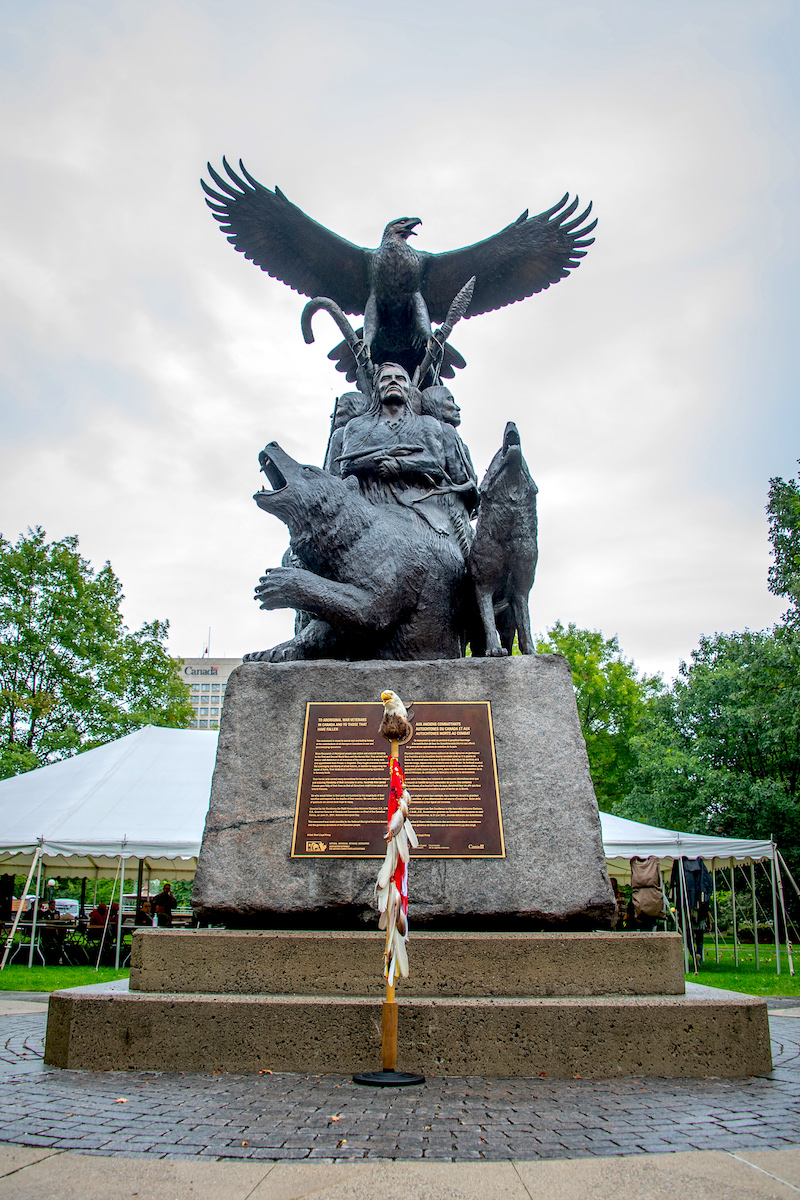
The National Aboriginal Veterans Monument in Ottawa features a sculpture of a large eagle watching over four warriors – two men and two women – representing the diversity of Indigenous Peoples. A wolf, bear, bison and caribou represent values held by many Indigenous Peoples and guard all four corners.
Murray Rankin, BC Minister of Indigenous Relations and Reconciliation added: “Serving overseas or on the home front, in times of conflict, war and peace, we acknowledge the tremendous contributions and sacrifices made by Indigenous veterans in the Canadian Armed Forces.”
But in highlighting both the distinguished service and appalling racism, Rankin cited the example of Dominic ‘Dick’ Patrick, who was one of 15 Sai’kuz First Nations members near Vanderhoof who volunteered for service in the Second World War.
He joined at least 3,000 First Nations members, including 72 women, who enlisted for duty. Patrick’s bravery at a three-day battle in the village of Moerbrugge during the Liberation of Belgium earned him the Distinguished Conduct Medal – the second-highest award for gallantry in action after the Victoria Cross.
“Despite their service and valour, many Indigenous veterans, including Patrick, returned home to face continued prejudice and discrimination,” Rankin noted.
Patrick returned home to BC where he was refused restaurant service because he was Indigenous. That year, he was imprisoned 11 times for returning to that same restaurant and repeatedly demanding fair and equal treatment.
He is remembered by his family and community for his courage not only in fighting for others’ freedom but for fighting for Indigenous rights back home.
“Indigenous veterans and their families have fought throughout every step of our shared history to receive the recognition and commemoration that they deserve. Today, we collectively recognize and remember more than 200 years of military service by Indigenous communities across the country.
“I encourage all British Columbians to take a moment today to reflect and remember the contributions of Indigenous veterans and active service members.
“On this sombre day, we remember those who never came home. We also remember those who returned home forever changed by their service. Lest we forget.”
More information about Indigenous Veterans can be found here.