Pedestrian safety.
ICBC has launched its annual pedestrian safety campaign with the B.C. Coroners Service, B.C. government and police to urge pedestrians and drivers to do their part to stay safe as crashes involving pedestrians spike at this time of year.
Almost two times more pedestrians are injured in crashes from November to January compared to June to August as the weather changes and daylight hours decrease.
The top contributing factors attributed to drivers in crashes with pedestrians are distraction, failure to yield the right of way and weather.
Drivers should take extra time to look for pedestrians before turning, avoid distractions and be ready to yield.
Pedestrians can help stay safe by making eye contact, wearing bright and reflective clothing, and staying focused on the road.
ICBC is distributing free safety reflectors and tips to pedestrians with the help of community policing volunteers and other local partners throughout B.C.
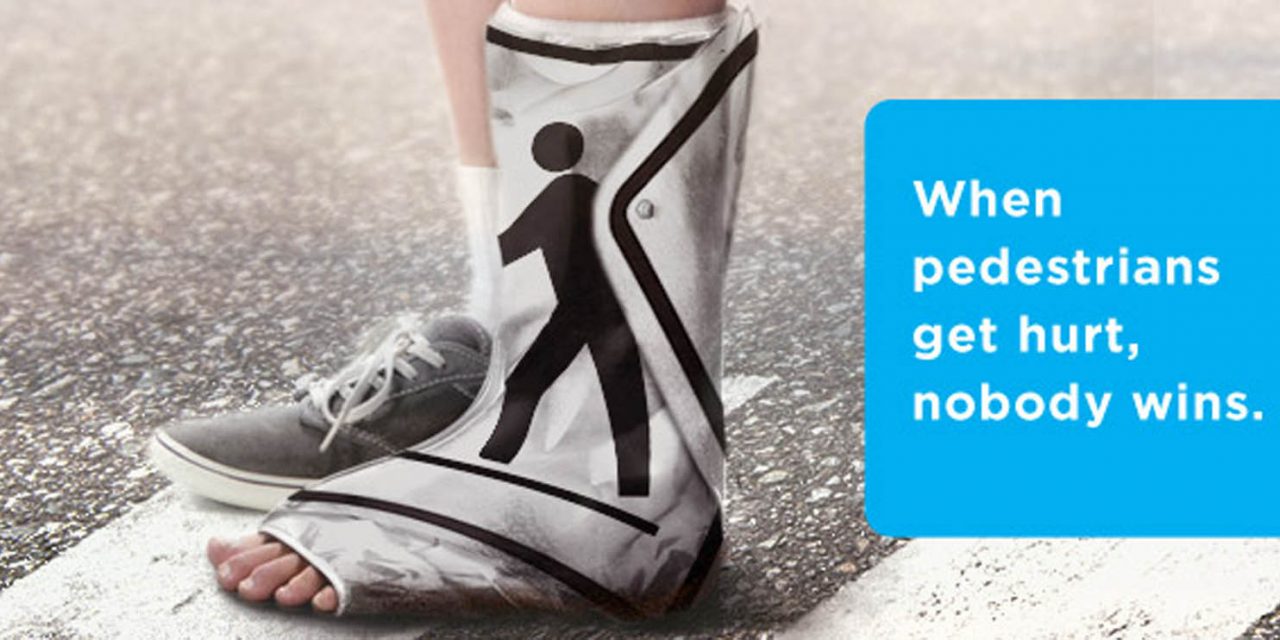
ICBC’s campaign will feature new radio advertising aimed at drivers and transit advertising aimed at pedestrians in the highest pedestrian crash areas of the province, along with online digital advertising.
Learn more stats and facts in ICBC’s infographic, and get more tips and see the advertising on icbc.com.
Todd Stone, B.C.’s Minister of Transportation and Infrastructure, urges pedestrians and drivers of motor vehicles to use extra caution this time of year.
“It’s the fall and that means the evenings get darker quicker and we can expect more bad weather such as rain and fog, and more treacherous road conditions, such as ice and snow,” said Stone. “These are all good reasons to be especially cautious and look out for pedestrians. As drivers, we need to quit making excuses for not seeing pedestrians by staying focused on our driving. As pedestrians, it’s critical that we do what we can to be seen by drivers.”
Moira Stilwell, MLA for Vancouver-Langara, echoed the same thoughts
“It’s important for both drivers and pedestrians to take precautions this time of year, with the weather and less light making driving conditions more difficult,” said Stilwell. “Remember to avoid getting distracted when you’re driving, and to wear reflective clothing when you’re walking outdoors at night time – planning ahead keeps everyone on our roads safer.”
Dr. Kelly Barnard, director of medical unit, B.C. Coroners Service, said the majority of crashes involving pedestrians can easily be avoided.
“Regardless of who is legally in the right in cases where a pedestrian is struck by a vehicle, it’s always the pedestrian who suffers the most catastrophic consequences,” said Dr. Barnard.
Superintendent Derek Cooke, B.C. RCMP Traffic Services and Vice Chair of B.C. Association of Chiefs of Police, said it’s very important for drivers to slow down in busy areas and for pedestrians to be aware and use caution.
“Drivers in crashes involving pedestrians are often distracted or failing to yield the right of way,” said Cooke.
“These behaviours are not only against the law, they’re simply unacceptable. It’s very dark at this time of year, so pedestrians need to help reduce the risk of being hurt by obeying traffic signals in intersections and only crossing at designated crosswalks.”
Lindsay Matthews, ICBC’s director responsible for road safety, said there are steps that all pedestrians can use to ensure their safety.
“For pedestrians at intersections, making eye contact with drivers is key to reducing their risk, as 75 per cent of crashes involving pedestrians occur at intersections,” said Matthews.
“Drivers must be extremely cautious at intersections – take the extra time to look for pedestrians before turning, avoid all forms of distraction and be ready to yield. So whether driving or walking, everyone has a role to play to keep pedestrians from getting injured.”
In the Southern Interior, 12 pedestrians are killed and 240 pedestrians are injured in crashes every year. In Northern B.C., 90 pedestrians are injured and four pedestrians are killed in crashes every year.
These figures are based on five-year averages from 2009 to 2013 and used ICBC data for crashes and injuries and police data for fatalities.
SPECIAL TO THE TIMES
Osoyoos Times