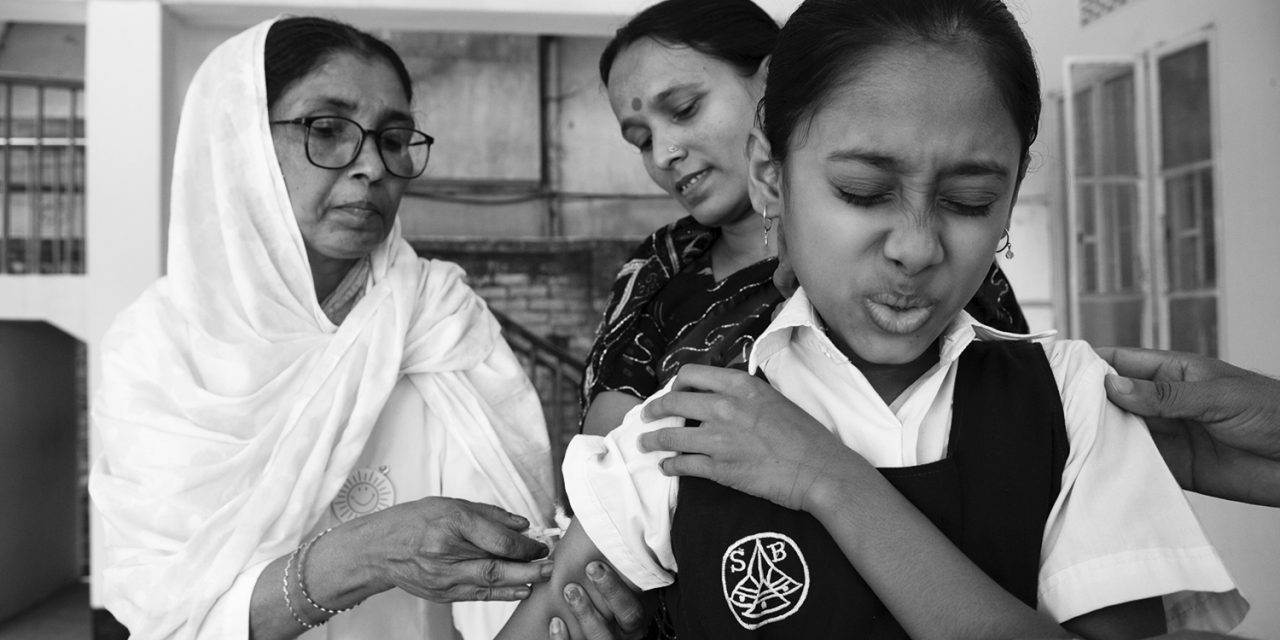
![A girl winces as a woman vaccinates her against measles, at a girls' school in the Halishahar neighbourhood of the southern port city of Chittagong. [#8 IN SEQUENCE OF TWELVE] In February 2006 in Bangladesh, the Government launched the second phase of its national measles immunization campaign. Despite great strides made in the past decade, measles coverage stands at only 71 per cent nationwide and nearly 20,000 children under age five die annually from the disease. The campaign targeted some 35 million children and involved more than 50,000 skilled vaccinators and 750,000 volunteers, making it the largest public health undertaking in the nation's history. UNICEF and the World Health Organization joined the government and numerous other partners of the Expanded Programme on Immunization (EPI) to support the immunization drive. Measles can be life-threatening and spreads quickly among those who have not been immunized, especially in densely populated areas, in emergencies and among malnourished children. Photo (c) UNICEF](http://www.oliverchronicle.com/wp-content/uploads/2016/07/87725aH.jpg)
Photo credit: A girls’ school in Bangladesh takes part in a UNICEF-supported vaccination program. One third of deaths among children under five are preventable by vaccine. Deaths by maternal and neonatal tetanus, for instance, which kills close to 50,000 babies each year from unhygienic birthing practices, is completely preventable through immunization of pregnant mothers. Photo ©UNICEF.
(NC) Parents are responsible for their children’s well-being and there are few ways to better protect a child’s health than through immunization. Vaccinating your child is one of the simplest ways to keep them safe from preventable deadly diseases. But as easy as it is to schedule a doctor’s appointment and get those life-saving shots, talking to your kids about vaccination can be tough. Here are some parent-tested tips to help you both get through it — remember, the more they know, the smoother the doctor’s visit will be.
1. Tell the truth. While you don’t need to reveal every single detail about the process before heading to the doctor, you want your child to trust you so be honest with them about what to expect. If they ask if the shot will hurt, say it might, but only for a few seconds.
2. Don’t avoid difficult questions. Stay calm and speak with a smile. Your confidence in the vaccination process will reassure your child that everything is going to be okay.
3. Get creative. There’s a reason many doctors give children lollipops after their checkups — it’s a reward for being cooperative and brave. You don’t need to rely on sweets though. Instead, go for a healthier alternative that includes some bonding time with you and tell your child that after the shot is over you will read them their favourite book or take them to the playground.
4. Don’t get frustrated with your child if they are resisting. Talk to them and your doctor to find solutions. Scheduling only one shot per visit is a great way to reduce their fears and make the experience more manageable. If your child has older siblings or cousins, have these wiser kids they look up to speak to them about how quick and easy getting a vaccination is.
5. Educate your child on the importance of vaccination. Don’t forget to mention how lucky we are in Canada to have them. Explain that in many countries children get very ill because they don’t have access to vaccinations. You can even hop online and show them some of the great work being done by organizations like UNICEF which, alongside Kiwanis and the Canadian government, is working to eliminate maternal and neonatal tetanus, saving lives with simple vaccinations.
Find out more about the importance of vaccinations and the work that UNICEF is doing alongside Kiwanis and the Government of Canada at www.unicef.ca/eliminate.
www.newscanada.com