Don Urquhart, Times-Chronicle
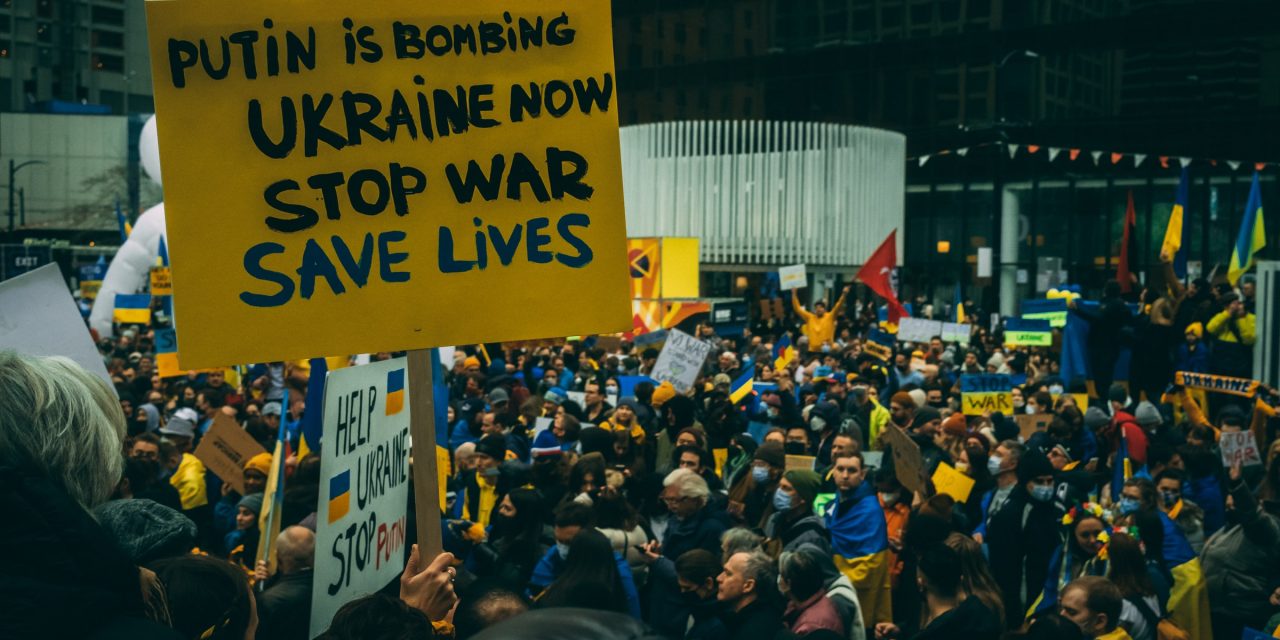
The weary and worrisome sound in Olena Lennox’s voice is unmistakable, and it’s unsettling. As Vladimir Putin’s Russian war machine continues to rage against neighbouring Ukraine she fears not only for her family’s well-being but that of all Ukrainians.
The Times-Chronicle reached out to Lennox (née Pyroshkova) – a Ukrainian-Canadian of Russian blood who left the country in 1994, three years after the Soviet Union collapsed. Lennox lives in Osoyoos.
Although difficult for her, Lennox shares her reflections on the military invasion of her homeland and how her family and other Ukrainians are surviving the madness of a war inconceivably thrust upon them.
“I don’t even know how to describe it really,” she says. “Last night was actually the first night I was able to sleep, I’m surprised I did. The constant worry… so much sadness and pain.”
Her sentences come out slowly at times, dragged down by tiredness and worry. One of the hardest parts for Lennox, and surely a sentiment shared by many citizens of the world, not least of all those struggling within Ukraine – why is this happening?
“We didn’t think this was going to happen. Right up to the last minute everybody was really hoping that it was just a scare tactic and not real… how in this day and age this can happen?” she asks incredulously.
“I’m heartbroken for not just my family, but everyone that has to go through this.”
She recalls when her aunt called her only days ago, although she struggles to recount just how many days it’s been. At the time I’m speaking with her it’s only been three days. She says that from everyone she’s spoken to in Ukraine, the first week will be the hardest. “That’s going to determine how much the Ukrainian side can take,” she says.
A big problem for Ukraine is the destruction Russia is inflicting from the air. Olena echoes the calls of many for help from other countries to remove this threat, creating at least a semblance of a more level playing field. “From the air, innocent people and children…” her voice trails off and she falls silent.
Lennox learned of the beginning of the attack through friends here who messaged her that it had begun. Soon after she received a call from her aunt who lives in Lviv, in western Ukraine. “My aunt called me and said ‘we’re under attack’… she was shaking,” Olena relates.
Olena’s family is perhaps ‘lucky’ in a sense, they are located in the western portion of the country very close to the border with Poland. For now, at least, it puts them out of the direct line of sight of advancing Russian troops and aircraft.
Much of the onslaught from Russia’s mighty military machine has been on the Black Sea coast in the south where Crimea (annexed in 2014) lies, the east which borders Russia directly and the north which borders Putin’s puppet state of Belarus.
At the time we spoke, the battle for Kyiv was raging. Ukrainian resistance was proving a challenge for Russian forces, according to reports citing British and American intelligence sources. At the same time, however, Russian missiles were not just taking out military targets, but slamming into residential buildings in the capital city as well.
Olena has an aunt and uncle, two cousins and a brother in Lviv. The eldest of her two cousins was deployed to the army on Monday because he has prior experience. Although retired, he volunteered again despite ongoing health issues from multiple injuries he suffered in the ‘first Russian war’ in 2014 when Russia annexed Crimea.
For some time after that conflict Olena says he was unable to sleep lying down, he could only sleep in a sitting position because that’s how they slept in the bunker when rockets were overhead.
“It damaged him forever, his view on life and everything… he’s not the same person and none of us are going to be the same, the people in Ukraine will never be the same,” she says.
Her brother has not been deployed yet as there is such a long queue of volunteers the intake is bogged down. “I was talking with my cousin today and he said that with the amount of people signing up there’s lineups and lineups, and not even enough time to process all the volunteers.”
“So far only around Kyiv they are giving out the weapons,” she says. “They will be standing up and fighting. They’re not going to go without a fight,” she adds. And facing a likely grim reality, ordinary citizens are also lining up to donate blood.
Lennox also has a stepfather and family not far outside of Kyiv. For them, the situation is dire. Her stepsister can’t sleep, the sound of the missiles streaking through the night sky and hitting their targets – intended or otherwise – keeps her awake. “My step sister gathered about 10 or 11 members of the family with small children from different places just to be together,” she says.
The night is difficult. The adults take turns to sleep and when they do, they sleep in their clothes, the emergency backpack at the ready when the air raid siren pierces the calm.
Olena had asked her if they could go to the western part of the country, but that’s nearly impossible. A martial law curfew keeps people off the streets and many of the main arteries are still clogged with vehicles caught up in snaking traffic jams as they too try to flee the capital area. Fuel is scarce and some bridges have been destroyed to make it more difficult for Russian invaders.
“A lot of people are just choosing to stay at home and see what happens,” she says.
The hardest part of the day for Lennox is when she’s awake and in Ukraine it’s night. “My aunt said that she hates nights and for me, I can’t call anyone and I don’t know what is happening,” she says. Her routine involves calling and checking in with everybody on the situation and to see how their morale is fairing.
So far the Internet and telephones are still functioning without problems. Grocery stores are still in operation but most everything else is closed, she says. She asked her cousin if they had stocked up on essential food supplies like rice and buckwheat, she laughs, saying nobody’s buying food, they’re buying weapons instead. At least they’ve kept their sense of humour, she adds.
When I ask her for her feelings on Putin she says she’s not one to believe in creating divisions and seeing evil in people, “but he is, it’s pure evil, there’s no other explanation.” She also notes the war is not fair for the Russian people either. “I know there’s a lot in Russia that do stand up and protest because they don’t believe in the war. Putin doesn’t care about his own people,” she adds, noting it’s everyday Russians that will be hurt by the sanctions, not the rich cronies of Putin.
One of the things that’s hard for her to accept, as a Russian friend of hers in Vancouver commented, this is “sister versus brother,” because of the extremely close cultural connection between the two peoples.
One irony of the situation that Lennox highlights is that following the breakup of the Soviet Union, Ukraine gave up what amounted to about one third of the Soviet nuclear arsenal. In exchange for giving up its nuclear weapons, Ukraine received financial compensation, as well as the security assurances of the Budapest Memorandum. The Russian Federation ironically was one of those signatories and theoretically one of Ukraine’s ‘protectors.’
To her family and the people of her homeland, she says: “Stay strong, we support you! I know the nation is already strong and developed so much more strength since 2014. Ukraine has always had to fight for its freedom and independence and I think that’s been encoded already in our genes. And I just truly really wish the world will really come together to support it.”
In a call on Friday speaking to her aunt and then on Saturday with her cousin, she says “there’s almost a strength in their voice that they believe they will win and I do believe we will win. How long will it take, I don’t know, nobody knows, but we will win this war.”
Should you want to donate to help the Ukrainian people the following registered charities are among those offering assistance to the country:
The Canada-Ukraine Foundation – cufoundation.ca/donate
The Canadian Red Cross Ukraine Humanitarian Crisis Appeal (due to the generosity of donors the Government of Canada match of $10 million has been met) – donate.redcross.ca/page/100227/donate
And locally the Lake Village Bakery in Osoyoos is accepting donations in-store for the Ukrainian Humanitarian Fund by GoFundMe and will match donations up to $2,000. All GoFundMe donations will be distributed to verified nonprofit organisations – gofundme.com/ukraine-humanitarian-fund