By Lexi McFarlane, Times Chronicle
The Regional District of Okanagan & Similkameen (RDOS) Board of Directors has voted to re-allocate budget funding for the Osoyoos Indian Band and the Okanagan Nation Alliance to continue progress on a significant conservation project.
The reallocation sees nearly equivalent funding amounts transferred between each portfolio. In both cases, the received funding amounts will be earmarked for weeding, planting, and mulch applications.
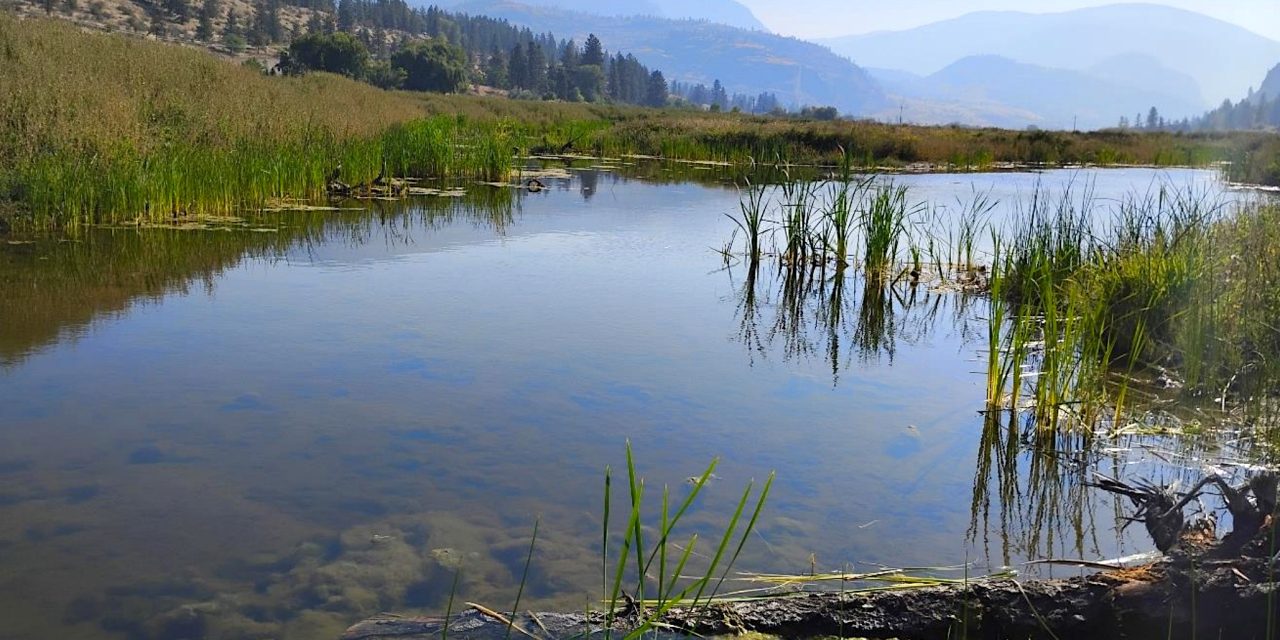
The project in question is the Vaseux Floodplain Re-engagement Project. The project aims to restore a channelized portion of water from the river near Okanagan Falls, along what is officially termed as “historic floodplain habitat”.
The goals of the project are to support the OIB and their objectives for use and “co-management” of the floodplain, further the enhancement of the land, and blend traditional methods with modern technology to achieve the aims.
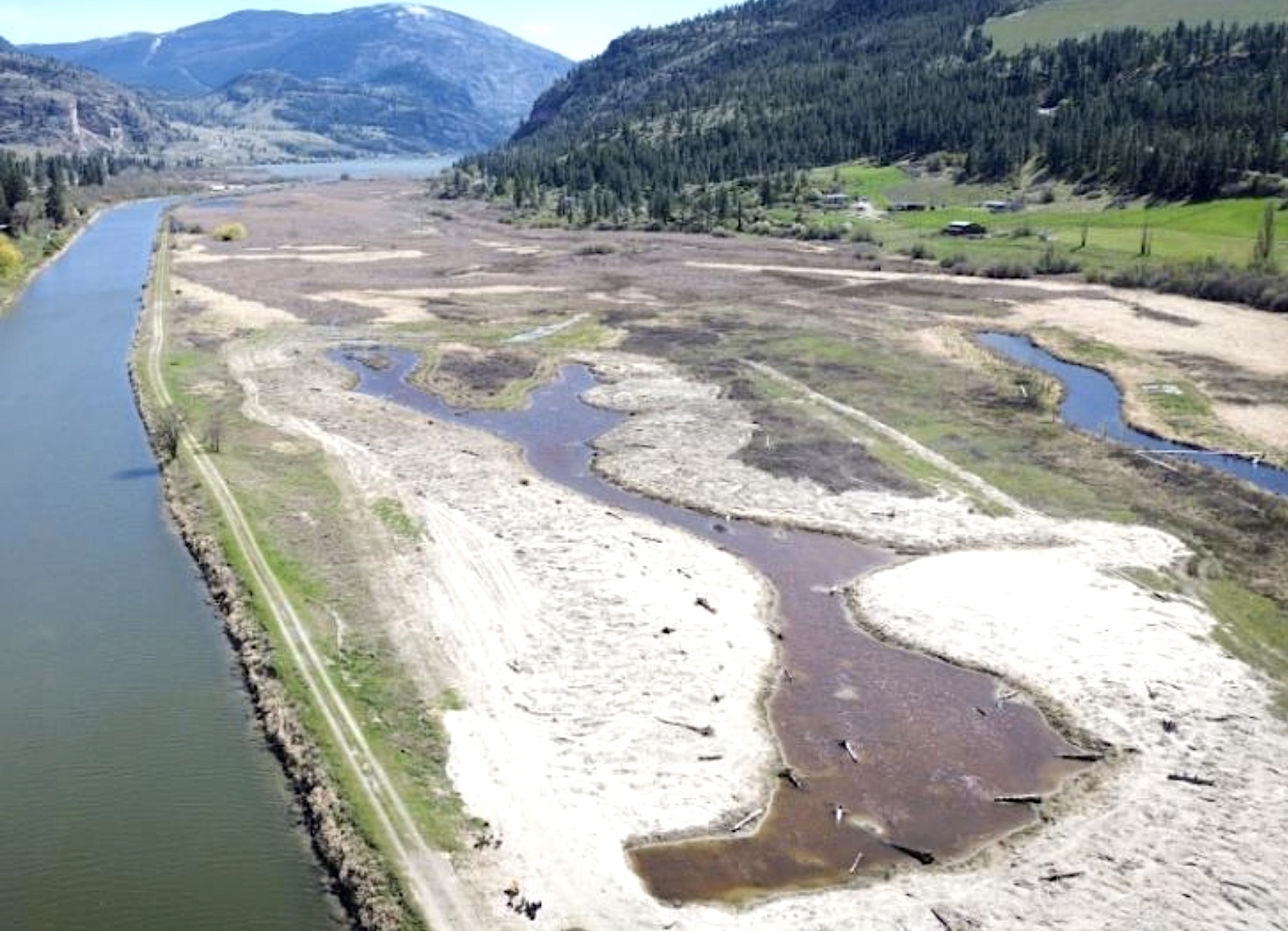
Project footprint prior to culvert installation in April 2025.
Okanagan Nation Alliance photo
An amount of $18,400 will be transferred from the OIB Archaeology monitor to the ONA’s weeding, planting, and mulch application, while an amount of $14,816 is being transferred from the expense for environmental monitor to the OIB’s own weeding, planting, and mulch application budget.
The reallocation of funding was made possible by excavation and culvert work being completed both earlier and at a less expensive amount, than what was initially forecast. With those construction aspects being complete, money now does not need to be spent on archaeological or environmental monitors.
Conversely, the costs of implementing new flora to the floodplain have become more than what was first budgeted, so a funding shift addresses that concern.
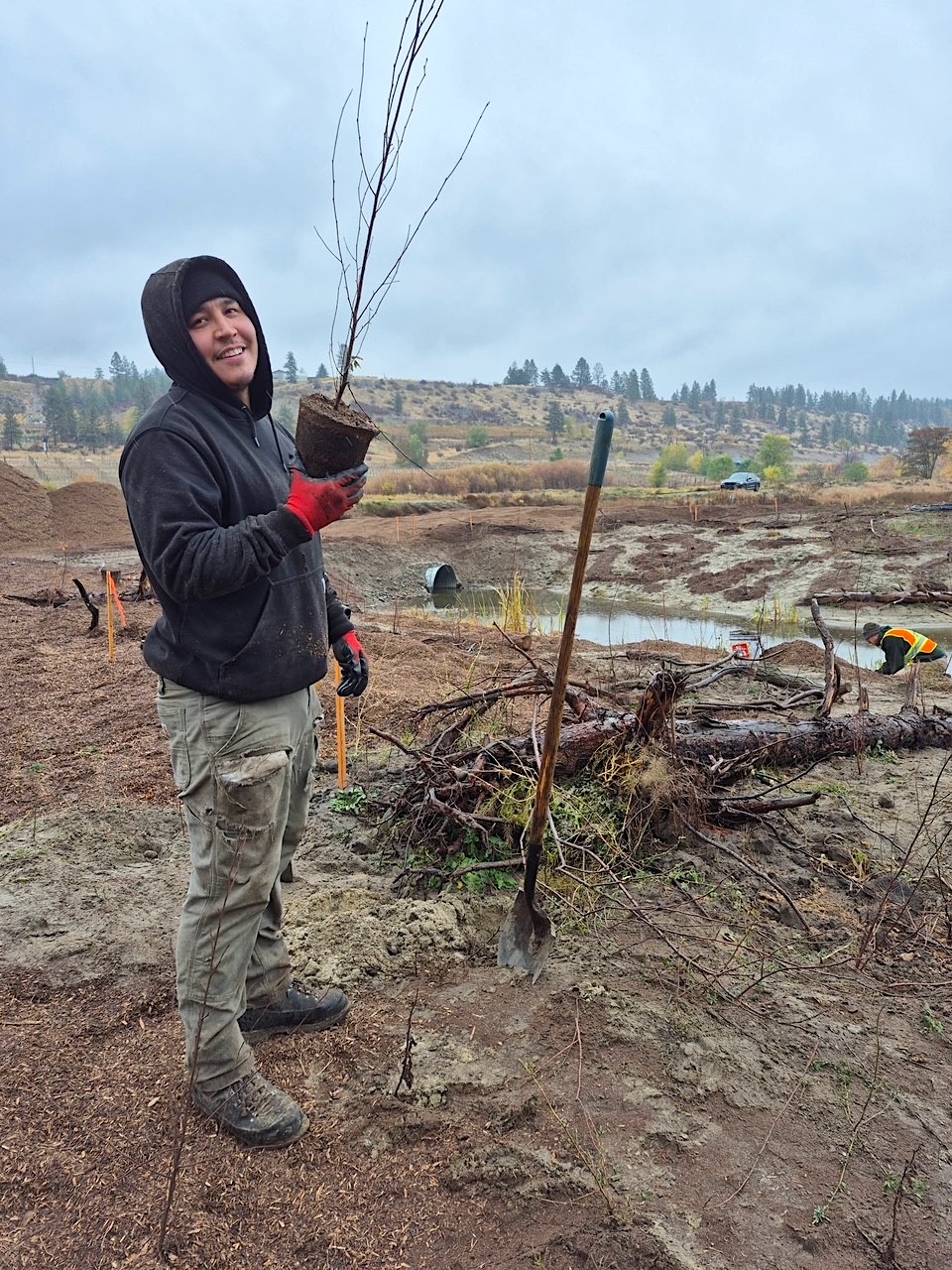
Okanagan Nation Alliance crew working on replanting in mid-November. ONA photo
More funding for re-vegetation also helps with enhancing natural habitat features, and preventing the rise of invasive species that could ruin the habitat. Thus, the quality of life for fish and wildlife will improve in the Vaseux Floodplain.
No additional funding will be required to complete the project, which is expected to be completed in the near future.
The Vaseux Floodplain Re-engagement Project involves restoring a section of the uniform, channelized river south of Okanagan Falls by re-engaging historic floodplain habitat in the Vaseux-Bighorn National Wildlife Area.
This will be done by following a Syilx Okanagan TEKK-based vision, combined with western science tools to achieve the goals.
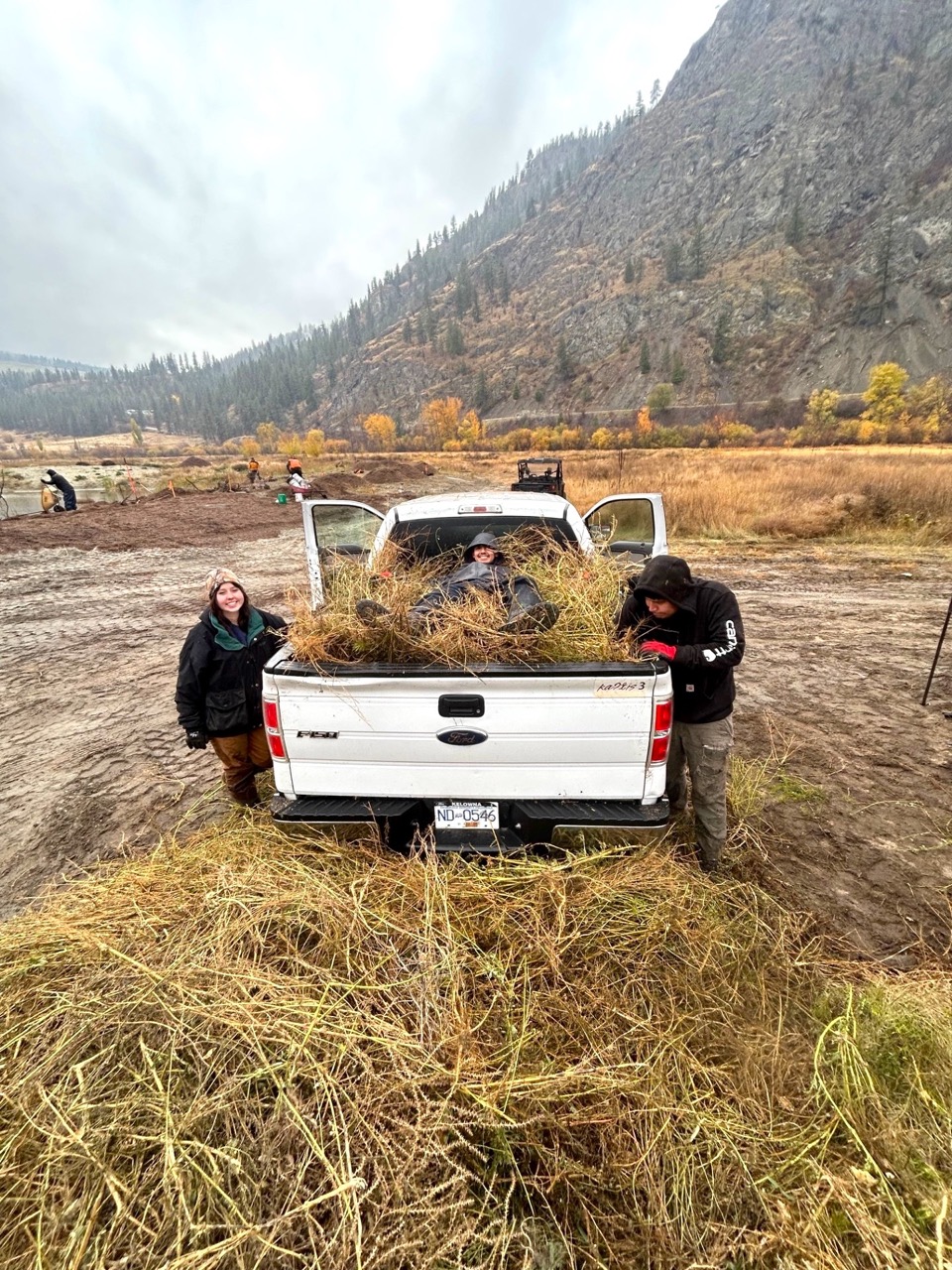
Okanagan Nation Alliance crew working on replanting in mid-November.
ONA photo
This project takes an ecosystem-based approach, targeting multiple species including Chinook Salmon, Rocky Mountain Ridged Mussel, Yellow-breasted Chat, Western Screech-Owl, and Blotched Tiger Salamander, among others.
Progress to date includes completion of floodplain excavation, culvert installation, engineering designs and as-built drawings, TEKK engagement, steering committee feedback, a first round of planting, and permitting.
The excavation earlier this year produced about 7,300 m2 of open water habitat connected to the main channel, and two ephemeral fish-free ponds for amphibians.
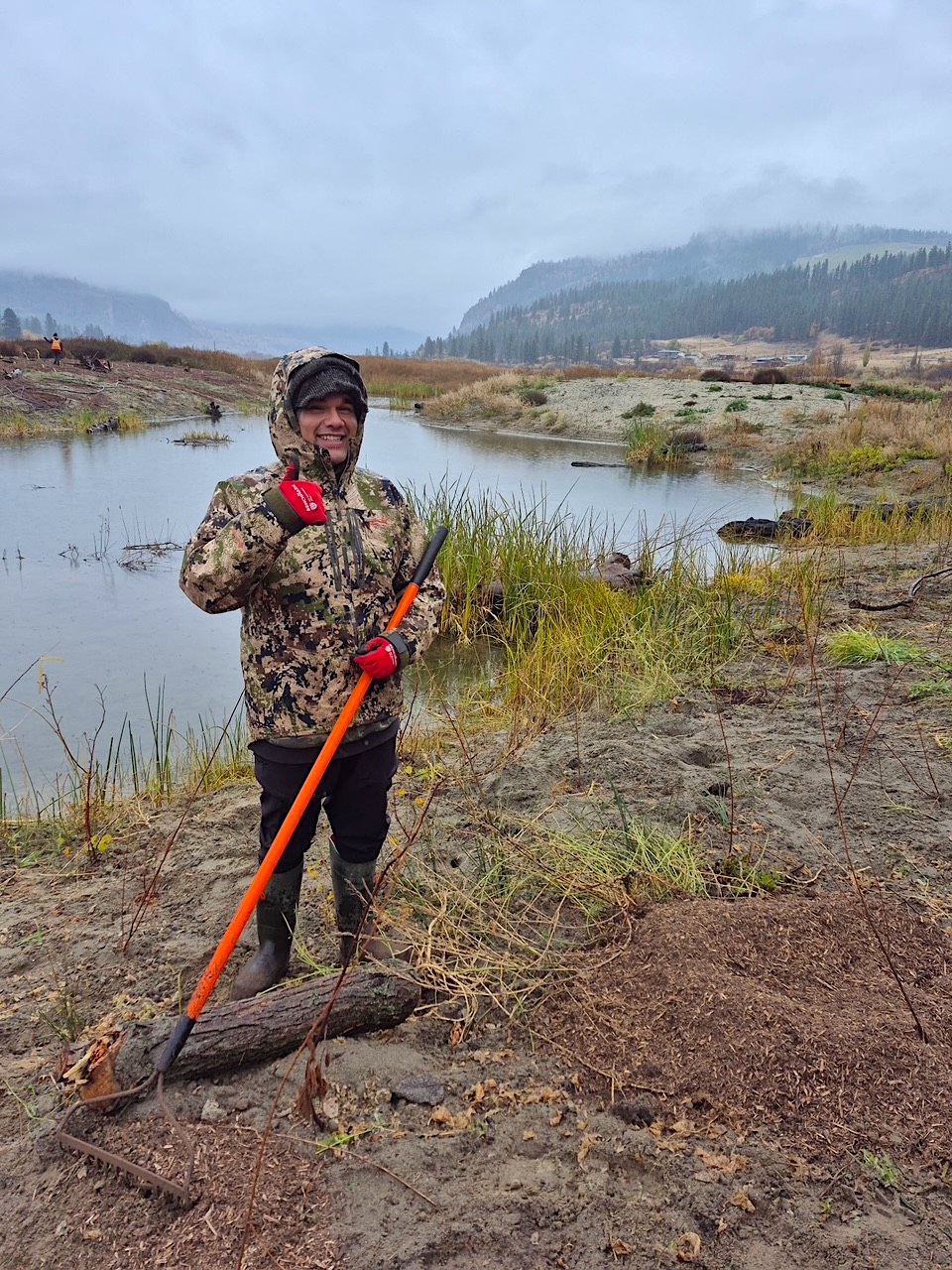
Okanagan Nation Alliance crew working on replanting in mid-November.
ONA photo
Since the completion of construction and the first round of planting, invasive plant species, including reed canarygrass, Russian thistle, and lamb’s quarters, have proliferated through the riparian portion of the project footprint. Additionally, patches of saline soils have caused the mortality of plantings in some areas.
A second round of targeted planting and intensive invasive species management to improve revegetation outcomes is now being undertaken.
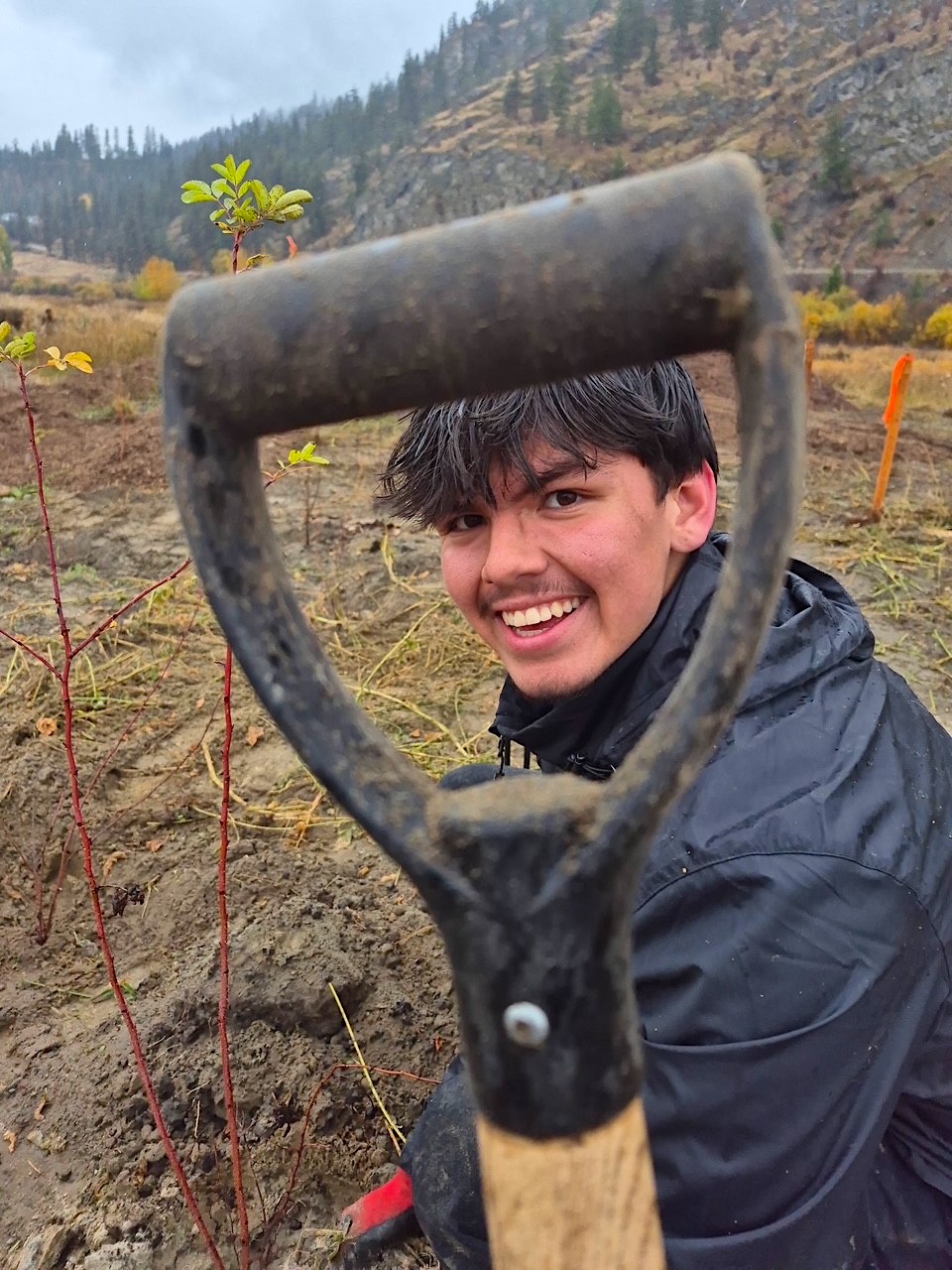
Okanagan Nation Alliance crew working on replanting in mid-November.
ONA photo