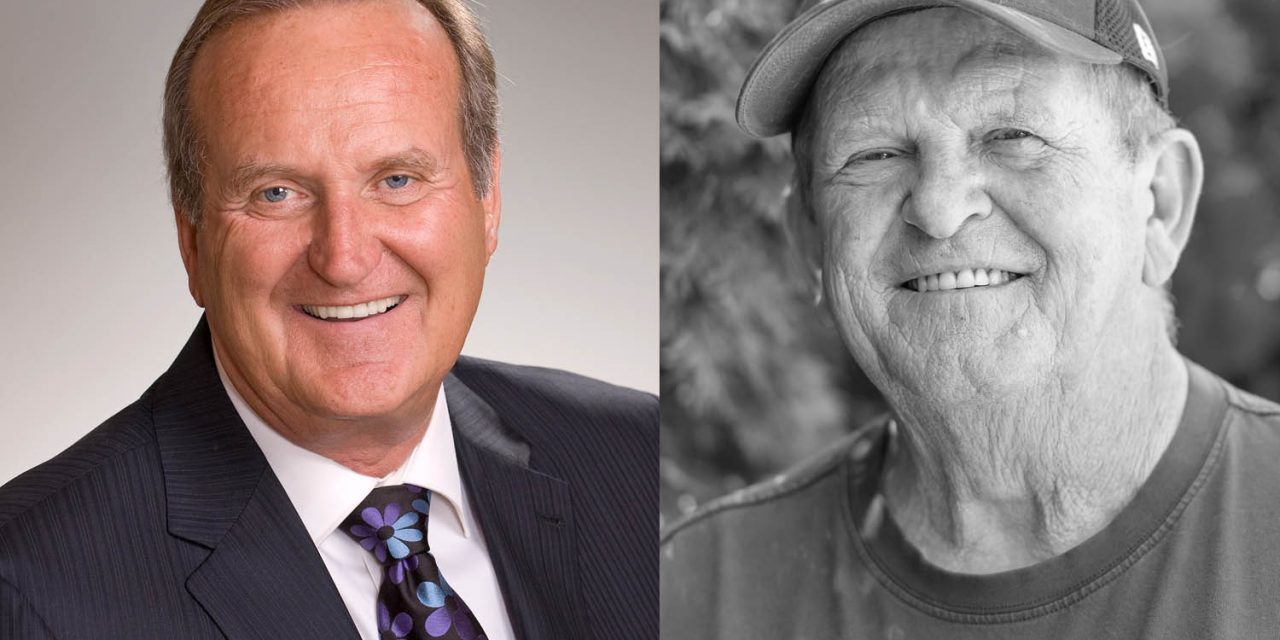
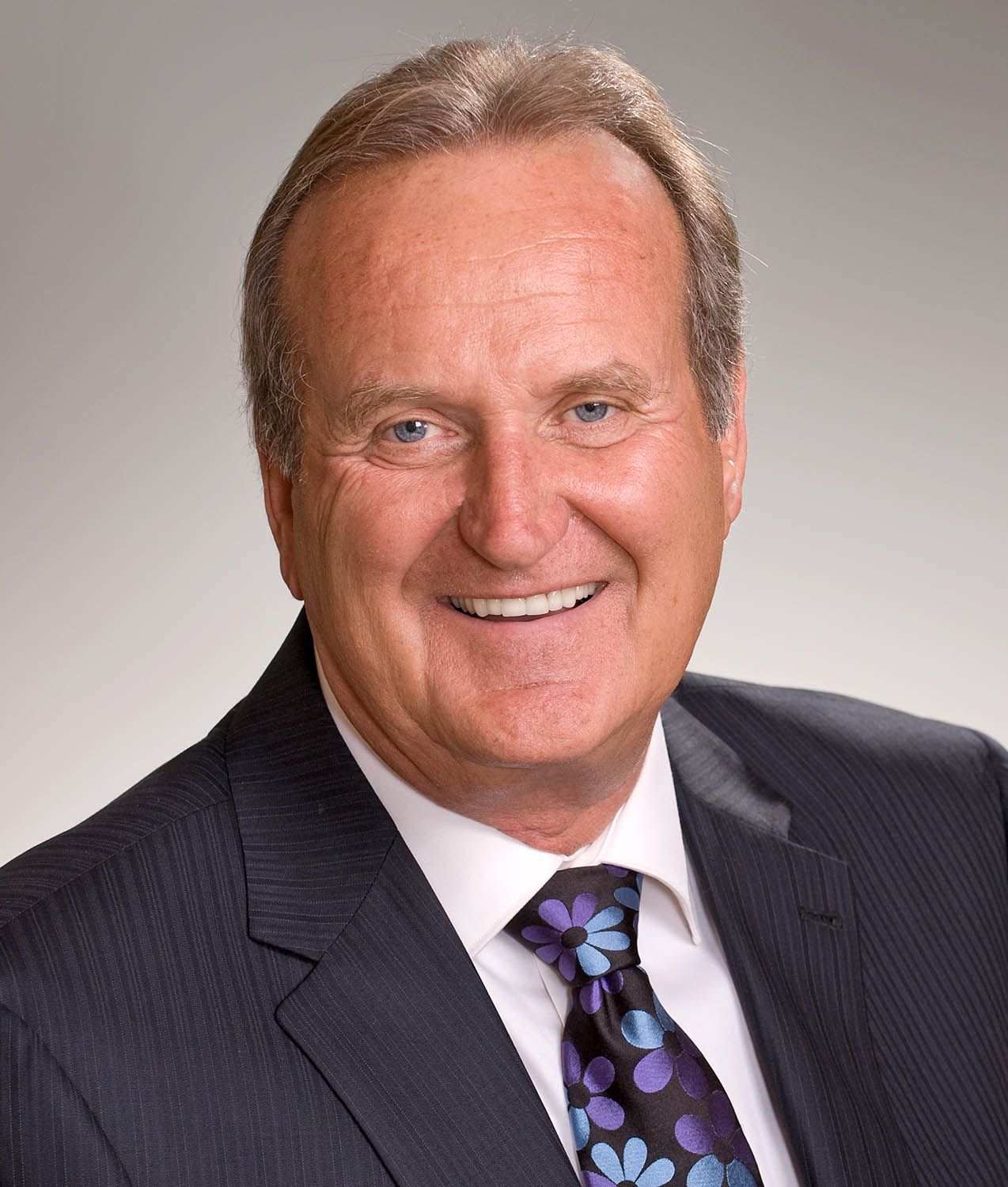
Stu Wells

Tom Shields
Two former Osoyoos mayors have raised red flags about the possible move by the town to bring thousands of water meters to our community.
Former mayors Stu Wells and Tom Shields both discussed their concerns in recent interviews.
Town council received a consultants’ report in October, submitted by Urban Systems of Kelowna, which said water metering reduces consumption by 20 to 25 per cent while the water restrictions imposed last summer only led to a marginal reduction.
Council has not yet made a decision on whether to proceed with meters, which would cost about $2 million to install.
A large percentage of those costs could be funded by federal and provincial grant programs, the consultants said.
Shields, who recently argued against the meters in a letter to the Osoyoos Times, believes green lawns are important for attracting business to town and believes an economic downturn is the wrong time to be spending $2 million on this project.
“It’s $2 million that possibly doesn’t need to be spent at this time,” said Shields. “We’re trying to get things revived here (economically). It’s just going to kick the town in the rear end. If we’re not looking good, and we did not look good this summer, it is reflected in the shopping in the community.”
Wells, who is the former chair of the Okanagan Basin Water Board (OBWB), has a strong interest in the importance of water and water management.
He argues that water costs will rise if metering is imposed and said there is too little science available on whether aquifers in this area are under pressure from water consumption.
“It’s very expensive,” said Wells. “The first thing that’s happened in communities that have imposed water metering, even with their best guestimates of costs, was that they had to put up the price of water.”
One of the problems with water meters, said Wells, is that it is so effective at reducing water consumption. Perversely, this means that municipalities need to raise the costs per unit of water to make up for lost revenue.
Urban Systems acknowledged this in their report to council.
“The paradox of metering is that if customers do an excellent job of reducing their water consumption, revenues may become insufficient to sustain the utility,” the report said.
Wells supports water rationing, but would prefer to see it imposed on an odd-even, alternate-day system based on residential address numbers instead of the twice-weekly system used last summer.
For people that aren’t on an automatic system, if they miss their appointed day, they have to go a whole week without watering, he said.
That could result, for example, if someone has a medical appointment on his or her watering day.
“A lot of other areas have achieved what they wanted on odd-even and then I think with that you probably eliminate ‘fudger-budgers,’” he said, explaining he prefers this term to describe people who water on days when they are not permitted.
Shields served three terms as mayor between 1990 and 2002 with a gap between 1997 and 1999. He also agrees that water restrictions are reasonable and said he managed to keep his lawn green with last summer’s limits.
“We can’t run water willy-nilly,” he said. “At the same time, you can save $2 million by watching what you’re doing. The point here is if we don’t water, all it takes is 10 per cent of people who won’t water and the town looks like hell.”
Metering, said Shields, will dissuade some people, especially seniors on fixed incomes, from watering their lawns. And certainly they’ll be less likely to water boulevards, he adds.
Wells, who served as mayor from 2008 to 2014, took on the position just as a new large water reservoir came on stream in the west of town off 74th Avenue.
The town draws municipal water from six groundwater wells and it is generally used for domestic purposes. This high-quality water is not chlorinated.
Irrigation Systems 8 and 9 in the rural areas to the north and south of town use water from Osoyoos Lake, which is chlorinated. This water is used both for homes and for agricultural irrigation.
Wells suggests it would be unfair to treat the large rural residences differently from homes in town.
“If the town is going to be metered, so should the rural area,” he said, referring particularly to non-agricultural rural homes. “Some of them are big homes and most of the rural areas also have big yards.”
He said there is not enough information on the extent to which local aquifers have been affected by water consumption.
The Town of Oliver, which has water metering, chose not to impose any restrictions last summer, he noted, suggesting they didn’t perceive there to be water shortages in the wells they draw from.
Nor is there good data on the amount of water being used in Osoyoos both on an individual basis and as a town, he said.
The Urban Systems report estimates total consumption in Osoyoos in 2015 at 2.1 billion litres. The largest contributor to high water consumption is summer season lawn irrigation, particularly at single-family homes, the report said.
Wells acknowledged that some people don’t appreciate the water shortages that occurred last summer because Osoyoos Lake must be maintained at an artificially specified level under an international agreement.
“All we have to do is look at the Similkameen River or look at the Okanagan River and see how little water is going in the river to understand that there certainly are water shortages out there,” said Wells.
Washington State experienced extreme drought conditions last summer and some water rights holders had to be cut off at different times. Nonetheless, the bulk of the water in the Okanogan River in Washington comes from the Similkameen River and not from the Okanagan in B.C.
Wells believes that two new dams on the Similkameen, one near Princeton and one on the U.S. side of the border, would better allow water from the spring freshet to be captured and used in the dryer part of the summer.
Shields concurs with the arguments of some meter opponents that meters are a cash grab.
“Meters are just a way for municipalities to collect more money,” he said.
Anna Warwick Sears, executive director of the OBWB, however has previously pointed out that utilities in B.C. are not allowed to charge more for water than the cost of the service.
This means money can’t be generated from meters for other purposes, she said.
RICHARD McGUIRE
Osoyoos Times