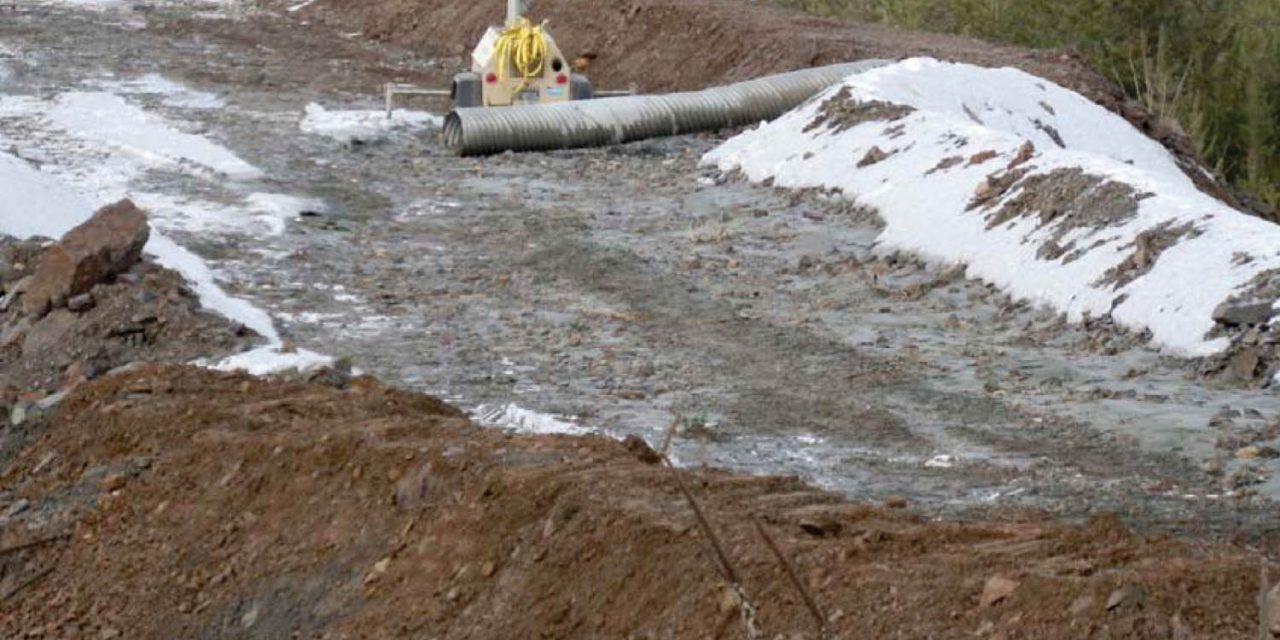
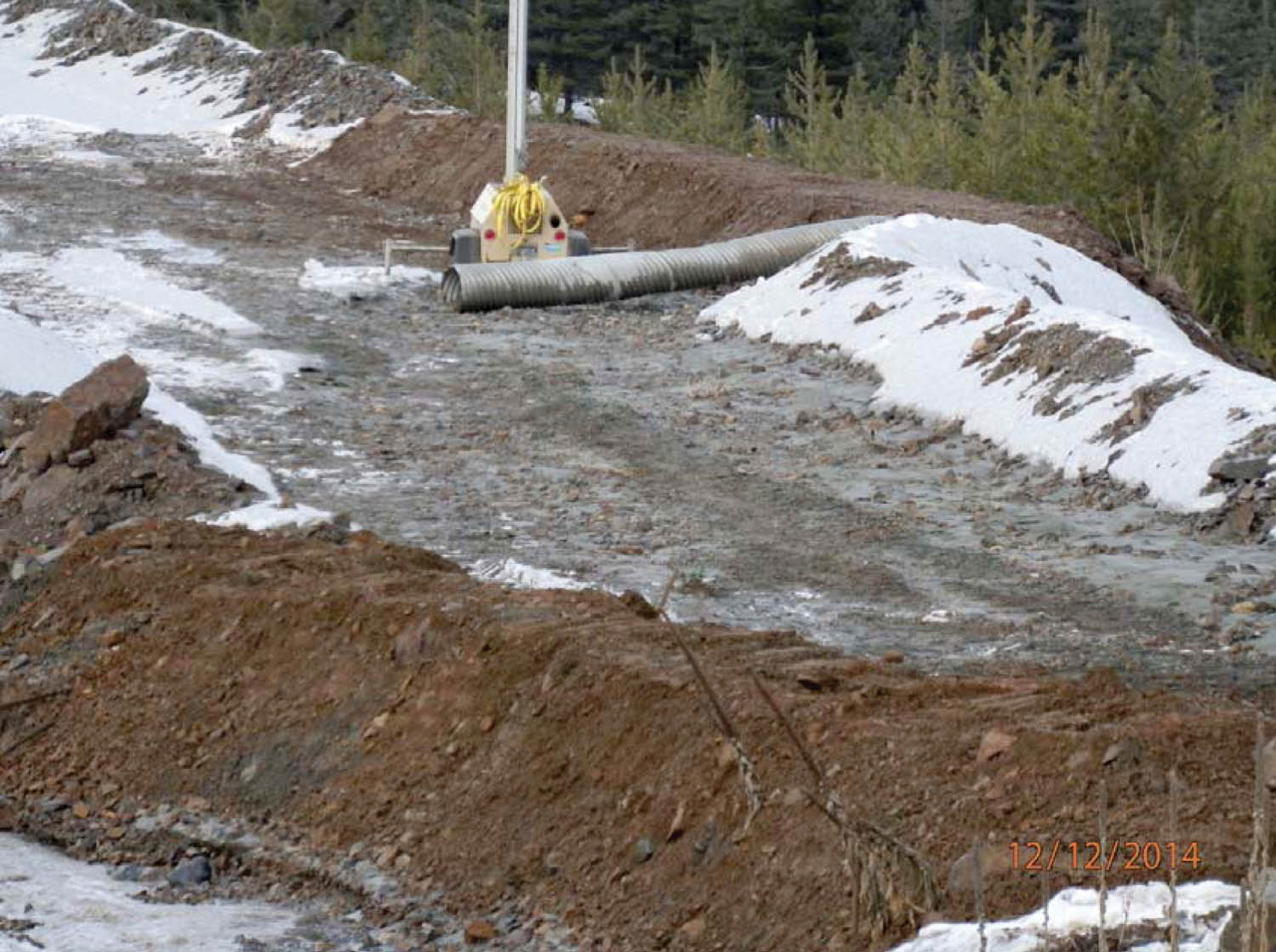
This photo supplied by the Lower Similkameen Indian Band (LSIB) shows the site of the berm breach at Copper Mountain Mine’s mill. The LSIB is considering legal action saying that the river is critical to the First Nation’s exercise of its Aboriginal Title and rights. (Photo supplied)
The Lower Similkameen Indian Band (LSIB) is considering legal action following a spill of mine tailings into Wolfe Creek, a tributary of the Similkameen River.
The spill occurred at Copper Mountain Mine near Princeton on Dec. 10.
“The Similkameen River system is the life and heart of the Similkameen People,” said LSIB Chief Keith Crow in a news release issued last week. “The river is critical to the exercise of our Aboriginal Title and rights. We have used these areas for traditional purposes and depended on the clean water and grasslands for generations. Government and companies can’t just keep silent when they are allowing our lands and waters to be damaged and our people’s health to suffer.”
Chief Crow said LSIB inspected damage to Wolfe Creek in person.
“We are extremely disturbed by the lack of long-term plans for containment and remediation to the land and water,” Chief Crow said.
The B.C. Ministry of Environment said the mine estimates about 500 tonnes of tailings slurry spilled from a pipe near the plant building, but only a very small portion of the slurry reached Wolfe Creek.
A spokesperson for Copper Mountain Mine could not be reached for comment before the Osoyoos Times went to press, however, ministry officials have been in regular contact with mine staff and the LSIB.
The tailings stream that reached Wolfe Creek was not large enough to scour the snow, but contaminated only the top few centimetres of snow, the ministry said.
“Thus, the spill was not very severe,” said a Ministry of Environment spokesperson in an email statement last week. “The effects on Wolfe Creek water quality were temporary and relatively local. Contaminant levels in the creek are decreasing steadily since the spill and most levels are close to those before the spill.”
Interior Health (IH) on Dec. 11 issued a “Do Not Use” order for Wolfe Creek immediately downstream from Copper Mountain Mine to the mouth of the Similkameen River. Residents were advised not to use water for drinking, even if boiled, or for bathing or recreation.
By Thursday last week, all water use orders had been lifted following testing.
“We implemented a precautionary Do Not Use order because we initially didn’t have clear information on what could have entered the water due to the tailings spill,” said Courtney Hesketh, manager for environmental health at IH. “Without any information that the water was safe, we needed to act to protect any possible users. The mine, Ministry of Environment and Interior Health all took samples to determine if materials from the tailings line had impacted the water – things like aluminum or other metals present in mine tailings.”
Test samples received last week indicated there was not a health risk related to the spill, said Hesketh. She reiterated that IH recommends people treat surface water with filtration and disinfection prior to drinking, as always.
The Ministry of Environment said the mine is currently building a reinforced and higher containment berm and deepening the containment trench to prevent future spills.
The mine is also scraping off and removing contaminated snow where it is safe to do so.
The ministry is reviewing the mine’s recovery and environmental management plan over the longer term and will make additional recommendations and requirements where needed.
The LSIB, however, is concerned about cumulative effects.
“This isn’t the first spill we have had to deal with on the Similkameen River system,” said Chief Crow.
In August 2013, there was a spill of 65,000 litres of coal slurry waste from the Basin Coal Mine into the Tulameen River, another tributary of the Similkameen River, the band said in its news release.
Coalmont Energy has since filed for bankruptcy leaving unanswered questions about environmental impacts from that spill, LSIB said.
The LSIB is calling for an independent inquiry to determine the cause of the Copper Mountain Mine spill before mining operations resume, as well as an environmental review of both recent spills and plans for cleanup and restoration.
Copper Mountain Mine employs more than 300 people and has an estimated resource of more than two million tonnes of copper.
The Upper Similkameen and Lower Similkameen Indian Bands receive a share of mineral tax revenues collected by the province from the mine, with each band receiving about $200,000 annually, based on production, for the life of the mine.
RICHARD McGUIRE
Osoyoos Times
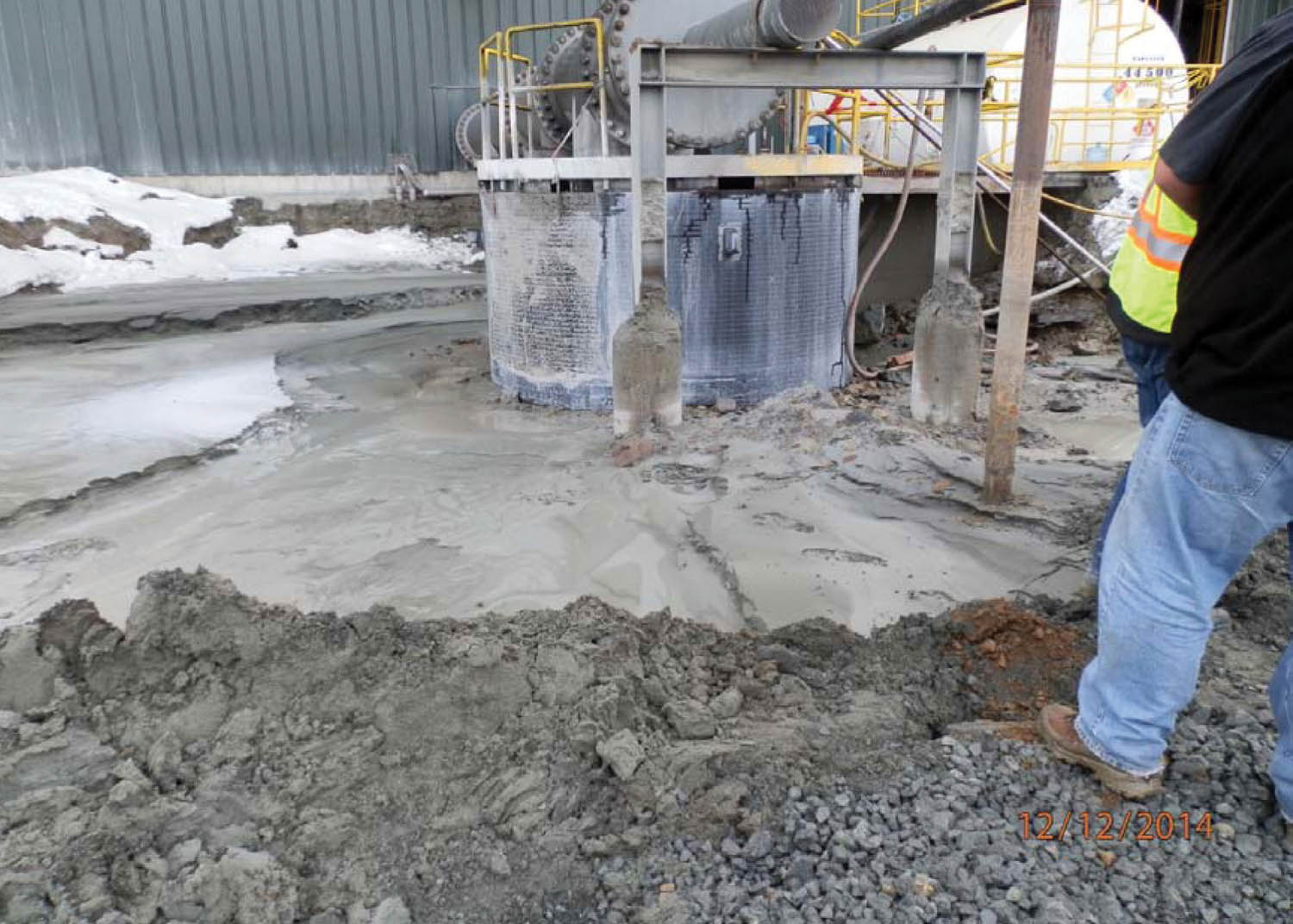
This photo supplied by the Lower Similkameen Indian Band (LSIB) shows the site of a tailings spill at Copper Mountain Mine near Princeton. (Photo supplied)