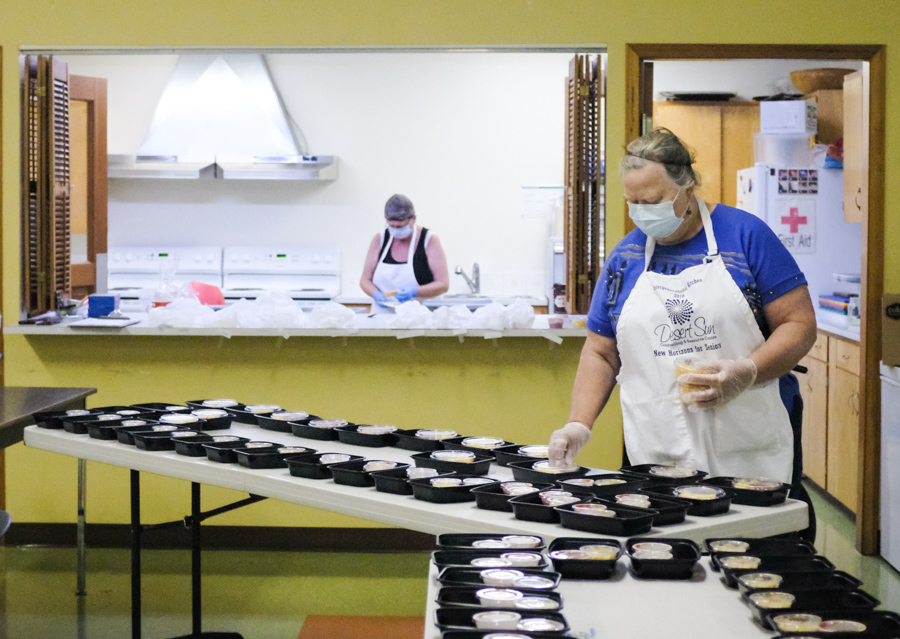
The community kitchen program that serves Osoyoos and Oliver is an intersectional operation that creates networks, teaches skills, and most importantly feeds people.
Since last April, the program has made and distributed over 6,700 meals to those who need it. Every week they deliver 150 to 180 meals. The demographics of people who use the program vary anywhere from isolated seniors to families who may have lost a job due to COVID and are in financial need.
The need for this kind of program in the community along with the sheer number of people on a weekly basis that benefit from it may come as a surprise to many locals.
Coordinator Nancy Aatelma acknowledges that food security is a bit of an invisible problem here.
“[Osoyoos] is a wealthy community and Oliver is wealthy as well, so you never think about the people in need,” said Aatelma, “But then if you think about it, if you’re looking for a rental, they’re $1,500 to 1,600, right?”
“And if you’re working minimum wage, that’s a big chunk of your change. Even if both partners are working, this still doesn’t leave you with a lot of money. You still have your utilities, you still have your food, you still have the personal care . . . so it doesn’t leave extras.”
In the past year the community kitchen program has gone through a lot of revising, changing the form of what it is in many ways.
Before COVID-19, the community kitchen would bring in a number of people, including young mothers that worked together to make meals each week. Aatelma said it was a great learning environment and social space for the people that came.
“It was a place where young families come together, it reduces their isolation, they learn how to make different things, interact with other moms, make friends and develop networks,” she said.
When the first restrictions of COVID rolled around last year, the kitchen adjusted accordingly. First they tried to bring in two families a week that would help in making the meals for that week. Then next week, two different families would come in to help. However, that got shut down when safety measures became stricter.
After that, the program tried to bring in some volunteers, but that too got shut down, explained Aatelma.
Finally, there are now three people who make the meals every week. This includes Aatelma, Sue Fife and Joanne Ziebart.
“So now I have my bubble and I have two excellent volunteers that come in,” said Aatelma.
Ziebart has been volunteering with the community kitchen every week for over a year now, and speaks about how rewarding the experience has been for her.
Fife, who joined the community kitchen just a few weeks ago, was a nurse for 40 years and said that she believes in giving back to the community.
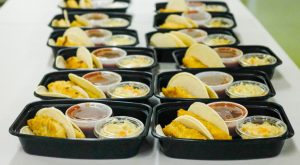
Fish tacos with salsa and coleslaw meals ready to be delivered on May 19, 2021.
Neha Chollangi photo
The team of three is a force to be reckoned with. They get to work on Tuesday, prepping and cooking the meals. Aatelma normally does the meal planning beforehand so that they know exactly what meal they are making each week.
By Wednesday, the meals are done and ready to be packaged and delivered out on Thursday.
There are five volunteer drivers who come and pick up the meals which are taken to the seniors, while Aatelma delivers the meals to the families.
“I go to my families, and I talk to them to make sure that they’re doing okay with mental health and see that the parents are okay, and the kids are okay. Because right now, everybody seems really tired,” said Aatelma.
These types of checkups are normal for Aatelma who does a lot of work as a coordinator under the Community Action Program (which the community kitchen falls under) that’s geared towards families.
“I meet with young moms and see that they’re okay, make sure that their pregnancy is doing okay, they’re exercising, they’re eating, they’re doing what they should be doing and taking their vitamins while they’re pregnant,” she explained.
While she’s not doing a lot of this type of work now due to COVID, Aatelma still checks on families (about 20 families she regularly checks on) and talks to them outside while she drops off meals.