
In order for our readers to gain a better insight into the candidates running in the South Okanagan-West Kootenay riding, the Times-Chronicle is presenting an all-candidates question and answer. Three questions, all pertinent to our region, were given to each of the five candidates running in this riding.
Answers were limited to approximately 150 words each and were edited for typos and grammar only. Liberal Party of Canada candidate Ken Robertson did not respond prior to press time. Candidates’ replies are listed according to surname alphabetical order. Early voting is available until Sept. 14 and a reminder that Election Day is Sept. 20.
Question One – Climate Change
The impacts of climate change have been very visible this year starting with a short dry spring, before quickly moving into the ‘heat bubble’, all leading to the ongoing wildfire problem and water shortages in the Okanagan.
What is your plan for addressing climate change and its impacts going forward?
Richard Cannings, New Democratic Party
 This summer has been a major wake-up call. I’ve worked my whole life to protect our environment and got into politics to in-fluence bold actions to confront the climate emergency. This past year the NDP pushed for scientific accountability and won 2025 targets to strengthen climate legislation. Now we need to ensure government invests in overhauling our energy sector to move into the future.
Our plan includes a big shift to clean, electrical energy. We will make it easier to purchase electric vehicles and build hydrogen infrastructure for heavy duty transportation. All buildings need to be retrofitted. Fossil fuel subsidies need to end. This is a tremendous opportunity for a just transition to provide a million good jobs for energy workers that are feeling anxious about their future. But even if we took these bold actions, we are still facing our current climate reality. We will provide $3 billion for adaptation infrastructure to make our communities more resilient.
Tara Howse, Green Party of Canada
 “We need a little less conversation, a little more action, please.” Shell knew burning fossil fuels was increasing atmospheric C02 back in the 80s. Indigenous communities – particularly Inuit – have been documenting the changing climate. There is no need for further discussion about climate change but time for actual action, such as the Green Party’s Mission Possible, a 20-step plan that outlines how to reach our targets.
The Green Economy is a job creation program waiting to be implemented, one that includes well-paying jobs for displaced fossil fuel workers. To make the shift we will need metals but we can do that while ensuring the safety of our communities and that benefits stay in Canada, not flowing out of the country. We can develop our economy so that local communities are at the centre, investing in local projects. Mission Possible is where future generations have safe, secure, and stable work – not investing in aged ideals of energy and economies.
Helena Konanz, Conservative Party of Canada
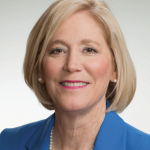 • Canada’s Conservatives have a serious plan to combat climate change that meets our targets and reduces emissions by 2030, while repealing Justin Trudeau’s Carbon Tax, which taxes Canadians and drives jobs and investment away.
• Instead of sending your money to Ottawa, the Low Carbon Savings Accounts help Canadians make greener lifestyle choices, letting you decide what works best for you and your family.
• Canadians want to do the right thing and are better positioned than governments to decide how to reduce their carbon footprints.
• Canada’s Conservatives will introduce a zero-emission vehicle mandate, based on British Columbia’s, requiring 30 per cent of light duty vehicles sold to be zero emissions by 2030.
• We will invest an additional $3 billion between now and 2030 in natural climate solutions focused on management of forest, crop and grazing lands including investment in forest health, wildfire prevention and early detection.
Sean Taylor, People’s Party of Canada
 A People’s Party government will:
• Withdraw from the Paris Accord and abandon unrealistic greenhouse gas emission reduction targets.
• Stop sending billions of dollars to developing countries to help them reduce their emissions.
• Abolish the Liberal government’s carbon tax and leave it to provincial governments to adopt programs to reduce emissions if they want to.
• Abolish subsidies for green technology and let private players develop profitable and efficient alternatives.
• Invest in adaptation strategies if problems arise as a result of any natural climate change.
• Prioritize implementing practical solutions to make Canada’s air, water and soil cleaner, including bringing clean drinking water to remote First Nations communities.
Question Two – COVID-19
Vaccination numbers appear to be stalling and this is particularly an issue in the Okanagan where vaccination numbers are clearly lagging the provincial average and infections are increasing leading to tighter restrictions.
What measures would you implement around this issue of lagging vaccination numbers?
Richard Cannings, New Democratic Party
The pandemic has been hard on so many people in our riding. We all want to put this behind us and protect health care workers and our vulnerable loved ones. The best way to do that is for enough people to get vaccinated. In the Interior where we have lower vaccination uptake, we need to have easy, barrier-free access and accessible information so everyone can feel secure in getting vaccinated.
The polarization of this critical health issue is not helpful. We need to create understanding, respect people’s concerns and provide science-based information. We have forgotten our mantra of kindness that got us through the early days of the pandemic. I stand with the NDP and science that support vaccines for federally regulated workers and those in workplaces with vulnerable people. Rights are being discussed a lot right now. One of the most universal rights is the one to life and safety, getting vaccinated is the best way to protect this fundamental right.
Tara Howse, Green Party of Canada
Locally-based, community education measures need to occur. This involves investing in greater resources at the community level to community groups to understand why people are hesitant, particularly with vulnerable populations and other groups who have historically experienced negative treatment with official health institutions (such as First Nations and the LGBTQ2S+ communities).
While I support and encourage everyone to be vaccinated – vaccines are crucial to saving lives and recovering from this pandemic – I recognize there are legitimate reasons for some people who have chosen not to. Shaming will only push people away and we need to support, understand why, and encourage individual choice.
Helena Konanz, Conservative Party of Canada
• Vaccines are a safe and effective tool to stop the spread of COVID-19. My entire family and I are fully vaccinated, and I encourage every Canadian to do the same.
• Canada’s Conservatives believe Canadians have the right to make their own health choices.
• Rapid testing is needed for the unvaccinated to protect our most vulnerable Canadians and a Conservative government will require unvaccinated Canadian passengers to present a recent negative test result or pass a rapid test before travelling.
• Jagmeet Singh’s NDP say employees who still refuse to be vaccinated, without a reason related to health status, will be disciplined under their collective agreement, and possibly terminated.
• The decision to implement a vaccine passport falls within provincial jurisdiction. The fact that certain people may need health or religious exemptions has been ignored by our provincial NDP and I encourage you to contact the NDP government in Victoria for further clarification.
Sean Taylor, People’s Party of Canada
A People’s Party government will:
• Promote a rational and scientifically-based approach to the pandemic that focuses on the protection of the most vulnerable, guarantees the freedom of Canadians to make decisions based on informed consent, and rejects coercion and discrimination.
• Fire the Chief Public Health Officer of Canada Theresa Tam and replace her with someone who will work with provincial agencies to implement a rational approach to the pandemic, instead of following the recommendations of the World Health Organization.
• Repeal vaccine mandates and regular testing for federal civil servants and workers in federally regulated industries.
• Repeal vaccine passports for travellers.
• Oppose vaccine mandates, vaccine passports, and other authoritarian measures imposed by provincial governments, and support individuals and groups that challenge such measures in court.
• Support emergency provincial measures to protect the most vulnerable but stop bailing out provinces that impose economically destructive lockdowns.
• Support medical research and development of therapies to treat COVID-19 and other viral diseases.
Question Three – Housing
The lack of affordable homes for many in B.C. is a key problem that has also exacerbated a severe shortage of rental accommodation. In the South Okanagan, this has impacted the ability of businesses to hire both regular and seasonal workers.
What is your plan for addressing affordable housing and the rental crisis?
Richard Cannings, New Democratic Party
Finding affordable housing is one of the biggest concerns for everyone in our riding – individuals, families and businesses struggling to find workers. Consecutive Conservative and Liberal governments have gotten out of the game of building affordable housing for Canadians, leaving us half a million units behind where we should be and local governments over-burdened.
The NDP will bring us back to where we should be with 500,000 units of rental, cooperative and social housing while also fighting for immediate rent relief. We will commit federal lands for affordable housing and work with the Federation of Canadian Municipalities to purchase affordable rental housing to keep rents low. We will implement a 20 per cent levy on home purchases from wealthy foreign speculators who drive up the housing market. By ending this free ride for the ultra-rich, we can fight Trudeau’s housing crisis and help ensure everyone has a safe, affordable home.
Tara Howse, Green Party of Canada
Affordable housing is borne on the backs of volunteers. Having recently completed research on rural housing issues, I understand the barriers to developments in rural communities. This includes local builders acting as developers but not able to carry the financial capital risk; increased distances for infrastructure (or a lack of suitable infrastructure, e.g., well water or septic systems); lack of data; and fewer municipal resources (e.g., planners on staff).
The federal government created the CMHC to address and support returning veterans from the Second World War and incentivized over 200,000 units of housing from 1973 to 1992, inclusive of market rentals. Solutions include supporting cooperative and co-housing models; allowing mortgages for tiny homes; assisting small municipalities and regional districts with financial supports on infrastructure for identified needs; data collection; community engagement processes; local government staff supports; and alternative finance models.
Helena Konanz, Conservative Party of Canada
• Housing in the South Okanagan is at a near crisis level – young families can’t afford to own a home, seniors can’t afford to stay in their home. The housing crisis in the South Okanagan has been virtually ignored by our current NDP MP and must be a priority.
• All levels of government must work together to lower the taxes on home building, and encourage the construction of all types of housing, including rental accommodation. Canada’s Conservatives are committed to building a million homes in three years and securing the future for all Canadians.
• Both the Liberals and the NDP have made it clear that they will bring in a new tax on the sale of Canadian homes, making housing even less affordable.
• With Canada’s Recovery Plan, Conservatives will help address the rising cost of housing and housing availability in the South Okanagan and throughout this riding.
Sean Taylor, People’s Party of Canada
A People’s Party government will:
• Substantially lower the total number of immigrants and refugees Canada accepts every year, from 350,000 to between 100,000 and 150,000, depending on economic and other circumstances. This will immediately impact the housing shortage and cost nothing.
• Abolish the carbon tax. The carbon tax does nothing but make every endeavour in this country more expensive, especially construction costs.
• Get out of the way. Government intervention has caused these problems. Free enterprise is more than capable of dealing with these issues. Asking for government interventions to solve complex, multifactorial problems like this is like drinking whiskey to cure your alcoholism.
_______________