Sophie Gray
Local Journalism Initiative reporter
The province is conducting risk assessments for the possible early release of non-violent inmates at B.C.’s correctional centres as the Union of BC Indian Chiefs (UBCIC) calls for the release of all non-violent criminals back into their communities to stem possible COVID-19 outbreaks.
BC Corrections stated, in response to questions from the Osoyoos Times, that the province is looking into actions that would address the issues of overcrowding and sanitation practices raised by the UBCIC at correctional facilities in B.C.
The provincial government said they can only do so much, but are taking steps to address the growing concerns over COVID-19 outbreaks in their institutions. The province is already conducting risk assessments for non-violent, sentenced inmates.
“This assessment and ultimate determination on release considers criminal history, sentence length, offence type, and any other relevant information, including risk to public safety,” said BC Corrections in an emailed statement to the Osoyoos Times. “Part of this assessment and determination for potential release includes whether the individual released would have the necessary supports in place.”
That support can come from family, community, or reserves for those inmates who are Indigenous. But with each inmate evaluated on a case-by-case basis, this will take time. BC Corrections said they are continuing to work with Indigenous communities and offenders to not only organize the early release of those eligible, but also to reduce the Indigenous incarceration rates across the province.
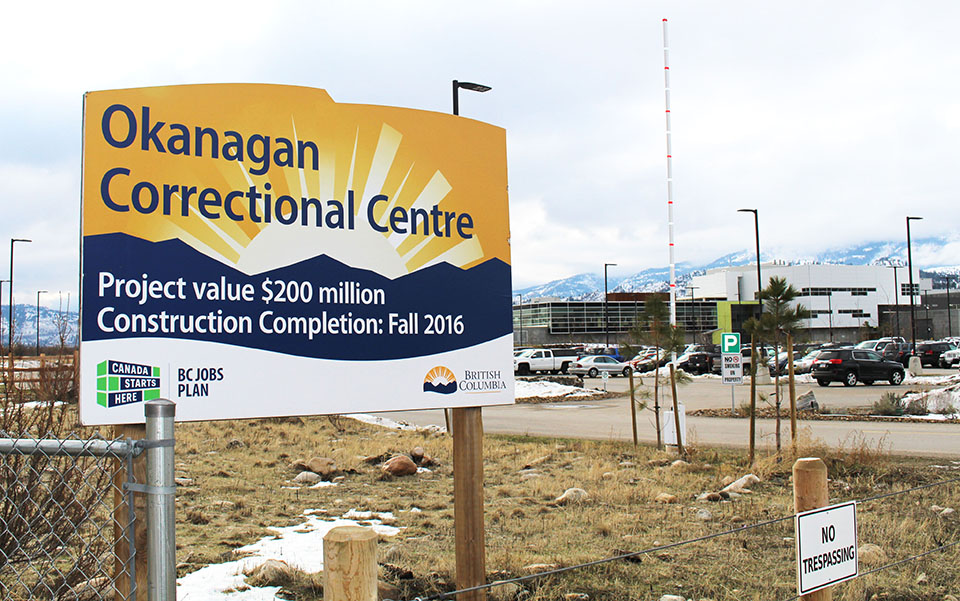
For the South Okanagan, home to the biggest correctional facility in the province, the release of inmates could have a potentially large impact on surrounding communities. The Okanagan Correctional Centre houses hundreds of inmates at the facility located in the Osoyoos Indian Band’s Senkulmen Business Park.
An open letter issued in March, signed jointly by Grand Chief Stewart Phillip, president of UBCIC, and two others from the organization, cites overcrowding and bad sanitation practices for putting all inmates in the province at high risk of an outbreak.
“Overcrowding and insufficient sanitation could cause the virus to spread rapidly in correctional facilities, while insufficient medical and mental health resources increase its lethality,” the letter stated. “Crisis-reactions have allowed the most vulnerable people to be overlooked, and without immediate attention and drastic interventions, COVID-19 threatens the safety and wellbeing of incarcerated people across British Columbia and Canada. “
The threat of an outbreak in one of B.C’s 10 correctional centres poses a threat to Indigenous populations in particular, claim the UBCIC.
“The consequences of the pandemic for the criminal justice system will be disproportionately felt by Indigenous people, who remain dramatically over-incarcerated by B.C. and Canada.”
In B.C., Indigenous people represent 30 per cent of the incarcerated population. With Indigenous communities already at an increased risk for outbreaks of the virus, correctional facilities pose a unique problem that the UBCIC feels needs drastic action.
Although the province said it is addressing their concerns about current inmates, the UBCIC said they are also concerned about Indigenous people being targeted under new crackdowns around social distancing and self-isolation. In their letter, the UBCIC asked that measure be taken to ensure authorities use new rules carefully.
“The use of police forces to disperse gatherings or regulate non-essential travel must not unduly target Indigenous peoples, and specifically must not endanger or target those who are homeless or at risk of homelessness, or who may be facing significant socio-economic barriers to self-isolation,” the UBCIC letter states.
This letter comes after the UBCIC asked for serious action to be taken last month to mitigate the overrepresentation of Indigenous people in the justice system. Currently, Indigenous people make up only five per cent of the population in Canada, but 30 per cent of inmates.