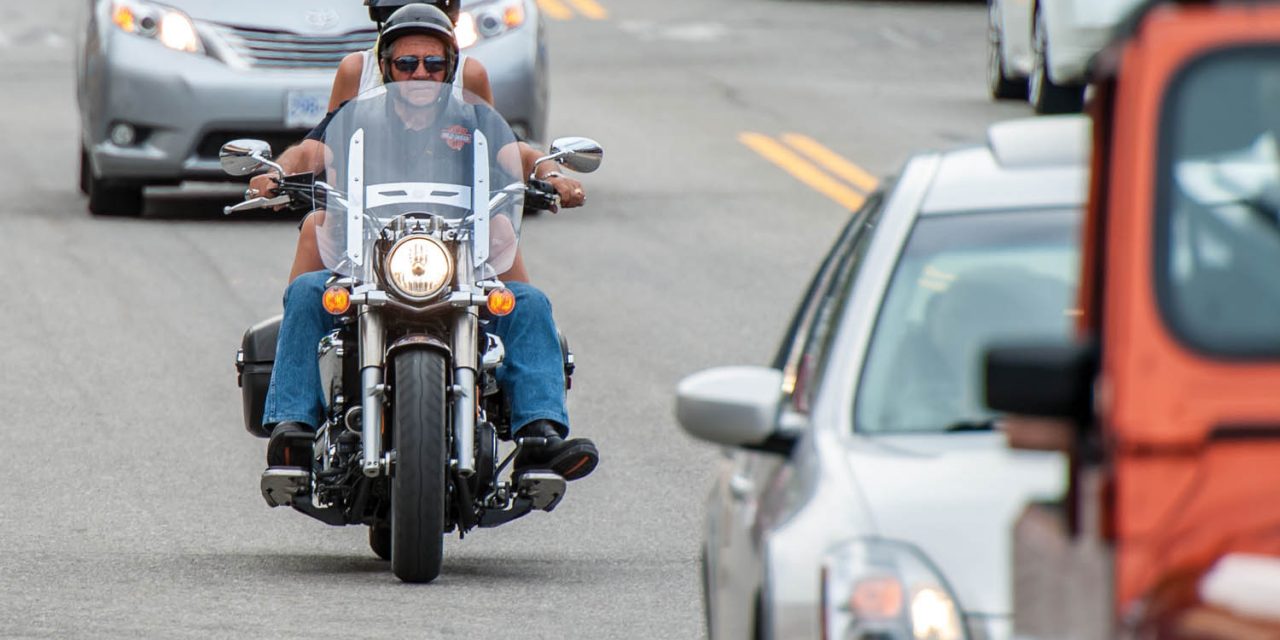
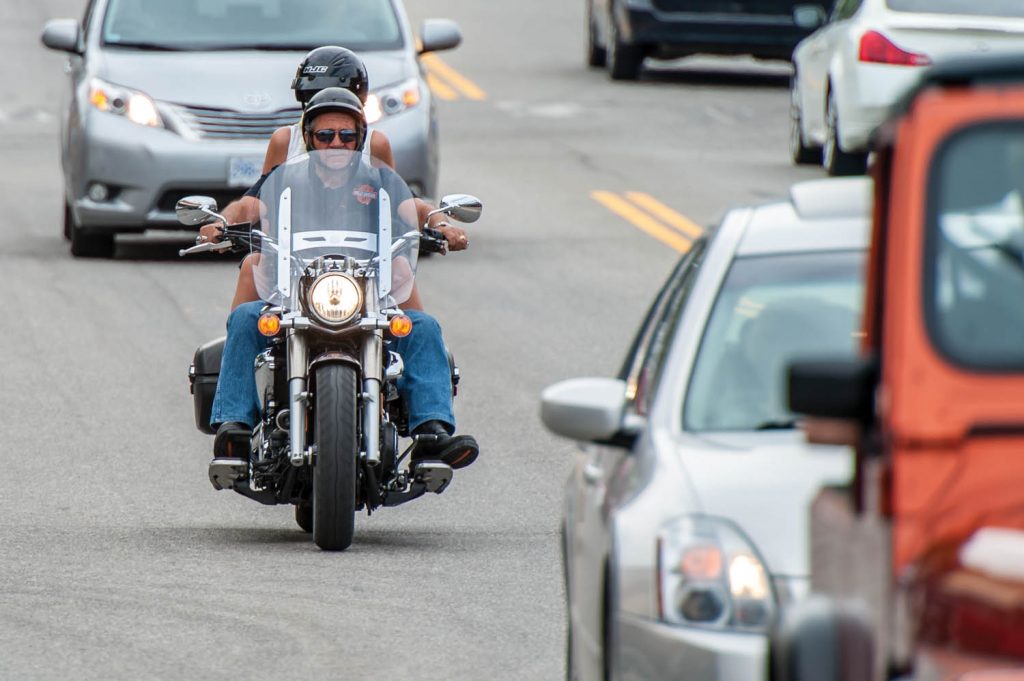
Motorcycles are popular in Osoyoos during summer months, but ICBC is urging people to keep an eye out for them. Although motorcycles make up only about three per cent of insured vehicles, they are involved in nearly 10 per cent of road fatalities. (Richard McGuire file photo)
While motorcycles make up only about three per cent of insured vehicles in B.C., they’re involved in almost one-in-10 road fatalities.
With motorcycle awareness month underway, ICBC is calling on drivers to share the road with motorcycles now and throughout summer.
Crashes involving motorcycles peak at this time of year. In May and June, approximately four riders are injured in B.C. every day. In July and August, that number rises to six riders injured every day.
“This year the warmer weather arrived early so all drivers need to already be thinking about sharing the road responsibly to reduce crashes involving vulnerable road users like motorcyclists,” said Todd Stone, Minister of Transportation and Infrastructure. “Most car crashes involving motorcycles happen in intersections. Drivers need to always look out for motorcyclists – especially when turning left. And riders should never assume a driver has seen them.”
ICBC’s message for riders is to wear all the gear, all the time.
The right motorcycle riding gear, including a helmet that meets approved safety standards, is the best protection against severe injuries in a crash. Check out the Gear it or Shear it videos at icbc.com to see a graphic illustration of the difference between wearing riding gear and street clothes.
“Too often police officers see the devastating results of motorcycle crashes,” said Superintendent Derek Cooke, Vice-Chair of the B.C. Association of Chiefs of Police Traffic Safety Committee. “We’re asking motorcycle riders and their passengers to be visible, dress appropriately, pay attention and focus on driving because we don’t want you to be a statistic. And to other drivers, please be alert to motorcycles – give them their space and remember that there are no minor incidents involving motorcycles.”
Tips for drivers:
• Always scan intersections and look carefully for motorcycles.
• When turning left — look for oncoming motorcycles. Motorcycles can be hard to see, especially at night, at dusk, in bad weather or in heavy traffic. The safest choice is to yield the right of way to an oncoming rider as it can be hard to tell how fast they’re travelling.
• Make eye contact — whenever possible, let motorcyclists know that you’ve seen them.
• Don’t assume that a rider in the left part of the lane is planning to turn left. Some riders do this to be more visible.
• Watch the rider for clues — sometimes a motorcycle’s turn signals are hard to see. If the rider shoulder checks or the motorcycle leans, the rider is probably planning to change lanes, adjust lane position or turn.
Tips for riders:
• All the gear, all the time. Choose a jacket and pants made for motorcycle riding. Street clothes offer little or no protection from the weather or in a crash.
• Wear bright or reflective clothing that comes with ventilation to help prevent over-heating. Passengers should also wear motorcycle gear for the best protection.
• According to the law in B.C., you must wear a motorcycle helmet that meets DOT, Snell or ECE standards. Be sure it displays the proper label and meets safety-helmet labelling requirements. When approaching an intersection, adjust your lane position and reduce your speed so you’ll have time to stop if you need to.
Get more tips at www.icbc.com.
SPECIAL TO THE TIMES
Osoyoos Times