Dear Editor:
British Columbia’s policy of allowing only B.C. wines to be sold in grocery stores is structured to fit within grandfathering provisions of our existing trade agreements. NAFTA grandfathers stores in existence or approved in 1987.
The Canada-European Union trade deal allows up to 60 private retail wine stores selling only B.C. wines.
Notwithstanding these grandfathering provisions, the California Wine Institute continues to complain that the province’s grocery store model violates Canada’s national treatment obligations under the General Agreement on Tariffs and Trade by denying equal access for imported wines.
In my opinion, there is little or no practical likelihood that the U.S. would commence a trade action against Canada for the sale of B.C. wine on grocery store shelves.
To keep the issue in perspective, British Columbia is California’s largest and fastest growing wine export market and the Canada-U.S border is one of the most open in the world to unrestricted wine trade.
Canada has eliminated all tariff barriers to the import of U.S. wines, together with all incompatible testing, certification and labelling requirements.
California is unlikely to jeopardize this significant market with a trade war, one of the effects of which would be to cause Canada to shine the spotlight on the many preferences instituted by the state of California to favour its local wine industry California wineries are not being denied access to B.C.’s grocery stores.
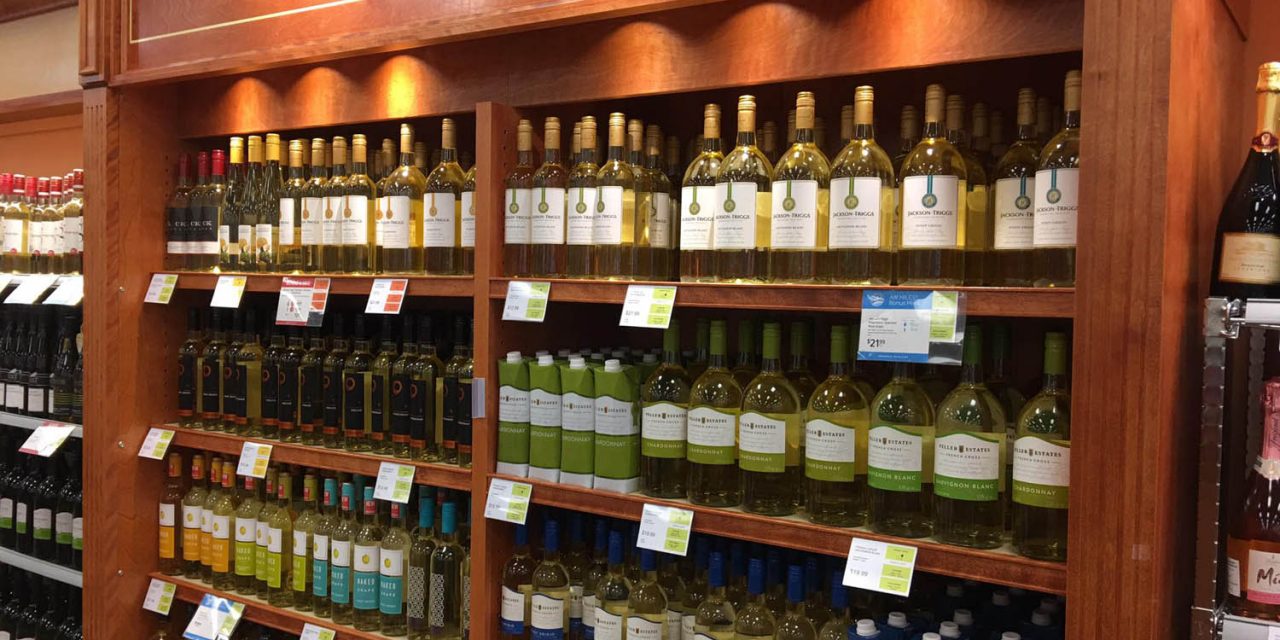
Under the Province’s reforms, both B.C. and California wines can be distributed through the grocery store channel, the only difference being that B.C. wine can be shelved on ordinary grocery store shelves and imported wines must be sold within a restricted area.
It is unlikely that anyone would seriously argue that this shelving preference amounts to a trade preference of such consequence as would justify a trade challenge.
Currently, the implementation of the store within a store model is being delayed by the ‘one kilometre’ rule which prohibits an LRS licence from being relocated within one kilometre of an existing LRS or government store.
Most grocery stores are adjacent to a liquor store, but over time it can be expected that these stores will be moved into grocery stores and that new grocery stores will be built with liquor stores in the grocery store premises.
If a trade action were ever launched, the focus would be on the GATT principle of ‘national treatment’ and on whether B.C. wines and California wines are ‘like, competitive or substitutable goods’.
If they are, then our NAFTA and CETA obligations require that the import product must be treated no less favoruably than the ‘most favorable treatment’ accorded to domestic product.
But do B.C. consumers regard B.C. wines and California wines as readily substitutable products?
In my experience most serious wine drinkers see B.C. and California wines as distinctly different products. B.C. wines are characterized by a distinctive taste of place, reflecting the lands on which the grapes are grown and the character and stories of our local growers and vintners.
They match seamlessly with our local foods, cheeses and produce.
California producers, on the other hand, tend to be known for their systematic homogenization of style, and for churning out large volumes of hedonistic, boldly fruit-forward wines.
California is also known for the mass production of low value commodity bulk wines. B.C. is very ‘old world’ in its focus on ‘terroir’ which matters so much that wines in B.C. retail stores are routinely shelved by geographic origin rather than by varietal or price.
The key issue in any trade case would be whether it could be established by independent empirical evidence that B.C. consumers, by habit and preference, treat BC and California wines as distinctly different products.
Existing GATT and WTO trade panel precedents, which have struck down discriminatory taxes on foreign liquor products, would have little relevance.
Such taxes exist for no reason other than to favour domestic products. In contrast, the shelving of local wines near locally grown foods simply reflects consumer tastes, preferences and habits – their desire to enjoy a bottle of ‘terroir driven’ local wine along with their locally grown foods and cheeses.
B.C. consumers are willing to pay premium prices for our more subtle and ‘terroir’ expressive B.C. wines.
They want the convenience of purchasing those wines with their quality local fresh foods. The British Columbia government’s grocery store model simply reflects this consumer preference and is not a breach of our trade agreements.
(Editor’s note; Al Hudec is a Vancouver lawyer who lives part-time in the South Okanagan and is interested in wine law.
Al Hudec
Oliver, B.C.